
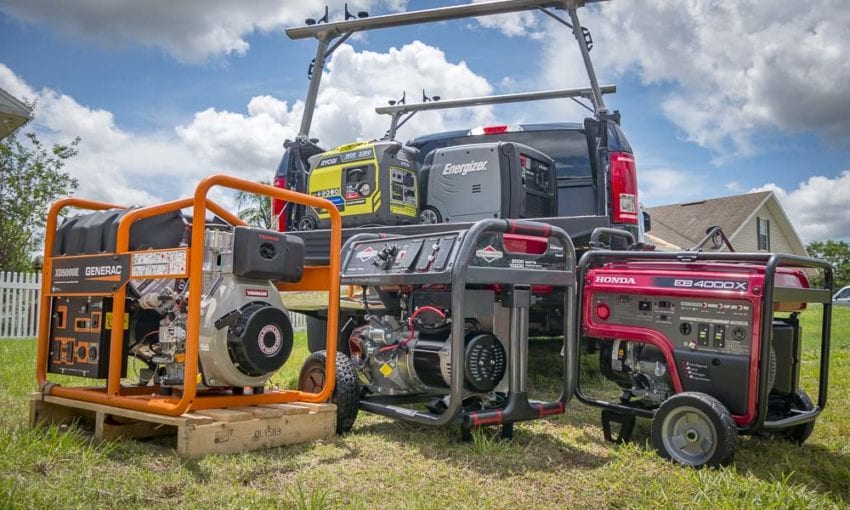

Key Takeaways
- Audit your home to inventory equipment that has to keep going during an outage and use appliance labels to add running and startup wattage for a precise generator size.
- Add running and surge watts for things like refrigerators, sump pumps, HVAC, and medical equipment. Add at least 20 percent additional capacity to account for unforeseen demand or future additions.
- Select generator type that suits your needs. Portable units are for brief outages and lower price. Standby units provide automatic whole-house backup and great dependability.
- Consider fuel types, accessibility, and storage needs. Use fuel efficiency to calculate estimated long-term operating costs and runtime.
- Plan installation and safety with a properly sized transfer switch, a licensed electrician, permits, and correct outdoor placement to prevent backfeed and meet local codes.
- Balance upfront price against operating, maintenance, and installation costs and adhere to a regular maintenance checklist that includes filter and oil checks, monthly tests, and post-storm inspections.
How big of a generator do I need for my home?
Estimate peak and running watts for basics such as a fridge (800 to 1200 watts peak), a furnace fan (600 to 1000 watts), lights (10 to 100 watts each), and outlets.
The majority of smaller homes require 3 to 5 kilowatts for the basics, while larger homes with HVAC may need anywhere from 7 to 12 kilowatts and beyond.
Below we break down how to add loads, how to decide between portable and standby units, and how to estimate costs.
Sizing Your Needs
Start by enumerating what you need powered during an outage and why those things are important to your family. Choosing the right size generator depends on having a clear list of equipment, an accurate wattage count, and accounting for startup surges and future needs.
- Refrigerator and freezer
- Lighting (critical rooms and security)
- Sump pump and well pump
- Furnace or boiler fan and controls
- Medical equipment and oxygen concentrators
- Electric water heater or tankless controller (optional)
- Electric range, microwave, or induction cooktop (optional)
- Washer and dryer (optional)
- Garage door opener and security system
- Communication devices, routers, and laptop chargers
1. Audit Appliances
List all the appliances and systems you desire to maintain. Add necessities and discretionary weights. Record brand and model if you can. Manufacturers’ stickers usually state wattage or amps.
Add seasonal gear such as sump pumps for rainy months and furnace fans in winter. Don’t forget small but vital items like medical gear, a router, and a garage door opener.
Size your needs – Draw a table on paper or on a spreadsheet with columns for item, running watts, startup watts, and priority (essential/optional). For instance, an average fridge may register 700 watts running and 2,000 watts starting.
A sump pump might record 1,000 watts starting. This record is what becomes the basis of sizing and wiring decisions down the line.
2. Calculate Wattage
Add the running watts for all of your prioritized items to determine the minimum continuous capacity you need. Size your needs, for example, convert amps to watts where labels display amps only.
Watts equals Volts times Amps; a 230 V water heater at 10 A equals 2,300 W. Divide total watts by 1,000 to get kilowatts, which you can then compare with generator ratings.
Most homes fall into three ranges: 5,000 to 7,000 watts for small essential loads, 7,000 to 10,000 watts for larger partial-house backup, and 10,000 to 20,000+ watts for whole-house or heavy HVAC loads. Choose a generator equal to or beyond your sizing.
3. Consider Surge
Identify high-start appliances: refrigerators, sump pumps, air conditioners, well pumps. Add their startup watts to the immediate load situation for when multiple units might start simultaneously.
Make sure the generator’s surge (peak) rating accounts for these starts together. As a guideline, add at least 20 percent to your final wattage calculation to account for surges and small future additions.
This easy buffer avoids overloads and extends equipment life.
4. Prioritize Circuits
Determine what circuits need to be on during an outage and logically group them. Put the fridge, lights, sump pump, and furnace on dedicated backup circuits.
Better yet, add a transfer switch to segregate those circuits safely from the grid. Eliminate non-essentials to maintain generator size and cost low.
Generator Types
Various generator types address different needs and outage scenarios. Here’s a simple comparison prior to exploring portable and standby options so you can align capacity, fuel type, installation, and cost to your home.
| Feature | Portable Generators | Standby / Whole‑House Generators |
|---|---|---|
| Typical capacity | 5,000–7,000 W (common) | 13–20 kW (air‑cooled); 25–150 kW (liquid‑cooled) |
| Fuel options | Gasoline, propane | Natural gas, propane, diesel; larger units liquid‑cooled |
| Installation | No permanent install; manual hookup | Permanent install with automatic transfer switch |
| Operation | Manual start, refuel on site | Auto start, wired to main panel, automatic switchover |
| Best use | Short outages, small loads, job sites | Full‑home backup, critical systems, long outages |
| Maintenance | Low cost, hands‑on (oil, spark plugs) | Higher cost, professional service contracts |
| Approximate price (USD) | 500–2,000 | 5,000–20,000+ (including install) |
| Pros | Low upfront cost, portable, flexible | Seamless backup, higher capacity, hands‑free |
| Cons | Limited power, noisy, manual | High upfront cost, needs space and permits |
Portable
Portable units provide immediate, versatile power for minor outages and job sites. Typical portable generators provide about 5,000 to 7,000 watts and run on gas or propane, powering lighting, refrigeration, a sump pump, and a few outlets, but rarely the whole home.
They need manual setup: place outdoors on level ground, connect via heavy-duty extension cords or a transfer switch kit, and refuel as required. Anticipate starting wattage for motors. Fridges or well pumps can require two to three times the running watts, so size a portable accordingly.
I think storage and mobility are a plus. You can bring the unit with you, tuck it away in the garage, and use it outdoors. Drawbacks are noise, fumes, and constant refueling in extended outages. For small apartments or infrequent outages where you run the essentials only, a portable unit is cost-effective.
Standby
Standby generators are permanent installations connected to the house by an automatic transfer switch. They operate on natural gas, propane, or diesel and span from 13 kW for small homes to 150 kW for large estates or buildings.
Air-cooled models address a significant percentage of residential requirements. Liquid-cooled models support larger loads and operate longer more efficiently. They turn on automatically when grid power goes out, provide starting and running wattage for HVAC systems, medical equipment, and whole-house loads, and decrease manual labor.
It needs permits, a concrete pad, and professional wiring for installation. Maintenance is more formal: scheduled servicing, fuel checks, and occasional part replacement. These generators are more expensive initially but provide peace of mind where outages are common or extended for families with long storms or critical-care patients.
Fuel Considerations
Fuel is a key in picking the home generator. Fuel considerations impact runtime, safety, cost and how you size and install the system. Here are key considerations on the primary fuel types, supply availability, storage requirements and efficiency compromises to help you align fuel strategy with household requirements.
Availability
Assure access to your fuel of choice during storms or other wide-area outages. In most areas, natural gas lines stay live when the power is off, providing a continuous supply if your generator can hook into the service. Check with your utility about emergency shutoff policies and if you need a transfer switch.
Propane has local supplier and delivery considerations. Some suppliers will top off tanks on a schedule or after a call, but others can be limited in serious storms. Gasoline is more accessible but susceptible to shortages close to mass outages and is more difficult to store safely in bulk.
Consider regional risks: fuel delivery routes can be blocked, pipelines can be disrupted, and supply can be prioritized for emergency services. If you reside in a seasonal storm zone, prepare secondary sources or multi-fuel accessibility to avoid the risk of going dry in lengthy outages.
Efficiency
- Check the generator’s fuel burn at various loads. Check for liters or gallons per hour consumption figures at 25%, 50%, 75%, and 100%.
- Select models with superior specific fuel consumption (consumption per kWh) to reduce operating costs.
- Think inverter or electronically controlled engines for better part-load fuel economy.
- Think about fuel, single versus dual, to keep you flexible in low-supply scenarios.
Just as an example, compare models on gallons per kilowatt-hour generated. Some home units are in the neighborhood of 0.5 to 2.5 gallons an hour, depending on output and load. While manufacturers may quote up to 20 hours on a single tank under light loads, verify those claims against your load mix.
Efficiency matters for sizing. An oversized unit wastes fuel and costs more to run, while an undersized unit can hit high load and lose economy.
Storage
Thinking ahead for safe, code-approved storage is essential. Natural gas requires no on-site tank but does require appropriate pressure and line sizing. Propane demands a tank sized for runtime and the generator’s appetite. You need to factor in vapor draw and piping.
Keep gas in approved containers and away from the house and away from ignition. Cap on-site quantities per local regulations. Keep days of reserves based on projected usage and rotate fuel every 6 to 12 months.
Adhere to factory recommendations on fuel types, line sizing, and maintenance to keep the system dependable and safe.
Beyond The Watts
Selecting a generator requires thinking beyond watts alone. Think about how the climate, noise, and power quality will impact daily life, and align generator features with your household’s real needs. Consider appliance categories, starting surges, and useful add-ons that maintain the system dependable and secure.
Climate Impact
Cold and hot weather affects how a generator runs and fuel consumption. Extreme cold can contribute to hard starting and a decrease in battery performance, while extremely hot conditions raise cooling demand and can decrease efficiency. Models designed for your local climate—think cold-start kits for cold climates or high-temp guards—will operate more dependably.
In snow or ice locations, elevate the unit from the ground and protect it from drifting snow. In flood areas, place it on a raised pad or within a weatherproof enclosure. Heatwaves and winter storms change what you run: air conditioners, space heaters, and sump pumps often run at the same time, pushing total demand higher.
For larger homes or those relying on heavy appliances, expect needs beyond 5,000 watts. For residences over 3,000 square metres, consider units exceeding 22,000 watts to keep systems running.
Noise Levels
Noise is an issue for comfort and neighborliness. Low-decibel models minimize noise disruption. Inverter generators typically operate quieter than conventional open-frame units. Site the generator to minimize perceived noise, away from bedrooms, outdoor living areas and neighbors’ lot lines.
If the area is tight, surround it with sound-absorbent enclosures, baffles or acoustic barriers. Be sure to ventilate to prevent overheating. Verify noise ordinances and HOA rules to prevent fines or having to move the unit.
Quiet does not replace capacity. A low-noise 7,000-watt model may suit a medium household, but larger homes with multiple bedrooms and heavy appliances often need higher output despite more sound.
Power Quality
Stable voltage and frequency help safeguard modern electronics and medical equipment. Seek out automatic voltage regulation or inverter technology if you intend to power computers, smart TVs, or life-sustaining devices. Appliances such as refrigerators and air conditioners require surge or starting watts that can be as much as 20% higher than running watts.
Add an additional buffer of at least 20% to the total running load to cover such peaks. Test the generator’s output periodically under actual loads to confirm wave form quality and voltage stability.
Think of transfer switches, surge protectors, and line conditioners as segments of the system to protect fragile gear and prolong equipment life.
Installation & Safety
Installation and safety planning decreases likelihood and ensures operation. Adhere to local codes, manufacturer’s instructions, and industry standard electrical practices. Home standby generators are permanent installations connected to your fuel supply and electrical panel, which means they require precise site placement, proper wiring, and confirmed permits prior to the commencement of installation.
Transfer Switch
Transfer switch separates the home from the grid and prevents backfeeding, protecting utility crews and your equipment. Transfer switches are manual or automatic. An automatic transfer switch senses an outage and switches loads within seconds, keeping pace with the standby generator’s rapid start.
Size the switch to the generator’s continuous and surge ratings and to the number of circuits you plan to run. For example, a 7 kW generator might pair with a 30–60 A switch for selective loads, while whole-house 20–25 kW units require 100–200 A switches. Install the switch between your utility meter and the main breaker or at a subpanel per code.
Concrete examples include a manual 3-circuit transfer switch for a small cabin and an automatic transfer switch wired to a whole-house subpanel for a suburban home. Make sure the switch’s enclosure rating is appropriate for outdoor installation.
Professional Help
Have a licensed electrician or approved dealer handle your wiring and fuel hookups and code compliance. Request a detailed, written estimate itemizing labor, conduit, wiring, transfer switch model, fuel line work, and permit fees.
Verify the contractor schedules inspections and files permit paperwork with local officials. Ask for references and insurance. Arrange yearly service calls for oil changes, filter swaps, battery checks, and a load test. Many dealers have maintenance plans that align with the seasons.
Professional service minimizes the risk of miswiring, guarantees proper grounding and bonding, and keeps your warranty intact.
Placement Rules
Install generators outside on a level, solid base like a concrete pad to minimize vibration and settling. The pad must be sized according to manufacturer specs. Keep clearances from windows, doors, vents, and living spaces to reduce carbon monoxide exposure and noise issues.
Typical setbacks are 1 to 3 meters, but refer to local ordinances for specific distances. Do not think about placing a unit in garages, basements, or enclosed areas. Provide excellent ventilation around the unit and direct exhaust away from occupied areas.
Consider fuel lines and shutoff valves, and route them to limit leak and fire risk while protecting against flood zones. Use manufacturer placement diagrams and local property lines, sound, and landscaping buffer rules.
Balancing Cost
Balancing cost means looking past sticker price to the complete economics of purchasing and operating a generator. Think about what you require today and what you will pay incrementally. Balance cost by shopping around, obtaining several quotes, and budgeting for both anticipated and unexpected expenses.
Initial Price
Set a cost in balance with your home size and power needs. Whole-home systems generally start at 3,000 to 10,000 dollars or more depending on capacity and features. Portables run a lot less at 500 to 2,500 dollars, though they typically don’t include automatic transfer switches or whole-house coverage.
Add to that the unit, a transfer switch, and professional installation. Permits, labor, a concrete pad, wiring upgrades, and local taxes can all add up significantly. Some installations run several thousand over and above the generator cost.
Balancing cost is important. Financing or payment plans assist when a 10,000 dollar upfront price is not possible. Programs like PACE spread payments over years and may ease cash flow.
Balance cost. Receive complimentary quotes from several dealers or independents in your area to compare equipment guarantees, service plans, and final installed prices.
Operating Expense
Fuel costs vary based on fuel type and generator efficiency. Natural gas, propane, and gasoline have different prices and burn rates, and availability may differ based on location.
Balance cost. Calculate fuel spend per year based on anticipated hours of usage. Frequent power outages or extended events increase fuel costs.
Annual maintenance for whole-home systems is typically between 200 and 500 dollars per year, including oil changes, filters, spark plugs, and labor. Follow storm season monthly expenses to get actual operating costs.
Longer blackouts increase fuel and wear, so allocate a contingency budget for longer runs and possible fuel delivery or storage fees.
Maintenance
Create a simple checklist: inspect filters, check oil levels, run the system under load, and test the transfer switch. Swap air and fuel filters at manufacturer intervals and test the unit monthly or at the recommended frequency.
This avoids battery burnout and stale fuel. Maintain service logs and receipts for warranty purposes and potential insurance savings. Some insurers offer a 4% to 10% premium discount for homes with automatic standby generators.
Following each significant storm or protracted outage, perform a rapid post-run examination for leaks, unsecured connections, or exhaust problems. Regular preventive maintenance prolongs your vehicle’s life, reduces emergency repair expenses, and keeps it running when it counts.
Conclusion
Selecting the appropriate home generator is about aligning power with genuine requirements. Combine the watts for the fridge, furnace fan, lights, and a couple of outlets. Choose a generator that offers continuous rated power somewhat above that aggregate. If you need to power your entire home, then consider standby models that run on natural gas or propane. For partial loads, portable or inverter units do well and use less fuel.
Consider run time, local fuel availability, and noise restrictions. Hire a licensed pro for transfer switch work and code checks. Test the system with a load once a year. Little things like marking circuits and stashing extra oil reduce hazards and rescue minutes.
Need help sizing your setup? Tell me your appliance list and budget and I’ll outline options.
Frequently Asked Questions
What size generator do I need to run essential home circuits?
A 3,500 to 5,500 watt generator typically runs essentials like the refrigerator, lights, internet, and a few outlets. Add up your appliance starting and running watts to verify. This range balances price and typical household requirements.
How do I calculate total watts for my home appliances?
Sum each appliance’s running watts and the largest starting watts. Use appliance labels or manuals. A 20 to 30 percent buffer protects from overload. This provides a useful, safety-oriented estimate.
Can a portable generator power an entire house?
Rarely. Whole-house power typically requires a 9,000 to 20,000 watt generator and a professional transfer switch. The majority of portable units are designed for critical circuits, not complete home loads.
Should I choose diesel, gasoline, or propane?
Decide on availability and storage. Gasoline is widespread and inexpensive. Propane stores well and burns cleaner. Diesel is rugged for heavy duty. Factor fuel type with runtime expectations and local availability.
Do I need a transfer switch for safe use?
Yes. A transfer switch stops backfeed to the grid and protects utility workers. It’s typically code-required and should be installed by a licensed electrician for safety and compliance.
How long can a generator run continuously?
Run-times are dependent upon load and fuel capacity. Small gasoline units typically operate six to twelve hours per tank. Standby generators on propane or diesel can go a lot longer with appropriate refueling. Follow manufacturer maintenance instructions.
How much should I budget for installation and maintenance?
Installation costs range from a few hundred dollars for simple hook-ups to several thousand dollars for a standby system with a transfer switch. Annual maintenance and fuel contribute to the lifetime cost. Obtain quotes and consider professional electrical work for accuracy.