

Key Takeaways
- Good air circulation clears the air of indoor pollutants, controls temperature and humidity, and may prevent mold while reducing energy costs.
- Seek out sensory and visual clues like musty odors, condensation, or uneven temperatures. Perform quick tests like the tissue or incense test to diagnose trouble spots fast.
- Here are a few natural ways to put more fresh air in your house without blowing a hole in your wallet.
- Maintain mechanical systems. Replace filters, clean ducts, use exhaust fans while cooking and bathing, and deploy ceiling or portable fans to bolster zoned circulation.
- Think breathable building materials, smart sensors, ERVs, and professional HVAC tune-ups to balance energy nerd tendencies with good ventilation.
- Don’t make my mistakes, like blocking vents, skipping maintenance, and forgetting about intake-exhaust balance. Take action now to avoid moisture, mold, and a less comfortable home.
===
How to improve airflow in house is to make indoor air circulate more freely to reduce suffocating rooms and decrease indoor contaminants.
Easy actions include properly utilizing ceiling fans, opening windows on opposite sides for cross-ventilation, and keeping vents and returns free of dust.
Upgrading to a quality range hood, installing exhaust fans in bathrooms, and keeping interior doors closed helps.
The bulk of the post provides hands-on, inexpensive, and metric-measured advice to increase home airflow.
Why Airflow Matters
That’s what proper airflow means. It’s the basis of a healthy, comfortable home. Airflow has an impact on pollutants and moisture levels, temperature balance, and HVAC systems performance. Before we consider fixes, know that air travels the path of least resistance. Blocked vents, furniture against returns, and closed dampers all make air take slower routes. This drives down efficiency and drives up energy consumption.
Health Benefits
Airflow helps reduce indoor pollutants and allergens by pulling stale air out and bringing fresh air in. That minimizes dust, pet dander, pollen, and spores that initiate asthma and allergy attacks. Lower particle loads lead to fewer respiratory issues for sensitive folk.
Fresh circulation reduces concentrations of VOCs and other pollutants that accumulate in sealed spaces. Good ventilation restricts accumulation of gases such as carbon monoxide and radon through dilution and exhaust avenues, reducing both acute and chronic exposures.
Cleaner air means fewer headaches, less fatigue, and less sleep disruption. People say they feel more focused and have fewer allergy symptoms with well-ventilated rooms. Maintaining steady air change rates sustains immune function indirectly by decreasing chronic inflammation induced by low-quality air.
Home Preservation
Airflow governs moisture, and moisture governs decay. When humid air lingers inside, surfaces become cool and damp and mold, mildew, and rot become friends of your wood and drywall. That breaks down framing and reduces the longevity of paint, wallpaper, and soft goods.
By ventilating, you control humidity, which keeps swelling and peeling at bay and minimizes the risk of pest infestation, which loves damp, stagnant areas. Little fixes—unblocking vents, pulling a sofa inches away from a return, adding passive vents—prevent water from accumulating in concealed spaces.
Good airflow keeps HVAC parts cleaner with less dust glued to coils and filters, helping reduce maintenance and extend system life.
Comfort Levels
Airflow balances out disparities in room temperature by physically directing warm or cool air to where it’s needed, so you don’t have to keep following the hot and cold spots. Stale air leads to stale smells. Getting rid of it makes rooms feel less stuffy.
Better circulation can improve sleep by providing light air circulation and consistent oxygen levels, and frequently helps daytime efficiency by sustaining alertness. Small fixes can yield noticeable change.
Clearing a blocked vent or adjusting a register can increase airflow by substantial margins, sometimes 20% or more, lowering energy consumption and utility bills. In other words, airflow isn’t merely technical; it fundamentally influences the experience of a home.
Diagnosing Poor Airflow
Poor airflow decreases comfort, increases energy consumption, and can rot building materials. Start by using simple observation to determine where to look next. Then apply simple tests to verify problems and establish priorities for repair or improvement.
Sensory Clues
Lingering musty or stale odors can frequently be the indicator of bad air circulation or moisture trapped in a room. Scents that persist after windows swing open indicate the air isn’t flowing through your space enough to exchange indoor air with outdoor air. Rooms that feel stuffy or humid, such as after cooking or showering, are a sign of poor exchange.
Humidity that remains elevated fosters mold and dust mite proliferation. See if your loved ones are telling you that they have more allergy symptoms or breathing difficulties inside. Worsened respiratory irritation inside but not outside frequently connects to bad filtration or dead air.
Hear at vents and windows — a very quiet one or no detectable draft near an air return can be as telling as a noise from a working fan. The absence of that tell-tale whoosh you anticipate generally indicates low supply or clogged return vents.
Visual Signs
Condensation on your windows, mirrors or walls indicates too much moisture and insufficient air flow. Mold often follows recurring beads of moisture or fogging on cold surfaces. Seek out obvious mold, mildew or water stains in corners, closets and ceilings.
These are screaming red flags. Dust bunnies near vent grilles, fans or return registers indicate constricted flow. If dust creates a ring around a vent, flow is pulling but not flowing through the ductwork.
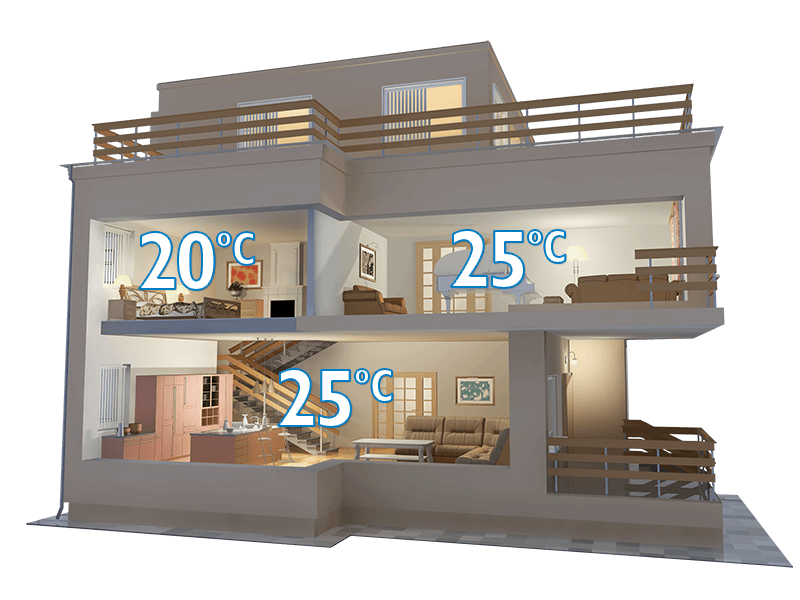
Uneven temperature distribution is a major clue: some rooms feel hot while others remain cool. This could be due to an undersized system, leaky ducts or runs of ducts that are under 350 CFM per ton. Proper airflow is usually 350 to 425 CFM per ton. Anything less than 350 CFM per ton usually manifests itself as comfort and efficiency issues.
Simple Tests
Do the tissue test by holding a light tissue or thin paper near supply vents and returns, observing whether it lifts, flutters, or barely moves. With incense or a smoke pencil, or a lit but safely used stick of incense, follow airflow through doorways and around returns and registers and see where it lingers or slows.
Measure humidity with a hygrometer to identify rooms elevated above recommended limits. Enduring high indoor humidity indicates lack of proper airflow. Track energy costs. An unexplained rise in monthly bills without a change in use can indicate restricted airflow causing longer run times.
Make a checklist to note each room’s feel, visual indicators, tissue and smoke test results, humidity, and measured CFM if accessible. A handheld anemometer can provide CFM and pros will check delta T, aiming for around an 18 to 20°C difference between supply and return for confirmation.
Simple checks and filter changes can add five to ten years of life to a system.
Natural Ventilation Strategies
Natural ventilation leverages site conditions and building design to draw fresh air through a home without fans or HVAC. It is based on wind, warm air buoyancy, and the positioning of openings and internal spaces. The goal is to optimize fresh air intake, leverage architectural characteristics for cross-ventilation, prevent furnishings from impeding flow, and incorporate outdoor elements into the strategy.
1. Window Usage
Cross-breezes from windows open on opposite sides of a room or house. Every room should have at least two openings for the air to pass through. Adjust which windows are open based on wind direction and weather. Open windward-side windows fully and leeward-side windows partially to speed airflow.
Put in screens so you can leave windows open and not let bugs in. Use fine mesh for bugs, but use bigger mesh for lower wind resistance where bugs aren’t a problem. Utilize window locks or stops to restrict openings for safety and manage flow. Stops also reduce the risk of overly large gaps during storms.
Install a few openings close to ceilings to allow hot air to escape, which works great in conjunction with lower intake windows to generate a constant upward draft. By offsetting paired windows slightly between floors or rooms, you can increase mixing and encourage air to flow across more of the house.
2. Door Positioning
Leave interior doors open when you’d like circulation between rooms. This provides open routes for air to flow. Use door stoppers or wedges to keep doors from closing and cutting flow. Close doors to unused rooms to funnel ventilation to where it’s most needed, like living areas or bedrooms at different times of day.
Think about vented or louvered doors or transoms over doors in areas of stagnation. These enable air to flow even when privacy is required. The stack effect occurs when vertical openings, such as open stairwells or central atria, combine with open doors to capture hot air and direct it upward and out.
3. Furniture Layout
Position furniture so it won’t obstruct vents, windows, or doorways. Large sofas shouldn’t be flush against an intake window, for example. Space big pieces away from walls to let air move behind and beneath them. Go with open shelving or lean furniture to minimize barriers in shared flow corridors.
Draw an easy floor plan diagram to plot air flow paths and experiment with how shifting a couch or bookcase alters circulation.
4. Decluttering Spaces
Get rid of clutter that acts as barriers in living spaces. Mounds of boxes or clothes skirt local flow and create pockets of stale air. Arrange closets and storage so that air is not trapped in those areas. Dust and stale air collect.
Clean under beds, behind appliances, and under sofas. Give to charity or trash unused stuff on a regular basis to maintain open, airy spaces.
5. Exterior Landscaping
Prune bushes and trees adjacent to windows and vents so air can enter unrestricted. Thick foliage up against a wall diminishes the effective size of openings. Don’t plant thick hedges right against walls on the outside.
It is better to plant them in a way that they direct any breezes to your principal living areas. Assuming cooling air, design pathways and planting schemes that funnel prevailing winds to inlet locations. Consider local topography as well as other buildings nearby. Keep outdoor corridors clear so air can access windows and vents freely.
Mechanical Ventilation Solutions
Mechanical ventilation moves air intentionally rather than allowing it to leak and luck. It ranges across six or so generic system types from simple exhaust fans to balanced HRV and ERV units, whole-house fans, and supply-only or balanced mechanical ventilation.
These systems, selected and combined to treat both supply and exhaust, can tie into existing HVAC for distribution and support continuous operation where appropriate. It’s the installation and maintenance that separates these systems and makes indoor air quality better or just more complicated.
HVAC Maintenance
Swap air filters once every 1-3 months to prevent clogs and maintain steady flow. More efficient filters catch more particles but clog more rapidly, so inspect them more frequently.
Dust, pet hair, and debris get caught in ducts and registers, which reduces airflow, so clean them out, vacuum accessible vents, and schedule a professional duct cleaning every few years in areas where build-up is heavy.
Schedule an annual professional tune-up for furnaces and air handlers that inspects motors, fans, belts, and electrical connections. A tuned system uses less energy and moves air more evenly.
Check ductwork for leaks, crushed areas, or broken joints and fix immediately. Sealing ducts with mastic or foil tape prevents loss of conditioned air and maintains balanced ventilation.
Strategic Fan Use
Install ceiling fans appropriately sized to your rooms. A 122 cm (48 in) fan fits medium rooms, while bigger rooms require longer blades.
Deploy portable fans to increase window ventilation or circulate hallway air into bedrooms. They’re cheap and versatile for spot issues.
Reverse fan direction seasonally: counterclockwise in summer creates a cooling breeze, and clockwise in winter blows warm air down from ceilings.
Put fans in open windows or doors when outside air is cooler to pull in fresh air or push out warm, stale air, particularly in the early morning or late evening.
Exhaust Systems
Install exhaust fans in kitchens and bathrooms to vent moisture, odors, and combustion byproducts. Select units by airflow (m3/h) and sone levels for noise.
Operate exhaust fans while you cook or shower and for some time afterwards. A 20 to 30 minute post-use run prevents mold by reducing humidity.
Make sure exhaust vents terminate outside and not into attics or crawl spaces so you don’t pass the pollutants to hidden spaces. Clean fan grilles and blades on a regular basis and inspect ducts for grease or lint buildup that decreases performance and increases fire hazard.
Air Purifiers
Select air purifiers that have true HEPA filters to trap fine particles, pollen, and many allergens. Some even include activated carbon for odors.
Leave purifiers on in the rooms with the most traffic or those that are allergy-prone for optimal coverage and swap filters per manufacturer recommendations to maintain effectiveness.
Consider CADR models around living spaces with low noise output.
| Model type | Key feature | Best use |
|---|---|---|
| Portable HEPA | True particle capture | Bedrooms, living rooms |
| HEPA + carbon | Odor and VOC reduction | Kitchens, smoking areas |
| Whole-house unit | Integrates with HVAC | Uniform coverage through ductwork |
Advanced Airflow Concepts
Advanced airflow is based on the interplay of design, materials and control systems to direct air wherever it’s needed while saving energy or shielding equipment. Building form and internal layout provide the fundamental paths for air. Material choices influence moisture and heat exchange. Intelligent systems enable you to adjust ventilation to actual conditions. The sub-sections that follow unpack each of these areas and detail practical things you can do now and schedule for later.
Architectural Influence
Open plans and unobstructed sight lines allow air to freely move from room to room, enhancing circulation and facilitating natural ventilation throughout single and multi-storey homes. Buildings that are wider are more difficult to ventilate naturally, so anticipate additional inlet and outlet locations or mechanical assistance as you increase your span.
Transom windows or clerestories provide vertical escape routes for warm air, reinforcing the stack effect in multi-story floor plans and alleviating cooling loads during summer. Use stairwells and hallways as strategic air corridors. A centrally located stairwell can transport air from the first floor to the second, eliminating hot spots when combined with vents located near the upper stairwell landing.
Classic wind towers scoop up any passing breeze and funnel it indoors. Their contemporary descendants are the rooftop vents and shaft designs that harness the prevailing winds to provide fresh air without consuming electricity. Pros check delta T across HVAC coils, looking for somewhere around an 18 to 20-degree difference between supply and return to validate good heat exchange and system health.
Material Choices
Be mindful of advanced airflow principles and select vapor permeable wall and floor materials. Breathable plaster, lime-based renders, and some natural fiber boards prevent moisture from becoming trapped. Stay away from off-gassing VOC finishes and paints and any kind of impermeable barrier like a liner or bottom paint because they will exacerbate indoor air pollution and inhibit diffusion.

Insulation that provides a balance between R-value and airflow diffusion resistance is important. Closed-cell foam prevents all airflow, including leaks, while mineral wool is more diffusive and requires good air barriers. Use a hygrometer to maintain humidity around 40 to 60 percent, which reduces the chance of mold and keeps residents comfortable.
Recommended materials by climate:
- Humid climates: breathable lime plaster, mineral wool, permeable breathable paints.
- Dry climates: insulated panels, reflective barriers, dense-pack cellulose.
- Temperate climates: balanced cavity insulation, vapor-open sheathing, natural fiber boards.
Smart Integration
Air-quality sensors for CO2, particulates, and VOCs can activate fans, ERVs, or purifiers when limits are reached, safeguarding health and equipment. Integrate systems to a home automation platform to monitor CFM, delta T, and runtime remotely and log data to identify trends.
Track performance: typical HVAC airflow targets are about 350 to 425 CFM per ton of cooling. Swapping stamped face registers for bar-type registers can boost airflow up to 20 percent, lowering strain. Seal ducts and maintain equipment to prevent efficiency losses.
Leaky ducts can cost 150 to 350 dollars in lost energy per year and can cause 600 to 1,200 dollars worth of repairs if left unchecked.
Energy Balance
Seal leaks and insulate to minimize unintentional air loss or gain. Use ERVs to bring in fresh outdoor air while conserving heat and coolness. Save energy and maintain comfort by accurately adjusting ventilation settings according to occupancy and activities instead of schedules.
Track humidity and airflow as a pair to optimize health, comfort, and efficiency.
Common Airflow Mistakes
All too often, the common airflow mistakes that make you uncomfortable, waste energy, and poison indoor air are simple and easy to correct. The list below tells you what goes wrong, where it goes wrong, and how to fix it with examples and straightforward steps.
If you’ve ever blocked a vent or return with furniture, rugs, or curtains, you’ve restricted airflow and it’s one of the simplest problems to resolve. Covering a supply or return with a sofa, bookcase, or tall curtain will reduce circulation in that room and disrupt whole-house balance.
Shift furniture 15 to 30 cm at least away from registers, opt for low-profile shelving, or trade heavy drapes for shorter treatments. Simple changes, such as swapping out stamped face registers for bar-type registers, can increase airflow by up to 20 percent. Replace a handful in critical rooms before investing in new ductwork.
Ignoring mechanical maintenance steps affects performance. Dirty filters, clogged coil fins, and worn fans all reduce airflow and increase energy consumption. Not checking and changing your filters regularly is another culprit; a clogged filter can restrict airflow and cause the system to labor.
Inspect filters every month and change when necessary, clean blower compartments yearly, and perform coil cleaning at least once a year. Undersized ducts are another maintenance and design issue. Ducts that deliver under roughly 350 CFM per ton of cooling often fail to move enough air for comfort.
If rooms seem stuffy even with a working unit, have a professional measure system CFM and verify duct sizing. Ignoring balanced intake and exhaust generates pressure imbalances that stall passive airflow and overwork mechanical systems. A kitchen or bathroom without enough exhaust will trap moisture and pollutants.
Too much exhaust compared to fresh intake will suck unconditioned air through cracks and crevices. Hint: Insufficient ventilation in kitchens and bathrooms. Excess moisture invites mold. Add right-sized exhaust fans and use passive vents or heat-recovery ventilators to keep pressure neutral.
With passive airflow, it’s all about coordinating windows, skylights, materials and layout. Orient openings and stack-effect routes so air can enter low and exit high. Neglecting airflow warning signs allows minor problems to become major problems.
Common symptoms include hot and cold rooms, expensive energy bills, stagnant air, and excessive cycling. Failing to tune for airflow results in energy waste. Flow fixes can save 10 percent or more on heating and cooling.
Look for symptoms early, measure airflow by room and make easy fixes first, such as register swaps, filter changes, fan cleaning, and smart furniture placement.
Conclusion
Nice airflow causes homes to experience fresher air, reduce energy bills, and reduce health risks. Use basic checks first: feel vents, measure room temperatures, and clear blockages. Open windows throughout the house for a cross-breeze. Install window fans or a whole-house fan to circulate the air quickly. DUST AND DIRT: Clean or replace filters and balance supply and return vents. Install supply vents or increase attic and crawlspace vents as necessary. Employ a straightforward timer on fans to operate them in the heat of the day or after cooking. Monitor the effect using a thermometer and small flow meter or an app. Experiment with one modification at a time and record the effect. Need a fast house plan? Post your layout and existing systems and I’ll sketch out a straightforward, step-by-step airflow solution you can utilize.
Frequently Asked Questions
What simple checks tell me if my house has poor airflow?
Look for uneven room temperatures, odors, condensation on the windows, and stuffy rooms. Test vent air flow and listen for weak HVAC hums. These indicators display ventilation issues.
Can I improve airflow without installing new equipment?
Yes. Try opening windows for cross-ventilation, using ceiling and portable fans, opening doors between rooms, and clearing vents and returns. These actions increase circulation inexpensively.
How often should I clean or replace HVAC filters?
Replace or clean filters every 1 to 3 months based on usage, pets, and indoor air quality. Frequent replacements enhance airflow and system efficiency and extend HVAC life.
Will sealing gaps and insulating affect airflow negatively?
While sealing drafts and adding insulation make things more efficient and comfortable, pair them with controlled ventilation such as heat-recovery ventilators to keep the air fresh and avoid stale indoor environments.
When should I call a professional for airflow problems?
Call in a pro if you have stubborn hot or cold spots, noisy ducts, high energy bills, or mold. A technician can test airflow, inspect ducts, and recommend repairs or upgrades.
Are whole-house fans worth installing for better airflow?
Yes, when climate and home design permitted. Whole-house fans evacuate heat fast on little energy. They are best in cooler evenings and with open windows for exhaust.
How do I balance airflow and indoor air quality?
Apply filtration, ventilation, and source control in combination. More fresh-air intake, filter maintenance, and pollutant avoidance are important. Balanced systems such as HRVs and ERVs handle airflow without compromising air quality.