

Key Takeaways
- Ductless HVAC systems offer efficient heating and cooling for older homes without ductwork and necessitate only a minor wall opening. This maintains architectural integrity and reduces renovation.
- Mini split systems feature indoor air handlers (the wall mounts you see inside rooms) and an outdoor condenser connected by refrigerant lines and inverter technology, allowing for whisper-quiet, energy-efficient and zoned temperature control.
- Professional sizing, placement and installation are critical to make sure it performs and isn’t oversized or undersized. This also addresses local codes and permits.
- Ductless systems enhance indoor air quality and humidity control with cutting-edge filtration and no leaky ducts. This minimizes dust and allergens and the danger of mold.
- Single-zone units are perfect for individual rooms or additions, while multi-zone systems enable whole-house flexibility without ductwork. This significantly decreases energy waste by conditioning only occupied spaces.
- To keep your system running efficiently and extend its life, clean filters monthly during use, clear condensate drains, schedule annual professional service, and maintain a record for warranty protection.
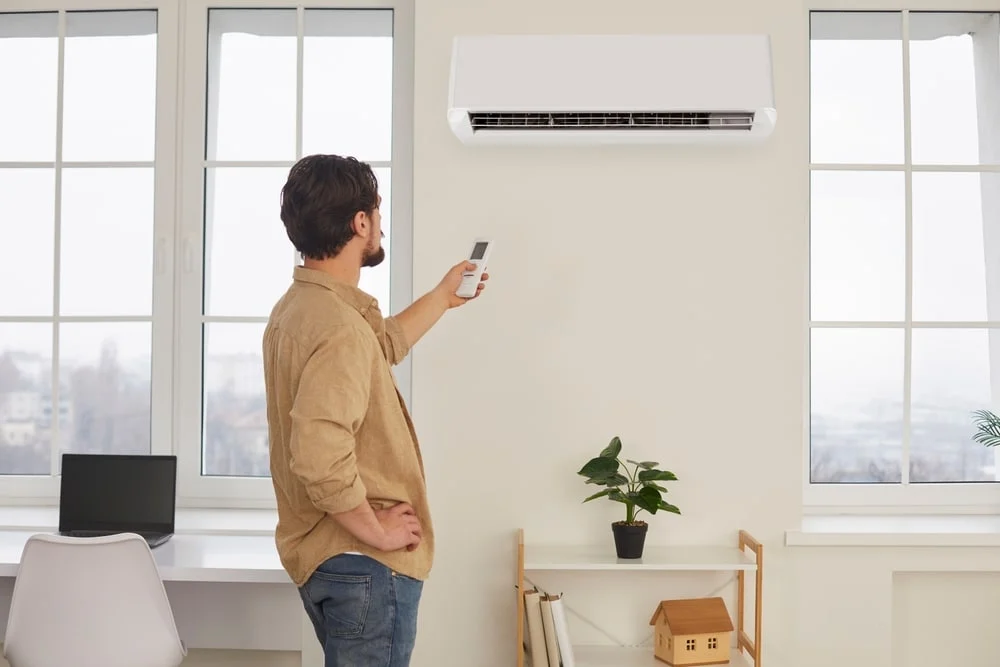
Ductless AC for older homes without ductwork is a compact indoor wall-mounted unit that cools individual rooms without requiring new ductwork.
These mini-split solutions employ an outdoor compressor and smaller indoor air handlers connected via slender refrigerant lines. They provide focused cooling, quieter operation, and greater efficiency than window units.
Installation requires little wall work and maintains historic features.
The bulk of the post is about sizing, costs, and installation tips for older homes.
Understanding Ductless
Ductless HVAC systems are air conditioning and heating alternatives that bypass ductwork entirely, so they’re ideally suited to older homes where installing ducts is expensive or invasive. Their split-system approach positions the compressor and condenser outside with one or multiple indoor units managing room-level air delivery.
These units connect via slender refrigerant piping as opposed to extensive duct work. Ductless mini-splits allow homeowners to cool or heat individual rooms or zones, frequently with no major construction. They are generally more expensive, but more efficient because duct losses can be as high as 30% in conventional systems.
The Technology
Ductless systems embrace inverter-driven compressors that offer variable-speed operation and enhanced energy efficiency. Rather than turning on and off, the compressor throttles output to demand, which reduces energy surges and stabilizes temperatures.
Refrigerant flows between the indoor evaporator coil and outdoor condenser, pulling heat from inside and expelling it outdoors in cooling mode, or reversing flow for heat. The most common units available today range from 14 to 21 SEER, with 14 as the minimum rating. Higher SEER models provide more optimal running costs over time.
- Indoor air handler (evaporator coil and fan)
- Outdoor condenser and compressor
- Refrigerant lines (copper tubing)
- Power cable and control wiring
- Condensate drain or pump
- Remote, wall controller, or smart thermostat
Controls range from handheld remotes to dedicated wall controllers, to smart AC controllers and integrated thermostats. These let you control temperature, scheduling, and setpoints by zone.
The Components
The indoor air handler, which mounts on a wall, ceiling or floor, blows room air across the evaporator coil. In the summer, it collects heat and distributes cooled air into the room.
The outdoor condenser unit is outside and connects to all indoor heads. It contains the compressor so inside noise remains low relative to window units. Refrigerant lines, a power cable and a condensate tube snake through a tiny 5–10 cm wall opening in most installs, keeping installation non-invasive and finishes intact.
Other systems use multiple indoor heads on one outdoor condenser for multi-zone control, where each head can run independent setpoints, eliminating wasted cooling in unoccupied rooms. Filter access is easy. Filters are dust-removers and quick to wash in minutes, so upkeep is less burdensome than occasional duct sweeps.
Ductless installs are often more affordable than retrofitting ducts in older homes, particularly for additions or converted spaces where preserving walls and trim is important. Quiet because the compressor is outside, and savings are real when you only condition the space you occupy.
Why Ductless Excels
Ductless is a brilliant air conditioning solution for homes without ductwork, especially older homes with boilers or radiators. They provide targeted comfort, involve little structural modification, and provide quantifiable energy and air quality advantages over retrofitting full duct systems.
1. Architectural Integrity
Ductless units retain the original features of older homes by eliminating the need for bulky ducts and significant wall or ceiling runs. Installation generally requires only a tiny 3-inch hole for the refrigerant lines, so historic moldings, plaster ceilings, and built-in woodwork remain intact.
Homeowners can supplement cooling or heat without chopping chaseways through finished rooms or stripping molding. This minimizes the chances of cracked plaster, warped trim, or damaged floorboards that typically accompany a ductwork retrofit.
2. Zoned Comfort
Ductless mini splits enable true zoning. Each indoor unit has its own thermostat and can run independently. Bedrooms can be cooled down a little cooler at night while living spaces are maintained a little warmer during the day.
That flexibility helps reduce energy waste because you only cool the areas you’re using. It’s great for additions, garages, and remodeled rooms where extending ducts would be expensive or impossible.
In older homes with hot and cold spots, tacking on a single unit to a problem room frequently addresses comfort complaints quicker and less expensively than a whole-house design.
3. Air Quality
Indoor air quality is better with ductless as many models have multi-stage filtration that cleans dust, pollen, and some bacteria. Without long runs of ductwork, there’s less opportunity for dust and leaks to circulate contaminants.
Humidity control is superior to window units. The system modulates run cycles to minimize dampness that promotes mold growth. By removing concealed ducts, we’ve eliminated a favorite secret corner for moisture to lurk and foment, reducing the potential for mold and mildew.
4. Cost Efficiency
Ductless systems reduce operating costs due to high seasonal efficiency and not having duct losses. Some houses show up to 40% energy savings compared with conventional systems.
Its installation saves money because there’s no duct layout to install in full, while maintenance is as easy as cleaning filters and doing an occasional check of the outdoor compressor.
Ductless is better than window ACs at both efficiency and quietness and better than full central systems because it doesn’t require a costly retrofit.
5. Quiet Operation
Ductless units operate quietly because the noisiest parts, such as the compressor, are located outdoors and air is distributed straight from subtly positioned wall or ceiling units.
They tend to be quieter than window units and central blowers, so they work well in bedrooms and home offices. Decibel scores tend to be a clear win for modern mini splits, providing quiet comfort.
Installation Realities
Ductless mini splits comprise an outdoor compressor/condenser and one or more indoor air-handling units. Installation is extremely simple, needing just a three-inch exterior wall penetration to connect, via a refrigerant line set, the indoor to the outdoor unit. Most single-zone installs take around 4 to 6 hours. Whole home complex multi-zone systems can typically be completed in one to two days.
The refrigerant line set can run up to 15 meters (around 50 feet) in most residential systems, providing versatility where outdoor unit location is restricted. Here we explore the practical measures, compromises, and code requirements you can anticipate in a ductless older home.
Sizing
Sizing begins with a room-by-room load calculation that takes into account the size of the room, insulation, window area, and local climate. As a rule of thumb, suggested capacities are presented below.
| Room size (m²) | Typical BTU (kilowatt) |
|---|---|
| 9–14 m² | 6,000–9,000 BTU (1.8–2.6 kW) |
| 14–23 m² | 9,000–12,000 BTU (2.6–3.5 kW) |
| 23–37 m² | 12,000–18,000 BTU (3.5–5.3 kW) |
| 37–56 m² | 18,000–24,000 BTU (5.3–7.0 kW) |
Don’t over-size either. An over-sized unit will short-cycle, waste energy, and not dehumidify as effectively. Undersizing makes spaces uncomfortable and compels long runtimes. Proper load work keeps you comfortable, saves energy, and safeguards equipment life.
Employ a skilled technician to do the calculation for older houses where insulation and air leaks differ.
Placement
Installation Realities, such as mounting indoor air handlers high on a rigid interior wall so the conditioned air is flowing across the room’s longest dimension. Installing Realities where you install the indoor unit affects how well it conditions the space.
Keep units out of direct sunlight, heat, and high traffic areas to prevent false loads and nuisance contact. Installation realities outdoor condensers require accessible, unobstructed, well-ventilated locations with a firm pad or mounting.
Favour as short and direct a refrigerant line route as possible. Every additional metre increases loss potential and leak risk. The line set is thin and pliable, so it can be snaked through existing wall cavities, closets, or floor joists. This minimizes damage to plasterwork or architectural details found in older homes.
Service realities: Install service access and clearances so filters and drains are easy to access.
Codes
Observe local building codes for electrical hookups, breaker sizing and refrigerant handling. Get any necessary permits prior to work. Inspections typically include low-voltage wiring, condensate disposal and outside unit anchoring.
Employ certified techs for refrigerant charge and leak testing. Meet safety and environmental regulations. Consult manufacturer installation guides and warranty details. Not following them can void coverage.
For historic homes, work with installers who are aware of any unique code regulations and preservation techniques.
System Options
Ductless systems and their closest competitors differ in terms of capacity, price and ease of installation. The approach you choose depends on room count, layout, local climate and budget. Here are the best system options, what they do best and how they stack up in old homes without ductwork.
Single-Zone
Single-zone ductless mini-splits cool or heat a single room with one indoor head and one outdoor condenser. They’re great for home offices, master bedrooms, or small additions where running new ductwork doesn’t make sense.
Installation is typically fast. A single indoor-outdoor pair can be mounted and piped within a few hours, and a 2-3 zone job usually finishes within 1-2 days. Single-zone units are inexpensive up front and tend to cluster near the bottom of the price spectrum.
They provide tight, targeted temperature control and can provide energy savings when you only want to cool or heat occupied rooms. These days, single-zone heads commonly have SEER ratings in the range of 16 to 28 and HSPF in the range of 8 to 14, so efficiency can still be substantial compared to window units.
For cold weather, choose units rated to -15°F or lower for dependable winter performance. Maintenance is straightforward: clean filters, check condensate lines, and inspect refrigerant lines periodically. Single-zone systems bypass duct losses and limit airborne dust compared to older ducted systems. They still need regular maintenance to stay efficient.
Multi-Zone
Multi-zone mini-splits connect multiple indoor handlers to a single outdoor condenser, so you can cover your entire home duct-free. One outdoor unit can support living rooms, bedrooms, and kitchens with individual temperature control in each zone.
This arrangement makes it easy to control in multi-level or unconventional layout homes and minimizes the look of multiple window or portable units. Multi-zone is more installation time and cost than a single zone and goes up in price with the number of zones.
They typically take up less space and appear sleeker than a lot of their stand-alone counterparts. Look for high-end multi-zone systems to hit SEERs in the 20s with good components. Larger systems or more complex setups can need additional line length and capacity balance planning.
Multi-zone systems are still relatively low-maintenance compared with their ducted counterparts. They do require filter cleaning and periodic professional inspections. Standard multi-zone work for a 2 to 3 zone system is completed in one to two days, which helps reduce disruption.
Alternatives and advanced options
- Portable and window ACs are cheap and quick, but they are less efficient, noisier, and limited to single-room use.
- Through-the-wall units are more permanent than window units and have similar limits.
- High-velocity HVAC uses approximately 2-inch flexible tubes to deliver conditioned air. It is nice for retrofits but typically maxes at 14 to 18 SEER.
- VRF systems are scalable, efficient for large homes, and offer precise control. They cost more and need specialized installers.
| System | Key Features | Best Use | Typical Efficiency |
|---|---|---|---|
| Single-zone mini-split | One indoor, one outdoor; quick install | Single room, office | 16–28+ SEER |
| Multi-zone mini-split | Multiple handlers to one condenser | Whole-house without ducts | 20+ SEER possible |
| Window/portable | Low cost, plug-in | Temporary or small rooms | Lower SEER |
| Through-the-wall | Semi-permanent | Rooms with exterior walls | Moderate SEER |
| High-velocity | 2-inch tubes, retrofit friendly | Large older homes | 14–18 SEER |
Long-Term Ownership
Mini splits need a fraction of the routine maintenance of ducted HVAC. Free of ducts that can leak, collect dust or mold, it’s merely filter care, condensate management and mechanical parts checks that need tending. From an energy perspective, mini splits can consume as much as 60% less electricity than conventional electric resistance systems, which reduces operating costs in the long term and generally compensates for greater initial investments.
Lifespan and efficiency vary based on usage, quality of equipment, and how well the home itself is conditioned. Insulation, window types, and sun exposure all impact the load the system must bear.
Maintenance
Clean or replace air filters every 2-4 weeks in active seasons to maintain good airflow and indoor air quality. Clogged filters make the blower work harder, leading to less efficiency and a shorter component life. Check and clear condensate drains. A clogged drain can lead to water leakage, staining, or microbial damage that spoils indoor air quality or finishes.
Have a professional inspection once a year to check refrigerant levels, controls, and overall system performance. Techs test for leaks, calibrate thermostats, and measure airflow. Clean indoor air handlers by removing dust and inspect the outdoor condenser for leaves, dirt, and debris that inhibit heat exchange.
Premium filters can reduce allergens and provide long-term health benefits, but they have to be changed on a schedule in order to be effective.
Repairs
Typical symptoms are confirmed refrigerant leaks, defective temperature sensors or electrical faults. These frequently present as loss of cooling, uneven temperature distribution or error codes. Swap out worn components—fans, thermostats, or circuit boards—as soon as diagnostics indicate them.
Otherwise, delay can lead to compressor failure, which is expensive. Act fast at the first suspicion of trouble—strange noises, stubborn error codes—to prevent bigger failures down the road. Maintain a repair history log, including service dates, parts replaced, and refrigerant charges for warranty claims and returning technicians.

Refrigerant lines can last a long time but will likely require recharge or replacement at some point. That cost should be incorporated into your long-term ownership calculations.
Mini split replacement costs depend on the complexity of the system. Expect to budget anywhere from 8,500 to 20,000 in most markets for a full swap depending on zones and piping runs.
With proper maintenance, a few systems will last 20 years or more, but most homeowners swap units after 10 to 15 years. Think about a home warranty plan that covers ductless equipment or additional coverage for compressors and refrigerant lines to offset shock costs.
Preserving Ambiance
Older homes frequently have layered details — moldings, wainscot, exposed beams, period finishes — that owners want to maintain while introducing climate control. Maintaining that look involves selecting systems and locations that minimize alteration to walls, trim, and lines of sight. Ductless mini-splits and high-velocity HVAC systems are both viable because they avoid big sheet-metal ducts and large wall cuts. Therefore, they tend to be the first options to consider when original architecture is to be preserved.
Integrate ductless mini splits discreetly to maintain the historic or aesthetic appeal of older homes
Keep indoor units where they hang out of direct sight but still service the room. Over door frames, inside pantry-style closets with return grills, or high on short wall runs can conceal a unit without impeding airflow. For rooms with ornate plaster or thin walls, surface-mounted conduit may snake along attic joists or behind baseboards and be painted to match.
In a Victorian parlor, a slim, high-mounted unit painted to match the crown molding preserves the eye line while cooling the space.
Select indoor unit styles and finishes that blend with existing décor and architecture
Select low-profile, flush-mounted or slim-line units in neutral tones to coordinate with period color schemes. Other folks make custom panels or wood-look covers that can make units look like cabinetry or trim. In a craftsman bungalow, a matte white unit above built-in shelving reads as joinery, like a brushed metal finish to go with mid-century room hardware.
Whenever you can, inquire about panels that can be painted by a professional restorer so the unit recedes into the wall color scheme.
Use compact air handlers and minimal wall openings to avoid visual clutter
Tiny air handlers and mini refrigerant lines eliminate big wall chases. High-velocity systems use small-diameter ducts, so the air distribution network can be run through floor voids or closet backs without cutting plaster. For mini-splits, one small penetration of about 5 to 8 centimeters in diameter is usually sufficient for lines and condensate; cover that with a clean escutcheon plate.
For example, routing lines through an attic cavity and dropping them into a closet keeps external walls unchanged and keeps visual clutter to a minimum.
Retain the charm and character of your old house while enjoying modern climate control
Schedule trim-ins with carpenters and preservationists to save moldings and finishes. Use reversible fixes: surface raceways that can be removed later, painted covers, or attic-mounted units that leave walls intact. Historic homeowners like these strategies because they maintain original woodwork and plaster while introducing efficient, zoned comfort.
Mini-split and high-velocity options allow homeowners to strike a harmony of efficiency and conservation without significant design sacrifice.
Conclusion
Ductless AC is perfect for older homes that have no ductwork. It cools rooms quickly and consumes less energy than window units. Mini-split indoor heads mount high on walls or low on floors. Outdoor compressors remain outside and connect to each head with skinny tubes. Installation time ranges from a couple of hours to a day for one to two zones. Choose models with inverter compressors and multi-zone capabilities for even finer control and lower bills. Expect modest wall changes and paint touch-ups to maintain a home’s appearance. Enjoy quiet operation and consistent comfort throughout your rooms. For many owners, the result is clear: modern comfort with little change to the house. Local installers provide two quotes and a good warranty unit.
Frequently Asked Questions
What is a ductless AC and how does it work in an older home?
A ductless AC (mini-split) has an outdoor compressor and one or more wall or ceiling units inside. Each indoor unit cools a particular room. Refrigerant lines and a small condensate drain connect units through a 5 to 10 cm hole in the wall.
Can ductless systems be installed without major remodeling?
Yes. Installation typically involves just a couple of small holes in the wall and a concrete pad or brackets for the outdoor unit. Zero ductwork means zero disruption and quicker installation than traditional central systems.
Are ductless systems efficient for older houses?
Yes. Ductless systems sidestep duct energy loss and utilize inverter compressors for consistent, efficient performance. They’re usually cheaper to operate and cool rooms more quickly than window units or baseboard electric heaters.
How many indoor units will my home need?
It’s contingent upon room size, layout, insulation, and sun exposure. One indoor unit covers 15 to 40 square meters. A professional load calculation provides the most precise suggestion.
Will ductless units preserve my home’s historic character and ambiance?
Yes. Indoor units are compact and can be hidden away. Certain models have low-profile or ceiling cassette options to keep visual impact minimal and preserve those historic interiors!
What are typical maintenance needs and lifespan?
A filter should be cleaned annually and the system should receive professional checks every so often. With maintenance, refrigerant checks and the occasional part replacement, a ductless system can last 15 to 20 years.
Are ductless systems noisy and do they affect indoor air quality?
Today’s ductless units are quiet running, frequently below 30 to 40 dB, and come equipped with multi-stage filtration options. With regular routine filter cleaning and occasional professional servicing, ductless systems maintain high air quality and low noise levels.