
Key Takeaways
- Determine your absolute must-have appliances and systems to be powered and calculate the total running and starting wattage to size a generator correctly, accounting for potential future upgrades and surge loads.
- Compare fuel options by availability, cost, storage, and compatibility with your site. Select the fuel type that provides the optimum balance of reliability and convenience.
- Compare whole home generator brands on engine reliability, enclosure quality, noise, power stability, and fuel consumption to align performance and longevity with your household demands.
- Check warranty, parts availability and service network. You want to make sure you have long-term support, quick repairs, and resale value.
- Schedule installation with professional, certified technicians. Adhere to local codes. Select safe siting for your generator with convenient accessibility and maintenance access.
- Keep a history of your maintenance schedule, allow for remote monitoring and updates, and track total cost of ownership to safeguard your investment and ensure dependable operation.
About: how to pick a trustworthy unit for 24/7 power. It addresses important considerations such as fuel source, kW capacity, transfer switch compatibility, warranty duration, and service network availability.
It contrasts noise, installation costs in metric estimates, and maintenance. Readers get a crisp checklist for matching household load, budget, and local service options pre-purchase.
Understanding Your Needs
Selecting the right whole home generator begins with a clear articulation of what you need it to do and how you intend to utilize it. Detail what appliances and systems must stay on, if upcoming add-ons will shift demand, and if you require entire-home coverage or just key circuits.
A professional installer will verify your requirements and provide a complimentary consultation. Financing options are typically available to distribute the expense.
Power Calculation
Write down all the devices you want to be powered and record their running and starting wattages. Think lighting, kitchen appliances, water heater, heat or cool, medical equipment, sump pumps, and electronics.
For instance, a standard central air handler might require 3,500 watts running and between 7,000 and 10,000 watts starting. A refrigerator might be 600 watts running and 1,800 watts starting.
Use online calculators or manufacturer charts to add running loads. Then add the highest starting wattages for motors. Account for surge wattage for HVAC compressors and refrigerators and for more sizable systems like well pumps.
Round the final total up to the next practical generator size. If you’re close to 9,500 W, select a 10,000 to 12,000 W model to give yourself some breathing room for surprise loads.
A home standby generator needs to be sized properly to safeguard sensitive equipment and prevent overload trips. Consulting with an electrician or installer can confirm your list and suggest a generator size that works with your plans and budget.
Fuel Source
Look at natural gas, propane, and diesel for availability, cost, and storage requirements. Check local utility access: natural gas lines may allow continuous fuel without refueling, propane needs on-site tanks and refills, and diesel needs secure storage and periodic delivery.
Know what you need. Check generator models for the ability to run on your fuel of choice. Then consider long-term fuel cost and reliability in your area.
| Fuel Type | Availability | Cost (relative) | Storage/Handling |
|---|---|---|---|
| Natural gas | High where mains exist | Low to moderate | No on-site storage; continuous supply |
| Propane | Moderate (delivery) | Moderate | On-site tanks; seasonal refill planning |
| Diesel | Variable | Higher | On-site tanks; needs treatment and safe storage |
Physical Space
Check local zoning and HOA guidelines for location, noise restrictions, and screening. A lot of places limit distance from property lines and need permits.
Make sure to plan safe clearances from windows, doors, and vents to prevent exhaust buildup. Most codes require some meters of separation.
Space for access for servicing and refueling is important so technicians can operate safely and you can top up tanks.
Take into account unit size and pad requirements. Heavier units require reinforced bases and room for air flow. Having it installed by a professional ensures code compliance, safe exhaust routing and proper hookup to the transfer switch.
Core Brand Attributes
Evaluate core brand characteristics to determine compatibility with your home and values. Prioritize reputation, breadth of product, real-world performance, and how brands address safety, efficiency, and continued support before you compare models.
1. Engine Reliability
Look into who makes the engine and their experience. Major OEMs frequently release service histories and failure rates. Engines rated for continuous duty and backed by long-standing field data are best for whole-home use, when runtime can approach 1,000 to 3,000 hours over 10 or more years.
Verify service intervals and whether standard tasks, such as oil changes and filter swaps, are easy for local mechanics. Brands that provide transparent maintenance schedules and modular components minimize downtime. Look for manufacturers that employ stringent quality assurance and durability testing, and that match engines with a suitably rated ATS to prevent stress during repetitive transfers.
2. Enclosure Quality
Check enclosure materials and coatings carefully. Long-lasting, rust-proof coatings and stainless or treated steel panels guard against salt, rain, and humidity and assist the unit in lasting in the 10 to 30 years range.
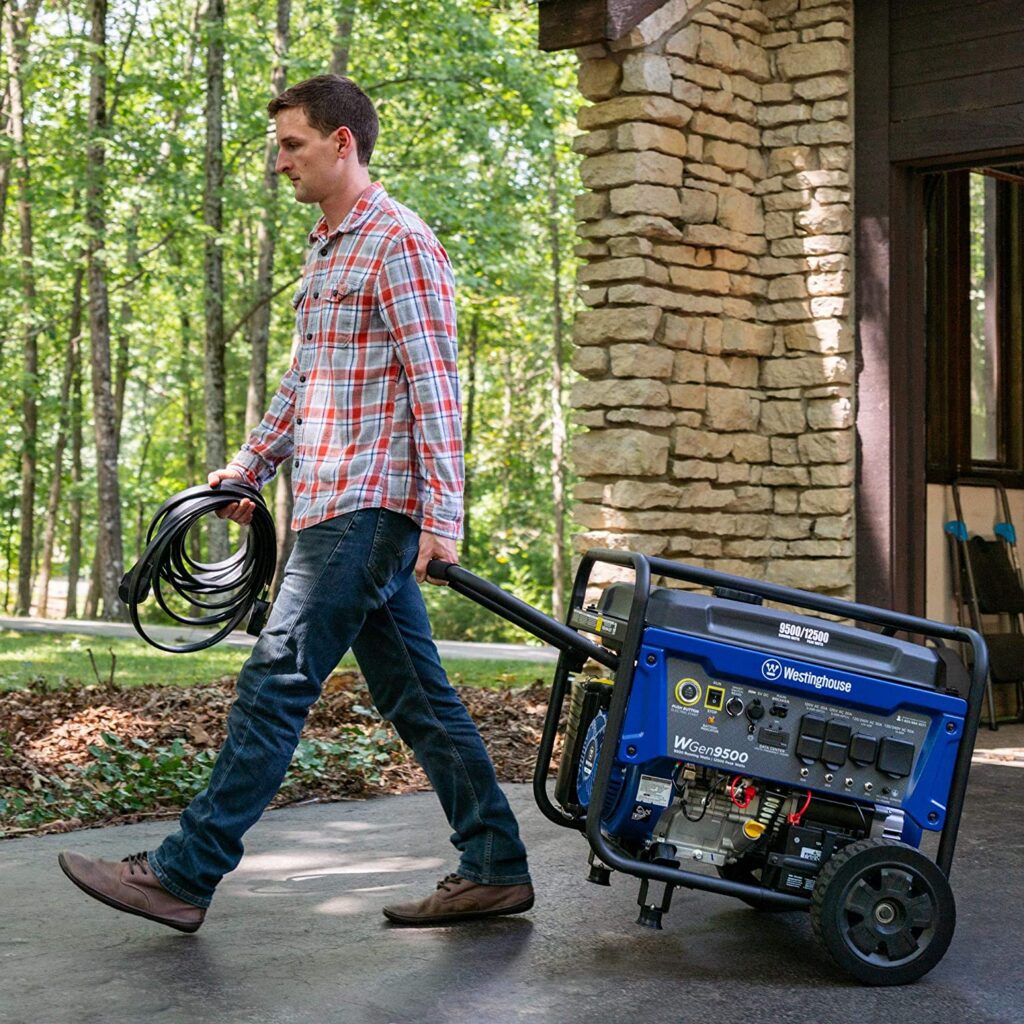
Search for sound insulated or all-weather enclosures and ensure they comply with local codes for wind, fire, and flood resistance. Warranty conditions should specifically address rust, paint failure, and seals, with longer warranties indicating confidence in materials.
Make sure access points and service doors are conveniently positioned so technicians can work without having to remove large panels.
3. Noise Output
For example, some manufacturers list published dB ratings at common loads. Many residential generators run in the 60 to 70 dB range, and there are quieter options available.
Brands that publish noise specs at idle, 50% load, and full load make comparisons easier. Explore noise minimizing technology such as composite barriers, high-tech mufflers, or variable-speed operation.
Refer to your local ordinances to see what is permissible and think about placement to minimize neighbor impact. Transparent noise data and field reviews help you set expectations for daily life and sleep.
4. Power Stability
Look for brands that provide “clean power” with total harmonic distortion below 5% for sensitive electronics. Check for voltage regulation, inverter or AVR, and frequency control under different loads.
User feedback regarding brownouts, flicker, or unstable outputs during extended outages provides real-world performance. Brands that test under realistic load changes and publish control specs are more likely to deliver consistent power to appliances, HVAC, and home offices.
5. Fuel Consumption
Contrast fuel consumption at various loads and determine expenses based on local fuel rates for natural gas or propane. Search for eco-mode or variable-speed features to trim use during light loads.
Weigh runtime with tank size or supply availability. Longer runtimes mean less frequent refueling but can increase initial price. Manufacturer fuel curves and third-party test data assist in approximating operating costs for common outage situations.
Evaluating Long-Term Support
Considering long-term support is about more than warranty duration. It encompasses service access, parts, software updates, installer expertise, and how a brand supports systems for decades.
Think about how the manufacturer deals with installation queries, emergency repairs, regular maintenance, and upgrades to controls or firmware. Include local ordinances, noise restrictions, and your utility configuration as well, as those impact long-term service requirements and expenses.
Warranty Terms
Evaluate long term support. Compare warranty lengths and what is covered for engines, alternators, controllers, and transfer switches. While a few brands provide five to ten year limited coverage on significant parts, some have divided coverage with longer terms on the powertrain and shorter terms on electronics.
Locate clear outlines of exclusions. Fuel system components, consumables such as filters, and harm from incorrect installation or weather could be omitted. Find out if labor and travel are covered for onsite repairs or if the homeowner pays service call fees.
Transferable warranties boost resale value. Verify the process and any registration deadlines so a potential buyer can pursue coverage.
Service Network
Map authorized service centers near you and see how many technicians each have. A robust national or regional network cuts response time and guarantees its techs know particular brand quirks.
Search for 24/7 emergency hotlines and technicians on the move because outages don’t keep office hours. Inquire about training and certification for technicians. Brands that mandate factory training often have more consistent repairs.
Local installer experience matters; a licensed local team should do the load evaluation, recommend transfer switch sizing, and plan safe installation. Choose brands that have a heavy service footprint in your region as well to minimize trip charges and accelerate repairs.
Parts Availability
Make sure replacement parts—filters, batteries, voltage regulators, control modules—are common and easily sourced. Look into lead times for key components. Some legacy model parts can take weeks or even months to source.
Make sure parts are stocked regionally or can be shipped fast, particularly in advance of seasonal storms. Brands with transparent parts catalogs and easy ordering minimize downtime.
Think about aftermarket support and if technicians could retrofit newer controllers into legacy units. Long term, local parts and service access is key because a well-maintained standby generator can easily run 20 to 40 years, as long as it continues to receive care and parts are replaced as necessary.
Installation Nuances
Installation of a whole home generator differs quite a bit based on brand, model, and site. Installation nuances include the unique mounting, fuel, and electrical requirements each brand demands. Brands can vary on needed clearances, routing for fuel lines, transfer switch types, and control wiring.
Consider load calculations. The number of appliances and home square footage determine size needs, with common units between 10,000 and 25,000 watts. In most projects, gear, materials, and labor account for roughly 63% of the expense, so budget for site work as much as the actual generator itself.
Certified Technicians
Installation nuances and insist on factory-trained or certified installers to protect warranties and for proper installation.
Before you schedule any work, ask for factory training or certification. Verification is simple: request credentials, trade license numbers, and documented factory courses. After installation, ask for a walkthrough where the technician demonstrates how to start, test, and perform basic care. This minimizes mishandling and teaches homeowners routine checks.
Have the technicians leave you notes and wiring diagrams of what they completed with serial numbers, fuel hookups, test logs, and so on. Documentation aids in future service and resale value. Verify who will do annual servicing. Routine inspections maintain efficiency and allow for a 15 to 20 year lifespan with proper maintenance.
Code Compliance
Visit national, state, and local codes that will affect generator placement, fuel storage, ventilation, and noise limits. Codes vary, with coastal or flood-prone areas having additional requirements. Secure any needed permits in advance and have copies.
Make sure your selected brand has models that comply with those codes and get your installer to provide written confirmation of code compliance. Inspections are usually at rough-in and final for permitting. An installer’s paper checklist that ties every permit and inspection date can help you coordinate with agencies and avoid expensive rework.
Siting Requirements
Respect manufacturer guidelines on minimum clearances, exhaust routing, and airflow to avoid heat build-up and provide service access. Don’t install in low or flood-prone locations. In beach or coastal areas, anticipate elevated pads or flood resistant mounting. Concrete slabs are typical. Occasionally, for larger units, reinforced or thicker pads are required.
Design your siting to provide convenient access to fuel lines, transfer switches, and the home’s electrical panel. Record your siting decisions with images and schematics. This assists future service and insurance or warranty claims.
For extreme climates, such as very hot summers above 100º or heavy snowfall, include weatherproofing, enclosures, or heated pads as necessary to maintain reliability.
The Ownership Experience
Owning a whole home generator isn’t just about the buy and install — it’s about the habits, the equipment, and the documentation that maintain the system dependable and secure through long outages and seasonal hazards. It details the reality of navigating maintenance, remote monitoring and software maintenance to ensure the generator provides the runtime and protection one expects.
Maintenance Schedule
Develop a checklist of daily, weekly, monthly, and yearly tasks with defined descriptions and who owns them. Add to that weekly test runs, oil and filter checks, battery voltage readings, fuel system inspection, air filter changes, and a visual check for corrosion or loose connections. Certain generators can operate 16 hours straight without a hitch.
These regular sweeps assist in ensuring it is still running and identifying any concerns before they become real issues. Record service history to sustain warranty coverage. Log dates and parts replaced, technician names and invoice numbers. Manufacturers are known to demand evidence of routine maintenance in order to stand behind warranties.
Set reminders for annual professional servicing. A certified technician can test transfer switches, load handling, and emissions controls. Maintain a records log book for maintenance and repairs. Note down whenever your generator failed a weekly test or a red service light showed up, and take corrective action.
Schedule seasonal work in advance of dangerous times, such as hurricane season or winter storms. By shifting inspections to immediately prior to these seasons, you decrease the probability of surprise breakdown at peak demand.
Remote Monitoring
Allow mobile application or web-based tracking to monitor status. Select systems that indicate runtime hours, fuel level, battery health, and fault codes. Configure alerts for faults, low fuel, or maintenance so you receive actionable information instead of general warnings.
Configure notifications for faults, low fuel or maintenance needs and direct them to multiple contacts if required. Set up escalation rules for critical faults that can cause generator shutdown during a long outage. Keep in mind that for certain models, load planning is critical to avoid overloads and preserve runtime.
Alerts can notify you to shed nonessentials.
| Brand | Ease of Setup | Reliability of Remote Features |
|---|---|---|
| Brand A | Simple app onboarding, guided pairing | High — consistent notifications, low false alarms |
| Brand B | Requires hub and setup with dealer | Medium — occasional sync delays reported |
| Brand C | Web portal plus mobile app, steeper learning | High — robust data, needs initial configuration |
Rate brands for ease of setup and reliability of remote features prior to purchase. A trusted app minimizes visits and accelerates troubleshooting.
Software Updates
Just register your generator with the manufacturer, so they can notify you of updates and validate your warranty. Plan regular firmware or software updates and install patches as they become available to optimize performance and security.
Note all updates in your maintenance records so subsequent service calls mention the correct firmware level. Updates can address issues such as bugs that cause a generator to fail to start during tests or enhance load management when powering refrigerated medications, sump pumps, or other critical things.
Beyond the Spec Sheet
A spec sheet will tell you power ratings and features. Selecting a brand requires further probing. Begin by examining how brands address customer requirements in the long term. Look up where their repair centers are, how easy it is to get spare parts, and how long the warranty is in the countries you live or travel in.
A brand with a broad service network and straightforward warranty coverage minimizes downtime when a unit does require servicing. See how quickly they respond to service calls and if the techs are factory-trained. Brands that publish service manuals and parts lists online are easier to fix and sell better used.
See beyond the spec sheet. Read real-life testimonials and case studies to witness how units perform in practice. Seek out reviews that specify the load type, wattage, and run-time used during testing, so you can map results to your own household needs.
Case studies that demonstrate performance during extended outages, seasonal storms, or grid instability are particularly helpful. Look for notes about noise and mounting arrangements. Some generators are nearly silent and safe for dense neighborhoods or RV parks, whereas others exceed the 70 dB barrier and invite complaints.
Articles that present runtime on actual fuel loads assist you in making decisions about fuel type and tank sizes. Think beyond the spec sheet to total cost of ownership, not just sticker price. Don’t forget installation costs, which depend on your locale and can involve permits, concrete pads, or transfer switch wiring.
Factor in routine maintenance: oil changes, filters, and periodic load tests. Fuel costs and fuel availability matter. Diesel, natural gas, propane, and petrol all have different prices and storage profiles. Estimate expected lifespan. Consumer-grade portable units often run between 1,000 and 3,000 hours with good care, while whole-home stationary systems typically last longer.
Determine annualized cost per reliable hour and compare that with options such as battery-based backup that can reduce utility bills and cut runtime fuel consumption. Consider something less concrete but potentially more important: ease of use, peace of mind, and compatibility with sensitive electronics.
Inverter-equipped systems provide clean, stable power with very little frequency fluctuation, which is important for computers and medical equipment. Remote monitoring and auto start make the entire experience more convenient and less hands-on. Noise, a useful quality-of-life consideration, varies significantly, with sub-50 dB models being appropriate for close residential proximity.
Consider resale value and brand reputation for reliability when projecting long-term contentment.
Conclusion
Selecting a whole-home generator comes down to fit, reliability, and real-world service. Make generator size match your home’s true load. Favor ones with long track records, transparent parts pricing, and local dealer support. Choose a fuel type that fits your availability and budget. Verify warranty conditions and study owner accounts for how units withstand hard usage. Watch installation details: transfer switch type, site preparation, and noise limits change real costs. Consider maintenance access and parts lead time. For instance, a brand with local technicians and stocked parts minimizes downtime. Another brand with a long warranty and simple controls lowers stress.
If you like, I can do a side-by-side comparison of three top brands or construct a quick checklist for your home.
Frequently Asked Questions
How do I pick the right generator size for a whole home system?
Match the generator’s rated output to your critical and aggregate load. Use a load calculator or bring in a professional electrician to enumerate appliances and starting currents. Right-sizing saves you money and guarantees power when the grid goes down.
Which brand attributes matter most for long-term reliability?
Most important is a time-tested engine design, quality components, and a durable enclosure material. Seek out brands with steady track records, third-party certification, and years of good owner reviews.
How important is warranty and service coverage?
Super important. A robust warranty and service network minimizes downtime and repair expenses. See what is covered, for how long, and if parts and technicians are local or regional.
Should I choose air-cooled or liquid-cooled systems?
Select by power requirements and climate. Air-cooled units meet smaller loads and milder climates. Liquid-cooled units accommodate higher capacities and extended run times. Consider noise, maintenance, and installation space as well.
How do I evaluate installation quality and costs?
Get quotes from licensed installers who provide site assessments, permits, and load testing. Compare scope, included components, and warranty on workmanship. Cheap installs often cost more over time.
What ownership costs should I expect over the generator’s life?
Plan for fuel, routine maintenance, occasional parts, and inspections. Experience lower annual costs for standby propane or natural gas compared to diesel. Consider service contracts for fixed costs.
How can I verify a brand’s credibility before buying?
See for yourself with independent reviews, industry certifications, and third-party lab test results. Check dealer and contractor networks. Request references and check out case studies or long-term owner reports.