

Key Takeaways
- Level 1 chargers utilize typical home outlets and are simple to install. Level 2 chargers deliver significantly quicker charging and might necessitate professional installation and electrical enhancements.
- Charging speed and convenience vary based on your daily commute, vehicle type, home schedule, and other EVs in your household.
- Evaluate your home’s electrical capacity and consult a certified electrician prior to installing a charger to ensure safety and adherence to local regulations.
- Level 2 charging’s upfront and running costs are higher than Level 1’s. Long-term savings and incentives help counterbalance those costs.
- Intelligent chargers and tie-ins with renewable sources can boost efficiency and foster sustainable transportation habits.
- Thinking ahead about battery and grid innovations can optimize your investment and set you up for an increased home value as EV technology develops.
Level 1 and level 2 EV chargers both make sense for home charging, yet each offers varying speeds, costs, and power requirements.
Level 1 EV chargers utilize a regular home outlet and charge at a slower rate. Level 2 EV chargers require a dedicated plug and provide quicker charging.
For families with extended commutes or multiple EVs, Level 2 usually makes more sense. The following sections illustrate what distinguishes them and guide comparing which charger suits you best.
Charger Fundamentals
Level 1 and Level 2 EV chargers use different electrical supplies and hardware, which influences charging speed, cost, and feasibility for different households. Selecting the appropriate charger is based on your EV model, driving habits, and electrical service at home.
The table below outlines key differences:
| Feature | Level 1 Charger | Level 2 Charger |
|---|---|---|
| Voltage | 120V (standard outlet) | 240V (dedicated supply) |
| Typical Power Output | 1.2–1.4 kW | 3.6–19.2 kW |
| Full Charge Time (BEV) | 20 to 50 plus hours | 6 to 10 hours | | Full Charge Time (PHEV) | 5 to 10 hours | 1 to 3 hours | | Installation | Plug-and-play | Possibly requires an electrician | | Use Case | Overnight top-ups, backup | Daily use, faster charging |
Power Output
Level 1 chargers utilize a standard 120V household outlet and provide a relatively low charge rate of 1.2 kW to 1.4 kW, which is sufficient for plug-in hybrids or backup charging. In contrast, Level 2 chargers operate on 240V and deliver anywhere from 3.6 kW to 19.2 kW, with most home EV chargers providing approximately 6.0 kW at 24 amps. This greater amperage leads to faster charging speeds, allowing a 32 or 40A Level 2 charger to fully charge most new EVs in a single overnight session, even with larger battery packs.
Your residential electrical panel plays a critical role in this charging setup. Many older homes lack spare capacity, making it essential to determine if your panel can support a dedicated 240V circuit. This dedicated circuit is vital to prevent overloading and ensures safe and reliable EV charging, giving peace of mind to EV owners.
For optimal performance, it’s crucial to assess your charging needs. Upgrading to a higher amperage charger can significantly enhance your daily charging experience, especially for those with minimal charging needs. Ensuring your home can accommodate a fast charger will provide you with a streamlined charging solution that meets your electric vehicle charging levels efficiently.
Charging Speed
A Level 1 charger increases range by roughly 5 to 8 kilometers per hour, making it possible for a near-empty battery electric vehicle to take more than two days to charge fully. For most, that’s still only useful for plug-in hybrids or as a backup.
Level 2 chargers, however, inject 25 to 50 kilometers per hour, making full overnight charging achievable. Charging speed is influenced by your battery’s capacity, existing charge level, and charger output. Most people keep the battery between 20 and 80 percent for battery health.
If your daily drive is less than 50 kilometers, Level 1 may be sufficient, but longer commutes or multiple electric vehicles in a household make Level 2 far more convenient. Big batteries take longer, so quick charging is an obvious advantage for active households. Faster charging translates into less waiting and more flexibility for spur-of-the-moment jaunts.
Equipment
- Level 1:
- OEM charging cable (usually comes with the EV).
- Typical grounded 120v wall outlet.
- Minimal installation required.
- Level 2:
- 240V charger station.
- Upgraded circuit and breaker.
- Pro installation suggested.
- Optional smart charger with Wi-Fi/Bluetooth for scheduling and tracking.
Level 2 installs are trickier, frequently requiring a licensed electrician to verify safety and code standards. Smart chargers can assist in controlling charging times, reducing expenses and monitoring energy consumption.
EVs cannot always use the full output of a Level 2 charger, but most models are compatible with common connectors such as Type 1 (J1772).
Your Lifestyle Match
Matching an EV charger to your lifestyle involves considering how you drive, what you drive, and how your home EV charging setup accommodates your family’s needs. Evaluate your daily mileage to find the right EV charger that’s the best match.
1. Daily Travel
If your commute is less than 40 kilometers, a Level 1 charger could suffice for your daily charging needs. Many EV owners simply plug in at night and wake up to a full charge in the morning, especially if they drive a short distance most days. For instance, if you’re a car user who runs errands or has a small commute, you’ll likely find that a Level 1 charger fits the bill, assuming you can leave your vehicle plugged in for 10 to 12 hours.
For longer commutes over 100 kilometers, a Level 2 charger is a more sensible choice. It offers faster charging speeds, charging four to eight times faster than Level 1, enabling you to fill up your battery even without a long charging window. This is particularly beneficial if your travel patterns are inconsistent or if you frequently take extended trips. Relying on slow charging could leave you feeling range-stingy.
Charging patterns depend on your daily drive frequency and distance. Short, predictable trips can accommodate slower charging, but longer or irregular trips typically necessitate a charging setup that is quicker and more efficient.
2. Vehicle Type
Different EVs, different needs. Hybrids with smaller batteries can usually get by with Level 1, while fully electric models with bigger batteries enjoy the speed of Level 2. If your EV boasts a large battery, it will require more time and wattage to charge. Level 2 provides you more flexibility.
Others consume more battery for heating or cooling, particularly in extreme climates. This additional activity can imply you require speedier charging to stay on top. Before selecting a charger, verify your car’s specs to ensure it works with the charger and your region’s power grid.
3. Home Schedule
Regular lifestyle charges can be scheduled. Overnight charging on a Level 1 charger will work for many, particularly if you’re home for long stretches. If your power company provides off-peak rates, you save money by charging at night.
If your schedule is more haphazard, Level 2 offers the flexibility. You can quickly charge anytime you’re home, so you’re less tethered to a fixed schedule.
4. Household Fleet
Once you have more than one EV in the home, one Level 1 charger just can’t keep up. You’ll most likely need a Level 2 charger, or maybe even multiple ones, to accommodate everyone in the household. That accelerates charging for all vehicles and guarantees no one waits too long.
Controlling cost and energy usage kicks in as more cars cohabit the system.
5. Climate Impact
Both charge levels consume electricity, and your method of charging impacts your carbon footprint. Using renewables, like solar, can reduce the impact even further. Level 2 chargers are typically more efficient, so less energy is wasted while charging.
The perfect setup backs eco-friendly transportation and reduces your energy footprint.
Installation Realities
Choosing between Level 1 and Level 2 EV chargers for your home involves more than just speed; it requires aligning your home’s infrastructure with your specific charging setup. Installation realities also introduce practical considerations that impact cost, safety, and the overall performance of your home EV charging.
Electrical Needs
Installation Realities for EV chargers vary significantly between Level 1 and Level 2 options. Level 1 chargers utilize a regular 120V outlet, which most homes already have. They only draw 12 to 16 amps, allowing you to plug them into a pre-existing outlet in your garage or driveway. This charging setup is straightforward but slow, contributing approximately 6 to 8 kilometers per hour of added range for the EV owner.
On the other hand, Level 2 chargers are a different beast. They require a dedicated 240V circuit, similar to what you’d use for an electric stove or dryer. This means your electrical panel must have sufficient spare capacity in both amperage and breaker slots. If your panel is older or already near its capacity, upgrading might be necessary to support the faster charging speeds.
Installing a panel upgrade or new wiring can increase costs significantly, sometimes reaching as high as $5,000. However, most installations tend to average around $1,500. Breaker ratings and wire gauge are crucial for safe and efficient charging. For optimal performance, the wires must be capable of carrying the amperage the charger will pull, typically 32 to 40 amps for home EV installations.
Incorrectly sized wires can lead to overheating or even electrical fires, making it essential to consult with professionals. GFCI protection is often required, adding another layer of safety to your electric vehicle charging station.
In summary, whether you are considering a home EV charger or a Level 2 installation, understanding the electrical requirements and potential costs is vital for ensuring a reliable and efficient charging experience.
Professional Work
With a Level 1 charger, the majority of us are capable of plugging in the unit on our own. For Level 2, you’ll nearly always need to hire a licensed electrician. It means you’re frequently installing a new 240V circuit, running conduit, and maybe turning a wall or ceiling into Swiss cheese to get to the charging location.
The complexity increases if the panel is located away from the garage or parking area, or if your desired charger mount wall is brick or concrete. A pro makes sure it’s all up to code and pulls any necessary permits. This safeguards your home and may be necessary for your insurance policy.
Labor costs are regional and can be based on complexity. It’s typical for installation to add hundreds, sometimes thousands, to the total bill.
Home Readiness
Installation Realities – Before any installation, see if your home is ready for an EV charger. Check with your electrical panel. Do you have open breaker slots and do you have capacity for a new 240V circuit? If not, you might require a panel upgrade, a costly big add-on that can cause scheduling delays.
Space does matter. Your charger needs to be easily accessible from your car’s parking position and walls have to bear the unit’s weight. Thought permits and inspections are usually required for level 2 charger installation in most areas.
These regulations exist to ensure that it’s all safe and code-compliant. Permits vary in their costs and inspections can cause delays. Installation realities always check local codes before starting.
Financial Breakdown
Electric vehicle charging at home is more than simply plugging in; it involves choosing the right EV charger for your specific charging setup. Pricing varies based on multiple considerations, from installation to daily charging needs, allowing you to make an intelligent selection.
- Type and price of charger equipment
- Installation complexity and need for electrical upgrades
- Energy efficiency and charging rates
- Home electricity rates, including time-of-use pricing
- Incentives or rebates from governments or utility companies
- Features, warranty, and smart capabilities of the charger
- Frequency and length of vehicle charging sessions
Initial Cost
Level 1 chargers utilize a standard outlet, often included with the vehicle, making them the cheapest option initially. However, you may still need an electrician to inspect or upgrade your electrical panel for optimal performance, which could lead to additional costs. For EV owners with minimal daily mileage, this standard home charging method usually suffices.
In contrast, Level 2 chargers are more expensive upfront, with equipment costs ranging from $500 to $2,000 and total installation costs between $800 and $3,700. This charging setup may require dedicated wiring or panel upgrades, especially in older homes. The choice between entry-level units and smart EV chargers can significantly affect the price, as the latter often includes advanced energy management features and charging capability that enhance the overall experience.
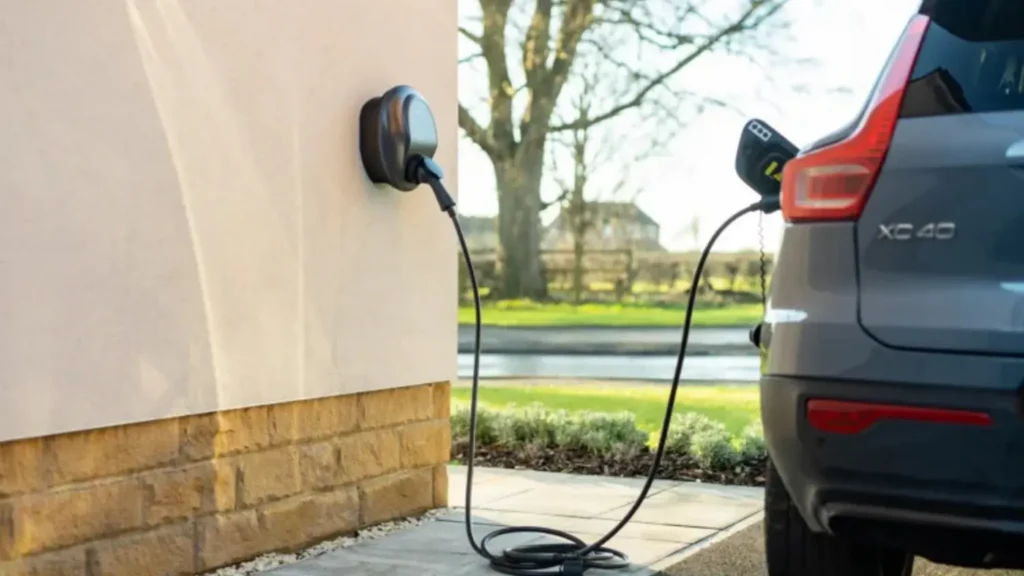
These chargers are ideal for multi-EV households or those with higher-mileage needs. While smart chargers with Wi-Fi and scheduling features can increase costs, they also provide valuable control and energy usage data, ensuring reliable EV charging for the future.
Running Cost
| Charger | Charge Rate (kW) | Usual Efficiency | Energy Cost per 100km (at $0.13 per kWh) |
|---|---|---|---|
| Level 1 | 1.4 | 85% | $2.00–$2.50 |
| 2nd Level | 7.2 | 90% | $1.80 to $2.20 |
Level 1 chargers require less power, take longer, and may result in higher losses over time due to the inefficiency. Level 2 units charge faster and more efficiently, so they consume less power per kilometer driven.
For homes with time-of-use rates, charging at off-peak hours can reduce costs even more. Most new chargers allow you to create schedules to optimize these rates. Small measures such as charging in off-peak hours, maintaining your battery at twenty to eighty percent, and avoiding overcharging go a long way towards keeping bills in check on a monthly basis.
Potential Savings
- Charging at home bypasses the expensive per-kWh rates levied by public DC Fast Charging stations, which can be two or three times the home rates.
- Using off-peak electricity rates with a Level 2 charger can reduce your charging costs by as much as thirty percent.
- A few utilities offer installation rebates, usually ranging from $100 to $500.
- Smart charging is easier on the charger and vehicle battery, which decreases those costs over time.
Home charging, in the majority of scenarios, is more affordable than public charging in the long run, particularly if you use energy-efficient equipment and smart time-of-use scheduling. Utility programs and incentives can help reduce the upfront cost hurdle, and lower energy rates at home compared to a public station add up over time.
Being mindful of your charging patterns and leveraging rebates can reduce not only your upfront costs but your ongoing expenses, making EV ownership more economical.
Future-Proof Your Home
Future-proofing is about making decisions now so your home remains functional, energy-efficient, and eco-friendly long-term. With electric vehicles on the rise, future-proofing your home with reliable EV charging options, such as a home EV charger, is one way to keep up. For most, it boils down to Level 1 versus Level 2 chargers, both of which have their own advantages and specific charging setups.
Evolving Batteries
EV battery technology just keeps on advancing. New battery designs are helping future-proof your home by not only extending driving range but also accelerating charging. With larger capacities, that’s more energy stored, so older Level 1 chargers using a standard 120V outlet often can’t keep up.
A long-range EV would take over a full day to charge using Level 1, which is not exactly great for busy schedules. Level 2 chargers, utilizing a 240V outlet, manage these larger batteries with ease, reducing charging times to just a few hours for the majority of cars. Battery tech advances will probably make Level 2 the norm at home.
Faster charging isn’t the only trend. Battery manufacturers are developing methods to extend battery life and reduce the usage of scarce resources, which benefits the environment. A few automakers have even begun recycling old batteries and converting them into energy storage or fresh packs.
These shifts might help make EV ownership even more sustainable and keep home charging relevant for years to come.
Smart Grid
A smart grid aligns electricity supply with demand in real time. Combined with smart chargers, these allow you to schedule your vehicle to charge at low-peak times when energy costs less and the grid is less burdened. Homeowners with solar panels or wind turbines get an opportunity here by scheduling charging for when their panels produce the most power.
Smart charging not only knows where you are, it measures how much energy you consume, so you can see patterns and prevent unnecessary fees. Certain systems allow you to manage charging via your phone, which makes it a breeze to change things up if your schedule shifts.
Over time, these can really start to add up, particularly in time-of-use areas.
Property Value
EV charging adds a special appeal to a broader range of home buyers. Almost everyone is shopping for a home with modern amenities now, and an EV charger says you’re ready for tomorrow. Some buyers, particularly those who prioritize sustainability, could even spend extra for these enhancements.
For homeowners thinking long-term, these upgrades can translate into a more robust resale value. As electric vehicles become more ubiquitous, homes with charging integrated into the design will be the ones that stand out.
Even if you don’t intend to sell anytime soon, a Level 2 charger is a smart investment that can reward you later.
Beyond The Basics
Deciding between Level 1 and Level 2 EV chargers involves more than just speed; it encompasses energy efficiency, battery health, and impacts on the broader energy grid. For EV owners seeking reliable EV charging solutions, these factors are crucial for ensuring their electric vehicle’s longevity, keeping expenses low, and maintaining a conscientious footprint.
Energy Efficiency
Plugged in at the right EV charger time, your EV can reduce energy waste. Charging during off-peak hours, when demand is low, not only helps the grid but also typically lowers your rates. Smart EV chargers can be scheduled to start and stop when energy is cheapest or greenest, leading to less strain on the system while ensuring convenient EV charging.
For those driving more than 64 kilometers (40 miles) a day, using a Level 2 home EV charger is more logical because it replenishes the battery faster with less loss. Taking care of your charging setup—inspecting cables, cleaning contacts, and encasing the charger in a 4x enclosure to protect it from the elements—ensures optimal performance and longevity. Routine inspections lead to reduced energy loss and increased charging protection, especially in areas with precipitation.
Smart chargers give you control over your charging experience. They allow you to switch charging speed, track usage, and customize settings based on your local electricity rates. By monitoring how much power your EV consumes, you can prevent overcharging and avoid pushing the system unnecessarily hard, especially if you have a specific charging setup with solar energy or a variable tariff.
Battery Health
The way you charge your EV affects its longevity. Quick charging, especially if done every day, can warm up the battery and accelerate aging. Level 2 chargers are speedier, but using them at max power all the time isn’t necessarily optimal.
Several EV manufacturers recommend charging up to 80% for everyday purposes and reserving a 100% charge for travel. It’s wise to adhere to what your car’s manual recommends for optimal battery life. Big batteries, 75 to 100+ kWh, aren’t a great fit for Level 1 charging. It’s just too slow for everyday needs.
In cold weather, Level 2 chargers provide sufficient power to preheat the car while still plugged in, conserving range when it counts. Monitoring battery stats through your car’s app or dash allows you to catch changes early.
Grid Strain
More EVs means more power pulled from the grid, particularly if we all plug in during prime time. Level 2 chargers pull more power, so controlling when and how they charge is even more important. Smart charging can stagger start times or slow down charging to spread out the load.
Some communities utilized shared or public charging to reduce strain on home wiring and keep expenses low. With thoughtful planning, EV owners can charge with less effect by selecting off-peak hours, smart chargers, and community options when available.
Conclusion
Level 1 works for short trips and light use, and it has an easy setup. Level 2 charges faster and is perfect for longer drives or hectic days, but it requires professional installation and a slightly bigger budget. Most opt for Level 2 due to its convenience and speed. Still, others cling to Level 1 for the price and plug-and-play convenience. Look at your car, your driving habits, and your home’s configuration. Consult an installer if you’re still stuck. To find what’s best for you, take stock of your needs and plan how you commute each day. For additional tips or to get a jumpstart, connect with a local pro.
Frequently Asked Questions
What is the main difference between Level 1 and Level 2 EV chargers?
Level 1 chargers plug into a standard 120v household outlet and provide a slow option for charging. In contrast, Level 2 chargers, which are ideal for home EV use, require special installation and offer faster charging speeds.
How long does it take to fully charge an electric vehicle with Level 1 vs Level 2?
Level 1 chargers can require more than 24 hours for nightly charging, while a home EV charger with Level 2 capability typically takes between 4 and 8 hours to charge most electric vehicles.
Is a Level 2 charger worth the extra cost for home use?
A Level 2 ev charger is worth it if you need faster charging speeds or have multiple EVs, providing a streamlined charging solution that saves time and ensures convenience for busy households.
Can I install a Level 2 charger myself at home?
A Level 2 ev charger generally needs a licensed electrician for installation, as it requires a dedicated circuit and higher voltage, ensuring a reliable ev charging setup that meets local codes.
Does a Level 2 charger increase my home’s value?
Homes with a Level 2 EV charger tend to be more appealing to prospective buyers, enhancing home value, especially as electric vehicle charging stations gain mainstream adoption.
Will using a Level 2 charger affect my electricity bill a lot?
Charging with a Level 2 EV charger will raise your electricity bill, especially for EV owners. The exact cost varies by location and daily mileage, but charging during off-peak hours offers a more cost-effective charging setup.
Are Level 2 chargers compatible with all electric vehicles?
While most Level 2 chargers, including home ev chargers, are compatible with any modern EV, always confirm your car’s connector type and charging setup before installation.