

Key Takeaways
- SPDs respond in nanoseconds to clamp excess voltage and divert surge current to ground, protecting appliances from immediate damage and reducing long-term wear.
- Select a protector with a suitable clamping voltage and adequate energy rating in joules for the sensitivity and worth of the appliance you wish to secure.
- Provide layered protection by installing service entrance, distribution panel, and point-of-use devices so whole-system and individual-appliance exposure is addressed.
- Use reliable grounding and install correctly, as poor grounding or faulty connections may make surge protection ineffective and increase the risks of fire or equipment failure.
- Check indicator lights, track component wear, and swap out protectors every 2 to 5 years or after a massive surge to preserve protection.
- The response time should be low and the technology type (MOV, TVS, or gas discharge) should be right for sensitive electronics, inverter systems, and motor loads in order to minimize the risk of data loss or expensive repairs.
What is an appliance surge protector? It shunts high current voltages away from vulnerable components and caps peak voltage to safe thresholds. Typical examples are plug-in strips and hardwired whole-home units rated in joules and response time in nanoseconds. Doing it right with the right size and properly installed minimizes risks of damage and maximizes your appliance’s life. The bulk of the post details the how-tos for selection, installation, and maintenance.
Working Mechanism
An SPD detects rapid, brief spikes in line voltage and intervenes nearly immediately to prevent that excess energy from getting to devices. Detection employs electronic components that track voltage against a threshold and activate suppression within nanoseconds when a transient is detected. This quick reaction is what keeps sensitive circuits within today’s appliances from witnessing harmful peak voltages.
Voltage Clamping
Clamping voltage is the most voltage the SPD will permit on the protected line before it starts to divert or absorb. Lower clamping voltage means the protected equipment sees less peak stress, but it often costs more and may wear components quicker. For instance, a 400 volt-rated clamp will clamp down on a 120 V AC appliance more forcefully than one rated at 600 volts. Select a clamping voltage near the apparatus’s normal operating margin so that spikes do not get through. Always check product specs for the clamping voltage and compare that to the voltage tolerance of your devices.
Energy Diversion
Surge protectors employ metal-oxide varistors (MOVs), gas discharge tubes (GDTs), or transient voltage suppression (TVS) diodes to capture and divert surge energy. MOVs turn from insulator to conductor at high voltage and shunt current. GDTs ionize and short for huge surges. TVS diodes respond incredibly fast for low-energy spikes. Diverting surge current protects both the endpoint device and the wiring feeding it, as high currents may overheat conductors or damage insulation. The Joules rating on a protector tells you how much energy it can take before it gives out. The higher the rating, the bigger and more frequent surges it can absorb. Here’s a fast overview of popular models and their power redirection ability.
| Model type | Typical technology | Typical joule rating |
|---|---|---|
| Basic power strip SPD | MOV | 200–500 J |
| Mid-range whole-house SPD | MOV + GDT hybrid | 1000–3000 J |
| Point-of-use industrial SPD | TVS + GDT | 5000+ J |
Grounding Role
Adequate grounding provides this deflected surge current a low-impedance path into the earth, which inhibits the energy from passing through appliances. If the grounding is bad or absent, surges find other paths through neutral or equipment grounds and risk damaging components, data, or even starting a fire. Confirm the ground with a licensed electrician and ensure the SPD’s ground terminal is connected to the same service grounding electrode as the building. Whether it is a whole-house system or a point of use protector, both require a solid ground in order to function as designed. Without it, the SPD cannot safely divert surge energy away from delicate equipment.
Core Types
Surge protective devices (SPDs) have a handful of core types, each relevant to different points in the electrical system and toward different protection objectives. Below are the core types, applications, and key selection points so you can pair protection to appliances and systems.
1. Service Entrance
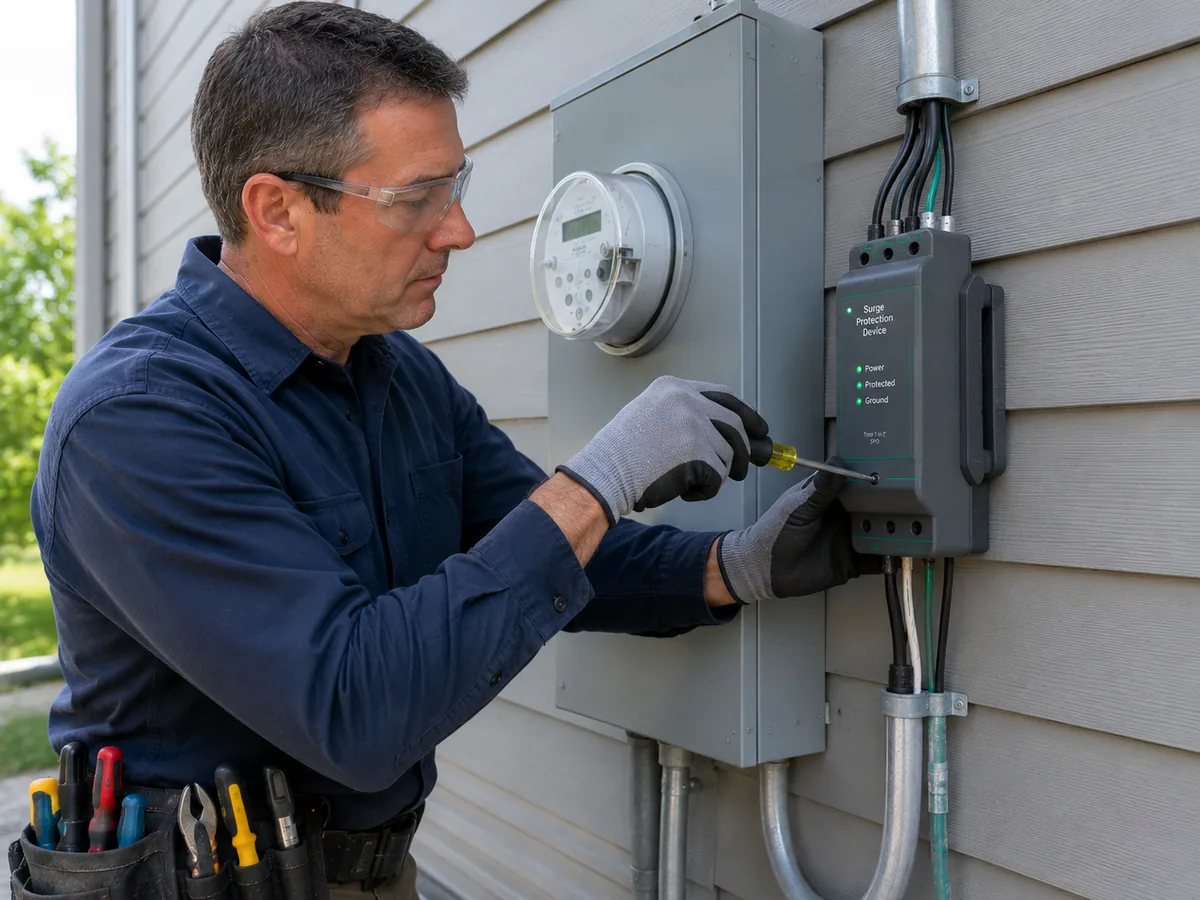
Service entrance SPDs reside at the point of utility power entry into a building, usually at or immediately after the main meter or main breaker. They are the first line of defense and are sized to dissipate extremely large surges from lightning strikes or utility switching. Since they safeguard the whole electrical distribution, a properly sized service entrance SPD minimizes strain on downstream equipment and decreases the risk of cascading equipment failures.
These are typically hardwired units installed on or near the service panel. Installation must comply with local electrical codes and is best undertaken by a licensed electrician. Search for units tested to UL 1449 as well as suitable nominal discharge current (In) and short-circuit withstand scores on the label.
2. Distribution Panel
Distribution panel SPDs are placed at subpanels or breaker panels to guard circuit bundles. They’re great where specific spaces or load groupings require supplemental protection, such as a home office panel, an entertainment circuit, or a workshop subpanel with all the power tools and control equipment.
Integration with circuit breakers provides improved fault isolation and facilitates the inspection or replacement of the SPD without disrupting other circuits. These units generally have lower nominal energy ratings than service entrance devices and are designed to safeguard localized equipment and sensitive loads. Schedule periodic inspections to check connections, indicator status, and enclosure integrity.
3. Point-of-Use
Point-of-use SPDs plug in to outlets or nestle in power strips adjacent to the appliance they safeguard. They’re very handy for computers, TVs, chargers, and other devices that are susceptible to ‘mini’ transients. Common features include multiple outlets, protection status indicator lights, and internal fuses.
Select point-of-use models with sufficient joule ratings and low clamping voltage for the device type. They’re mobile, cheap, and easy to replace, but they don’t supplant upstream protection from big surges.
- Advantages and limitations (summary): * Service entrance: broad coverage, high energy handling. Needs professional install, higher cost.
- Distribution panel: targeted area protection, easy circuit isolation. Less energy capacity than service entrance.
- Point-of-use: low cost, portable, user-friendly. Limited to single outlets, lower surge capacity.
- Component level: embedded, immediate local protection. Depends on device manufacturer, not user-replaceable.
- Universal series: flexible fit, modular. Complexity in selection, possible higher upfront cost.
Perhaps we could do a cool comparison chart mapping cost, energy rating, installation type, and best-use scenarios by core type.
4. Component Level
Component-level protection into devices or PCBs to safeguard microprocessors, comms ports and data lines. Typical components are TVS diodes, metal-oxide varistors and capacitors that swiftly clamp transients. Check appliance specs to determine if the maker includes surge suppression and at what level.
5. Universal Series
Universal series SPDs are modular, flexible units that accommodate different voltage systems and mixed equipment. They provide plug-in modules or configurable blocks for various line topologies and international voltages. Test them in environments where equipment mix, load patterns, and changes occur regularly.
Vulnerable Appliances
Several other household appliances are vulnerable to surges as well. Appliances that run cool with few moving pieces can still be damaged if they have sensitive electronics. The subsections below break down specific categories of appliances, why they’re vulnerable, what can go wrong, and actionable protection steps.
Inverter Systems
Inverter-based appliances, which convert DC to AC, typically require power electronics that are sensitive to transients. Even momentary voltage spikes can strain semiconductor switches, induce control-board faults, or open protection circuits. These mini surges shorten component life by generating heat and microcracks in solder joints and silicon.
Failure modes include sudden shutdown, reduced efficiency, and in worst cases, full inverter replacement. Use low clamping voltage surge protectors so the device limits spikes before the inverter’s own electronics see high voltages. Pick protectors with a high joule rating because inverters will take multiple hits during storms or when grid power switches on or off. You need a good ground; a lousy ground path leaves the inverter floating and more susceptible. Schedule periodic maintenance: check grounding integrity, inspect input and output filters, and replace MOVs or fuses in the surge device after major events.
Microprocessor Units
Microprocessor-driven appliances are particularly prone to small surges and voltage sags. Small over-voltages can corrupt firmware, change calibration, or cause logic failures that resemble intermittent bugs. Data loss on computers and smart home controllers is prevalent when surges strike storage or memory subsystems. Repairing could involve board-level repair or full device replacement.
Checklist of common microprocessor appliances that benefit from dedicated surge protection:
- Desktop computers and servers
- Routers, modems, and network switches
- Smart TVs and set-top boxes
- Home automation hubs and smart speakers
- Modern refrigerators and ovens with electronic controls
Put dedicated surge protection on outlets feeding these devices. For single units, use point-of-use protectors. For upstream protection, use whole-home SPD devices. Back up key information and utilize uninterruptible power supplies (UPS) wherever feasible to protect against surges and short outages alike.
Motor Loads
Appliances with motors, such as pumps, clothes dryers, and HVAC compressors, are susceptible to surges, both internally and externally. Motor startup generates voltage spikes on the line and can cause transients that propagate to other devices. These external surges can harm windings, bearings, and the control electronics that regulate motor speed and provide protection.
Choose surge protectors that are rated for inductive loads and can handle high surge currents without nuisance failure. Seek out devices stating they work with motor loads or industrial equipment. Watch for signs of surge-related wear: new or louder noises, increased vibration, frequent tripping of breakers or motor overloads, and erratic motor speed. Early detection and timely protection replacement minimize repair costs and downtime.
Selection Metrics
Surge protective devices need to be selected by explicit, objective metrics to suit the appliances they defend. Here are the selection metrics to review prior to purchase, with pragmatic observations on their impact on protection, illustrative examples for context, and a brief checklist at the end to steer your decisions.
Clamping Voltage
Clamping voltage is the voltage level at which the protector starts to reroute energy away from the load. It is a threshold. Below it, the device sits idle, and above it, the device conducts and limits the peak seen by connected equipment.
Select a clamping voltage under the maximum safe input for your appliance. For instance, a lot of consumer electronics will withstand short spikes up to approximately 330 V on a 230 V supply. Choosing a protector with a 300 V clamping level provides a margin of safety. Harder-to-protect gear like medical or lab instruments often require even deeper clamps.
Typical values are technology and application dependent. Whole-house or service entrance SPDs commonly are rated for 600 V or higher for nominal systems. Type 2 point-of-use units might say 400 V to 600 V clamping. Point-of-load telecom protectors could be 90 V to 200 V. Always consult the product label or datasheet. Manufacturers provide nominal and maximum clamping voltages as well as test conditions used to obtain them.
Energy Rating
Energy rating, provided in joules, indicates the amount of surge energy that the equipment can absorb prior to failing to protect. Higher joules indicate the amount of energy absorbed, so the longer it can withstand repeated events.
If you’re in a lightning-prone area or near industrial switching, opt for higher joule ratings. For a normal home router or TV, 600 to 1,200 J might suffice. For a high-end server or sensitive lab instrument, seek 2,500 J or more. More potent ratings are more expensive and can expand unit size, so balance budget and space against infestation exposure.
Recommended joule ratings:
- Basic consumer electronics (TVs, set-top boxes): 600–1,200 J
- Desktop computers, gaming rigs: 1,200–2,000 J
- Home office/network equipment, NAS: 2,000–2,500 J
- Whole-home panels or critical systems: 3,000 J+
Response Time
This is how quickly a device responds to a spike, expressed in nanoseconds or microseconds. By reacting more quickly, it minimizes peak energy that reaches electronics like semiconductors and data lines.
Ultra-fast response is crucial for sensitive parts. MOVs (metal-oxide varistors) normally respond in tens of nanoseconds. TVS (transient voltage suppression) diodes act in single-digit nanoseconds and are ubiquitous on data lines. Gas discharge tubes react slower, in microseconds, but absorb very high energy.
Computers, modems, data lines: low response time first. TVS diodes on network ports, MOVs for AC mains. Look at datasheets for actual measured response under test conditions and match the tech to your application.
Checklist for choosing an SPD:
- Clamping voltage: below appliance max
- Energy rating (J): matched to exposure and value
- Response time: low ns for sensitive electronics
- Certifications: UL 1449 or equivalent
- Compatibility: local voltage and wiring standards
- Installation location: service entrance vs point-of-use
Hidden Vulnerabilities
SPDs alone don’t ensure full protection. It depends on installation, component condition, and system context. Even a premium SPD won’t save appliances if it’s installed in a bad location, miswired, tired, or ill-suited to the system. Tackling these hidden vulnerabilities calls for dedicated inspection and regular inspections that extend beyond just inserting a device.
Improper installation, degraded components, or lack of maintenance can leave appliances unprotected despite having surge devices
Faulty installation can mean using the wrong SPD type for the circuit, placing the device a long distance from the load, or connecting it to a circuit with incompatible voltage or phase configuration. For instance, installing a point-of-use SPD at the end of a long cable run is less effective at clamping fast transients before they reach sensitive electronics. Degraded components are another risk: metal-oxide varistors (MOVs) and gas discharge tubes wear out after repeated surges and lose clamping capability. A scorched or discolored MOV may still appear intact but no longer provide protection. Neglect lets these breakdowns slip under the radar. Basic maintenance, such as inspecting for burn marks, testing SPD indicator lights, and replacing end-of-life modules, can keep the failure silent. Most manufacturers will give a service life in years or number of surge events, so track that versus your local grid and replace early if you experience a high frequency of disturbances.
Hidden risks from indirect surges, such as those induced by nearby lightning strikes or switching errors in the power grid
Indirect surges course through wiring and grounding systems instead of strike points. A lightning strike 300 to 500 meters away produces voltage spikes in phone lines, coax, and power cables that couple into appliances. Switching operations in substations or the start and stop of large motors generate slow, lower-amplitude surges that nonetheless damage electronics in the long run. For example, an office UPS may block short, sharp transients but fail to stop repeated mid-level surges from industrial switching nearby, causing gradual capacitor stress in sensitive equipment. Protectors rated just for direct-contact events may overlook these modes. Layered protection, including service entrance SPDs in addition to localized point-of-use units, can help capture both. Meanwhile, surge counters and event logs can still show you when indirect activity is occurring.
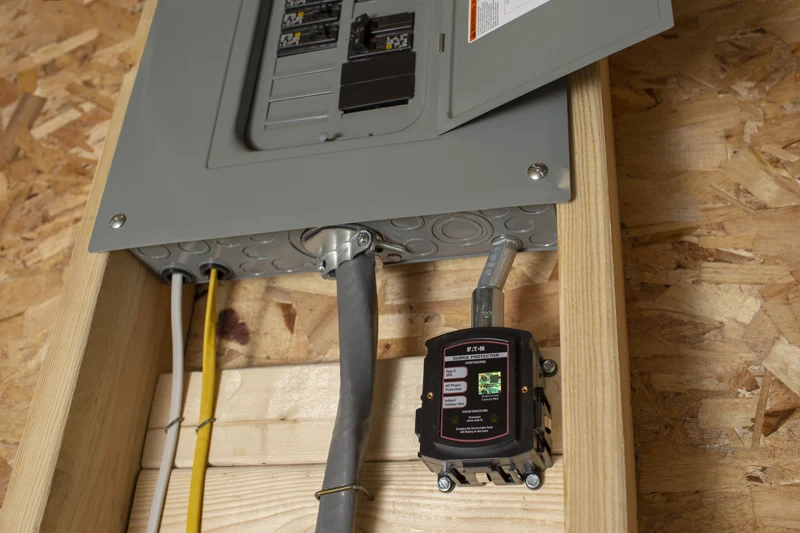
Inspect wiring, grounding, and surge protector placement to eliminate weak points
Wiring faults, bad ground, convert otherwise ordinary spikes into destructive differentials. Look for loose neutrals, corrosion at distribution panels, and shared neutrals on multi-wire branches. Make grounding conductors as short and direct as possible and bond SPDs to a known earth electrode. Long or high-impedance grounds significantly diminish SPD effectiveness. Placement matters: place SPDs close to the protected loads and as near to the service entrance as practical for whole-site protection. Run sensitive signals over shielded communication lines or isolation transformers. Document discoveries, photograph, and label circuit charts so subsequent sweeps hit the correct locations.
Conduct regular audits of surge protection systems to uncover and address vulnerabilities
Plan audits once a year or following significant electrical incidents. Tests should consist of visual inspections, clamp-voltage verification, ground resistance measurements and end-of-life checks on modules. Use simple tools: a clamp meter, insulation tester, and an earth-resistance tester. Track replacements and tests to identify patterns. Educate employees to notify you of any changes in the indicator lights immediately.
Maintenance Practices
Regular maintenance keeps your SPDs dependable and appliances secure. Scheduled inspections catch breakdowns before they become critical, verify that safeguards are aligned with real-time threats, and help inform replacement schedules. Below are some hands-on advice and guidelines on how to monitor, inspect, and replace SPDs in homes and facilities.
Indicator Status
Check LED or status lights at least quarterly to ensure the SPD is active. A solid green or other status displayed in the manual generally indicates that the device is primed to protect. If the inspector is off, red, or fault codes appear, assume protection is breached and move swiftly!
A failed or extinguished indicator generally means internal parts have been depleted or damaged and the unit should be disposed of immediately. Certain models have separate LEDs for various modes; understand which lights are relevant for line-to-neutral and line-to-ground protection. Audible alarms and remote monitoring prove valuable in critical setups such as server rooms or medical equipment rooms where it’s important to receive immediate notification when protection lapses.
Maintain a basic log of indicator checks with the date, reading, and action. Try using a spreadsheet or better yet, a maintenance app, and link entries to device serial numbers and locations.
Component Degradation
Surge absorbers like MOVs and gas discharge tubes soak energy and deteriorate with each event. Repeated surge absorption makes MOVs heat, shift characteristics, and gradually lose clamping capacity. Gas tubes can become a little less sensitive after a few discharges. This degradation shifts protection levels and increases the risk to connected appliances.
Check SPDs visually for discoloration, burn marks, bulging components, or a smell of ozone, all indications of stress. Check housing, connector tightness, and any external fuses, too. Small wear could be superficial, but spilling or burn marks call for swapping it out.
Replace units exhibiting physical wear or after known major surges like a nearby lightning strike, transformer failure, or major grid switching.
Replacement Cycles
SPDs don’t last forever. Their lifespan is closely tied to the amount of energy they’ve absorbed over time. Manufacturers offer life or energy estimates; heed those. Usual advice is every 2 to 5 years, but high-risk sites might require less.
Mark every SPD with installation date and anticipated replacement window so anyone can tell when it’s up. For good measure, maintain a site-wide schedule listing device location, type, install date, and next review date to keep replacements on track. Even after a recorded major surge event, reset the schedule and replace affected units regardless of whether indicators look normal.
Conclusion
Surge protector for appliances. Choose a device with a low clamping voltage, high energy rating and fast response. Pair the type to the appliance and the panel design. Verify the device frequently and replace it after major storms or when the indicator signals degradation. Simple steps bring big gains: plug a fridge into a quality surge protector, fit a whole-home unit at the main panel, and add point-of-use protectors for sensitive gear like routers and TVs. All of these actions reduce repair expenses and minimize downtime. For next steps, comparison shop models emphasizing specs and warranty, and get a quick system check this month.
Frequently Asked Questions
What is a surge protective device (SPD) for appliances?
SPDs are devices that mitigate voltage transients from lightning, grid switching, or equipment. It redirects the power away from appliances to prevent damage and prolong life.
How does an SPD work in simple terms?
An SPD detects when voltage is higher than an acceptable threshold and generates a low-resistance path to ground or neutral. This diverts the surge from connected appliances nearly immediately.
Which types of SPDs are most common for home appliances?
Popular variants include metal-oxide varistors (MOVs), gas discharge tubes (GDTs), and transient-voltage-suppression (TVS) diodes. MOVs are very commonly used for home protection because of cost and effectiveness.
Which household appliances are most vulnerable to surges?
Sensitive electronics such as electronically controlled refrigerators, HVAC systems, smart TVs, computers, and home routers are particularly susceptible to voltage spikes.
How do I choose the right SPD for my appliances?
Choose an SPD with the correct voltage rating, clamping voltage, response time, and joule energy rating for your needs. Seek out UL or other international safety certifications and have it installed by a qualified electrician.
Do SPDs require maintenance or replacement?
Yes. SPDs break down after taking in a surge. Check indicator lights and swap units following significant events or manufacturer guidance. Yearly inspections are well advised.
Can an SPD protect against all types of power problems?
SPDs primarily defend against momentary voltage spikes. They don’t correct sustained overvoltage, brownouts, or wiring faults. Additional equipment or electrical work may be required.