

Key Takeaways
- Licensed electricians are formally trained, have passed certification exams, and can legally perform and approve electrical work. Unlicensed ones do not have credentials and typically cannot legally complete a lot of electrical work.
- Bringing on a licensed pro safeguards safety because they do not only execute work based on industry minimum standards but minimize risks of fires, shocks, and property damage.
- Licensed electricians have liability insurance and adhere to code, which preserves homeowner insurance coverage and prevents expensive rework or denied claims.
- Check credentials on the fly by searching state or local registries and asking for physical license cards and insurance documents. Cross-check license numbers and complaints.
- Licensed electricians can be more expensive initially, but selecting them reduces your total cost of ownership due to fines, failed inspections, repairs, or legal liability.
- Don’t presume small repairs are low risk. Tiny errors can go BOOM! Prioritize electricians who provide written estimates, warranties, transparent communication, and evidence of continued training.
Licensed electricians are trained professionals who have completed the necessary training and passed the required exams to practice their trade legally. Unlicensed workers do not have this formal certification. Licensed electricians adhere to building codes, have insurance, and typically provide warranties, all of which can minimize safety hazards and expensive fixes. Unlicensed workers may perform rudimentary jobs cheaply but can overlook code necessities, have no liability coverage, and cause inspection issues. A licensed professional tends to bring with them formal qualifications, permit handling, and consistent work quality. The meat afterward details typical license steps, legal differences, cost comparisons, and practical tips for deciding between licensed and unlicensed assistance.
Core Distinctions
Electricians – both licensed and unlicensed electricians – are not the same. Journeyman electricians undergo rigorous training programs and obtain an electrician license that permits them to pull permits, sign off on approved work, and gain recognition from local or national authorities. In contrast, hiring an unlicensed electrician often involves significant risk, as these workers lack the necessary credentials and may operate outside regulated industries, impacting safety and compliance.
1. Formal Training
Qualified electricians typically complete an approved course of study and a several-year apprenticeship, typically four to five years of both classroom and on-the-job training. They log thousands of hours apprenticing under master tradesmen learning wiring, circuitry, load calculations, and fault diagnosis. Licensing exams cover electrical theory, safety regulations, and local code requirements. In contrast, hiring an unlicensed electrician often means working with individuals who learn on the job without formal training or supervision, potentially leading to significant risks and improper practices in electrical work.
2. Legal Authority
Licensed electricians are typically the only ones who can secure permits, arrange inspections, and formally sign off on code adherence. Hiring an unlicensed electrician can lead to significant risks, as licensing demands verification of education, identity, and hours logged on the job. Approved candidates are listed in license lookup databases, while unlicensed individuals cannot legally bid for numerous types of electrical assignments. Their work might cause infractions of structure or security laws, which can result in fines or orders to redo the work.
3. Safety Standards
Certified electricians adhere to rigorous safety standards to minimize hazards such as arc faults, short circuits, and electrocution. Their instruction includes coverall, grounding and bonding, and installation techniques that contain fire and injury risks. Hiring an unlicensed electrician may shortcut checks or employ inappropriate techniques, raising the risk of return visits, property damage, or worse. Good safety practices save lives for years to come and it saves circuits too.
4. Financial Protection
Licensed electricians typically have liability insurance and are bonded, which helps cover accidents or damage. In contrast, hiring an unlicensed electrician often leaves homeowners uninsured, making them responsible for repair and medical bills. Insurance companies may refuse to pay for damages that result from unpermitted work, highlighting the significant risk of hiring an unlicensed individual.
5. Code Compliance
Licensed electricians must stay up to date with the National Electrical Code and local regulations, ensuring that all installations meet inspection standards. Hiring an unlicensed electrician can lead to dangerous and unpermitted installations, which pose significant risks and may result in costly repairs during resale.
Hidden Liabilities
Unseen hazards arise fast when homeowners consider hiring an unlicensed electrician. The dangers include legal exposure, denied insurance claims, and costly remediation work. Issues tend to remain undisclosed until a defect, fire, or inspection exposes substandard or unlawful installations, highlighting the importance of hiring licensed electricians who adhere to industry standards.
Insurance Invalidation
Most homeowner insurance policies state that electrical work must be performed by licensed electricians and will not cover work done by the homeowner. If a fire or property damage is attributed to unlicensed wiring, insurance companies can refuse coverage, leaving repair and replacement expenses to the homeowner. Insurers will often inspect post-incident and will flag unpermitted work during their review. Protecting your insurance means bringing in licensed electricians and maintaining permits and receipts.
Licensed work creates paper trails: permits, inspection reports, and certification. These papers count to insurers and can decide if a claim is paid or denied. Even if a policyholder had no inkling the electrician was unlicensed, insurers can deny a claim. The hole unclaimed claims leave can be tens or even hundreds of thousands of dollars when medical attention or property repair is required.
Resale Complications
Unpermitted or unlicensed electrical work can reduce property value and cause slow sales. They anticipate code-compliant installations and evidence of licensed work from home inspectors and wise buyers. Even finding illegal wiring during inspection can cause sellers to either pay for work to be done or hold up closing while remediations take place. This can lead to price renegotiation or a lost sale.
Documented licensed work makes sales easy and buyer confident. Fixing hidden liabilities later can cost thousands, increase insurance rates and damage your good name within the Realtor community. Initial cost savings from bringing on an unlicensed individual frequently get erased when brokers, appraisers or buyers insist on repairs.
Personal Liability
Homeowners could be considered the de facto employer of unlicensed contractors, subjecting them to workers’ compensation and injury claims. If your shoddy wiring electrocutes someone or kills them, lawsuits and fines follow. Electrical injuries are some of the most disabling, with lifetime medical costs totaling into hundreds of thousands of dollars.
Hiring unlicensed help opens you up to lawsuits and fines. The higher hourly rate of licensed electricians, usually 25 to 50 percent more, pales next to the cost of remedial work, legal fees, and doctors’ bills. Select licensed experts to minimize those hidden liabilities and guard your home and wallet.
Verification Steps
Verification starts with a momentary look at an electrician’s professional status, then turns to paperwork and files that verify training, experience, and insurance. These fast, organized verification steps provide protection against hiring an unlicensed electrician and ensure your electrical work is compliant with the latest electrical codes and regulations.
- Leverage state or local registry searches to validate active license status.
- Request documentation: physical license card, proof of insurance, and ID.
- Verify license numbers with state and national boards and check expiration dates.
- Search for complaints, disciplinary actions, or expired licenses in registries.
- Verify apprenticeship, supervised hours, and exam completion where applicable.
- Document everything and save copies for warranty or insurance purposes.
- Utilize web tools, such as the CA Electrician License Lookup, if they exist.
Registry Search
To ensure quality work, look up by name, business name, or license number in the state or local database to verify the active status of licensed and unlicensed electricians. Most jurisdictions will have an online portal indicating license type, expiration, and whether the license is in good standing. It’s crucial to check for any disciplinary actions or complaints against unlicensed contractors. Verify that the electrician license was granted post-training completion, which often includes an accredited apprenticeship spanning 4 to 5 years, ensuring they have the necessary knowledge of electrical systems and have passed required examinations. Create a checklist to compare several electricians side by side to identify any discrepancies and ensure you hire a licensed electrician for your electrical projects.
Documentation Checks
It is essential to require the electrician’s actual license card along with a matching government-issued ID. When hiring an unlicensed electrician, ask for up-to-date evidence of insurance covering public liability and, where applicable, workers’ compensation. Ensure that the license number on the card corresponds with the number in the registry and that it covers the type of work you need. Verify that the policies are current and confirm state coverage limits by calling the insurer if in doubt. Document all license and insurance information, noting the dates you verified them for warranty claims or permit inspections. This verification process is crucial to avoid the dangers of hiring unlicensed individuals, which can lead to significant risks and costly repairs due to improper installations.
Cost Analysis
Cost comparison rests on three clear variables: size of the job, whether a permit is required, and what happens when something goes wrong. JLB electricians are usually more expensive to start with. That premium includes training, certification, insurance, bond, and code compliance. While hiring an unlicensed electrician might appear less expensive on the bid, multiple downstream expenses can negate early savings and add significant risk.
- Potential long-term expenses associated with unlicensed work: * Partial or full rework, typically between $3,000 and $5,000.
- Major corrective repairs that can easily exceed $12,000 out of pocket.
- More labor and replacement materials.
- Plan check and re-inspection fees when work fails.
- Fines or penalties for unpermitted electrical work.
- Larger homeowner insurance rates or rejected claims.
- Lost value at sale or mortgage holdbacks caused by noncompliant installs.
On jobs in the $5,000–$20,000 range, unlicensed contractors typically underbid licensed ones by 10 to 20 percent. However, that ‘saving’ disappears if rework is needed. Industry reports and inspector comments estimate that 30 to 50 percent of unlicensed work has to be partially or completely redone. For instance, consider a $10,000 job bid at $9,000 by an unlicensed worker that requires a $4,000 partial rework, eliminating the $1,000 saving and creating new costs.
Licensed electricians’ fee structure is broader than labor. Licensing fees average $295, annual bond renewal is around $200, and there are exam and training costs, continuing education, and insurance. Small contractors typically have general liability at $1,000 to $3,000 per year plus workers’ compensation. These fixed costs reflect in hourly rates and project bids but offer protection, including warranties for their work, code-compliant practices, and a paper trail for permits and inspections.
When a bug shows up, the result differs. Licensed pros can fix defects in warranty, coordinate with inspectors and minimize liability. Unlicensed workers leave owners with permit rework, inspection failures and likely a repair of over $12,000 that nullifies an upfront saving of $2,400. Hiring a licensed electrician minimizes the risk of surprise expenses and potential hazards and safeguards your future profitability.
The Illusion (Original Point of View on Minor Fixes vs Catastrophic Risk)
Most think a loose outlet or flickering light is a no-brainer, low-risk task anyone can get done. However, hiring an unlicensed electrician for minor electrical work can lead to significant risks, as this post demonstrates why that confidence is dangerous. It describes how improper practices can turn minor mistakes into major disasters and highlights the importance of understanding the differences between licensed and unlicensed electricians.
Challenge the belief that minor electrical fixes are safe for unlicensed individuals to handle.
A loose outlet, a tripped breaker, or a bad switch might appear strictly cosmetic, but hiring an unlicensed electrician can lead to significant risks. Unlicensed individuals often approach these as small tasks without understanding how electrical systems are interconnected. They seldom know how circuits are balanced or how one mistake can leave live components exposed. In contrast, licensed electricians are trained to read wiring schematics and follow electrical codes and regulations, ensuring quality work and safety. Additionally, licensed electricians provide liability coverage that homeowners usually don’t have, protecting against costly repairs and potential damage to your property.
Illustrate how small mistakes can escalate into catastrophic risks like fires or electrocution.
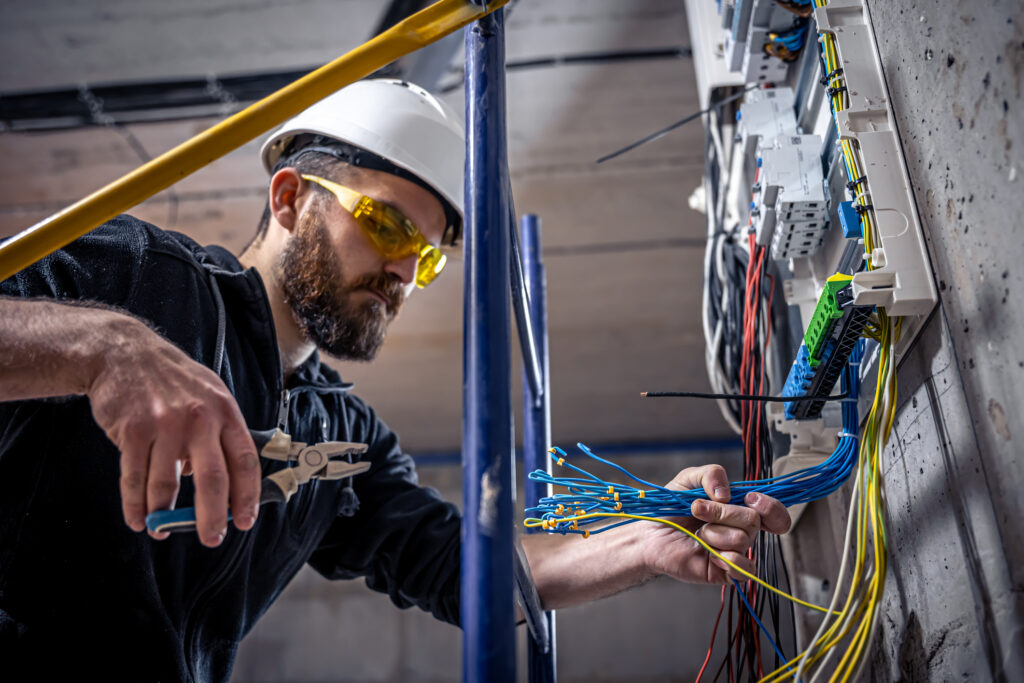
One loose connection increases resistance and heat, which can scorch insulation over months and potentially ignite a fire with little notice. A miswired hot and neutral could electrify a device casing, risking electrocution for anyone who touches it. In one typical case, hiring an unlicensed electrician to tie in a new light fixture to a switched neutral leads to significant dangers, as the switch fails to isolate the hot, leaving the fixture wire live. Such mistakes can result in costly repairs and electrical fires, underscoring the importance of hiring a licensed electrician for safe electrical work.
Stress that even simple electrical tasks require knowledge of codes, safety standards, and proper tools.
Local and national electrical codes determine wire sizes, connector types, grounding, and box fill limits, which licensed electricians are well-versed in. A proper fix employs the right gauge wire, connectors, and grounding. Tools matter: a non-contact tester cannot substitute for a calibrated voltage tester or an insulation resistance test when troubleshooting. Licensed and unlicensed electricians may approach these tasks differently, but only licensed professionals understand what tests to perform and when to pull permits, ensuring compliance with safety procedures.
Urge homeowners to recognize that cutting corners on minor repairs can have severe, long-lasting consequences.
Cheap fixes can save money now but may lead to costly repairs or significant risks in destruction or injury later. It’s crucial to hire a licensed electrician for anything beyond replacing a bulb or plug to ensure quality work and adherence to safety protocols.
Selection Criteria
A transparent selection criteria keeps you grounded in objective facts and real-world fit when deciding between licensed electricians and unlicensed electricians. The list below dissects the key points to verify, why they’re important, where to verify them, and how to balance each against your project requirements.
- Licensure and certification
Verify that your electrician has a valid electrician license for your area. Plenty of licensures demonstrate they successfully navigated a formalized examination and retained a certain number of training hours. For most areas, they must be listed in a state license lookup. Utilize that database to confirm status, expiration, and disciplinary actions. Example: check the state portal for license number, issue date, and active endorsements.
- Insurance and bonded status
Check for general liability and worker’s compensation. Insurance shields you from damage or injury claims. Request certificates with policy numbers and effective dates. For commercial projects, ask for higher coverage limits and verify that the policy covers subcontractors.
- Apprenticeship and hands-on experience
Seek completion of a certified apprenticeship or four to five years of supervised work, at minimum. Experience counts for troubleshooting and complex electrical systems. Request references for similar projects, including client contacts or photographs. For example, a journeyman who ran branch circuits in multi-unit buildings will know different code paths than a residential-only installer.
- Exam passage and technical knowledge
The licensing exam proves basic knowledge of wiring, load calculations, and safety. Pose specific technical questions related to your project, such as panel upgrades, earthing methods, and smart-home integration, to test depth.
- Specialized expertise and project fit
Match the electrician’s specialty to your need: commercial, industrial, low-voltage, EV charging, renewable systems, or home automation. Specialized equipment calls for contractors with niche certifications or manufacturer training.
- Ongoing training and code familiarity
Make sure they keep up with electrical codes and regulations updates and continuing education. New technologies and code changes impact safety and compliance. Ask for recent course or certificate details.
- Written estimates, warranties, and communication
Choose electricians that send you estimates in writing, with defined scopes, timelines, and warranty conditions. A written contract minimizes the risk of conflict. Prefer consultants that walk you through choices and price and allow requirements in laymen’s terms.
- References, background checks, and reputation
LOOK FOR CLIENT REFERENCES, ONLINE REVIEWS AND WORD-OF-MOUTH REFERRALS. Background checks or fingerprinting might be necessary in certain areas. Utilize these as added confidence of trustworthiness.
Conclusion
A licensed electrician provides proven training, local code expertise, and insurance that reduces liability. An unlicensed worker might save you money up front but can leave you with failed inspections, voided warranties, and unsafe wiring. For a quick busted outlet, a licensed pro still moves fast and plays by the book. When it comes to panel changes, new circuits, or anything that ties into service lines, a licensed electrician avoids expensive repairs down the road.
Verify license numbers and request proof of insurance and a detailed written estimate including timelines. Compare two or three bids and choose the pro who provides documentation and clear explanations. Need assistance vetting candidates or an interview checklist? I can build one you can use immediately.
Frequently Asked Questions
What is the main difference between a licensed electrician and an unlicensed one?
Hiring an unlicensed electrician poses significant risks due to their lack of proper training and knowledge of electrical systems.
Are licensed electricians insured and bonded?
Licensed electricians generally have insurance and are bonded, which shields you from liability and insures against damage or injury during electrical work. Always request to see evidence of their electrician license.
Can an unlicensed person legally do electrical work in my home?
Laws differ in each country and state, but in most locations, hiring an unlicensed electrician for electrical work is prohibited. This can violate local building codes and void permits or insurance, posing significant risks.
How do I verify an electrician’s license and credentials?
Request their electrician license number, insurance, and company registration. Then verify through your local licensing board or official online registry to confirm validity and any disciplinary history of licensed and unlicensed electricians.
Is hiring a licensed electrician more expensive?
Hiring a licensed electrician may involve higher initial costs, but their services significantly reduce the risk of defects and hazards, ultimately saving money on costly repairs and insurance claims in the long run.
When is it acceptable to hire an unlicensed electrician?
So it’s hardly ever a good idea to hire an unlicensed electrician for electrical safety work. Some places permit assistance from unlicensed contractors on low-risk jobs with supervision, but it’s best to hire a licensed electrician to ensure compliance with local building codes.
What risks do I face if I use an unlicensed electrician?
Hiring an unlicensed electrician can lead to unsafe installations and increased risks of electrical fires, while licensed electricians provide code-compliant work that mitigates these dangers.