

Key Takeaways
- Whole home surge protectors defend from both invisible internal and external voltage spikes, shielding sensitive electronics and appliances and mitigating cumulative damage over time. Select a unit that corresponds to your home’s electrical load and device sensitivity.
- Compare models by surge capacity, clamping voltage, response time, safety certifications such as UL 1449, and warranty terms. Prioritize units that meet or exceed local electrical code requirements.
- Validate installation realities pre-purchase. Verify panel space, service amperage, grounding, and compatibility with your appliances, EV charger, solar panels, and panel brand. Prepare for potential infrastructure upgrades.
- Employ a layered protection approach by installing a main service surge protector as the first line of defense and supplementing with point-of-use protectors or quality power strips for sensitive equipment in your home offices and entertainment centers.
- Get a licensed electrician to handle installation and post-installation inspection for code compliance, proper grounding, and to maintain warranties.
- Future-proof by opting for scalable, higher-capacity protectors and smart-compatible units that provide monitoring and home automation integration to keep up with growing electrical loads and new devices.
About: how to choose a whole home surge protector
Important considerations are clamping voltage, surge current rating (kA) and response time, as well as being installed near the main service panel.
Things to think about include device type, warranty and use with solar or EV systems.
Professional installation and local electrical codes are important for both performance and safety.
The guide below demystifies these options and provides actionable buying advice.
The Unseen Threat
Power surges can come unexpectedly and leave behind invisible harm. Minor surges might not knock out a breaker, but they can slowly erode circuit boards, data ports, and power supplies. Over months or years, this wear translates into intermittent failures, shorter device life, or sudden heart-stopping expensive breakdowns in appliances and smart home equipment.
New homes now have so many sensitive electronics—computers, modems, smart thermostats, and security hubs—that the cumulative risk compounds with each new device.
Internal Surges
Internal surges frequently begin in the household as big motors and compressors toggle on and off. HVAC units, refrigerators, well pumps, and heat pumps generate these momentary, but intense, current shifts that radiate through home wiring.
Even everyday things like flipping on a hair dryer, vacuum, or high-wattage lamp can produce mini surges that will still damage sensitive electronics over time.
- Major contributors include HVAC units, refrigerators, washing machines, dryers, well pumps, microwave ovens, water heaters, sump pumps, and large power tools.
- Smaller but frequent sources include hair dryers, space heaters, vacuum cleaners, toasters, and fluorescent light starters.
Cumulative damage from these events reduces the lifespan of electronics and smart devices. A modem or router might shrug off dozens of these little spikes, but its internal components deteriorate.
Even with circuit breakers, people experience equipment failure because breakers protect against overloads and short circuits, not slow spike damage.
External Surges
External surges enter from outside the house and tend to be stronger. Lightning strikes near power lines, utility switching or grid faults can surge high voltages into service conductors.
These surges are capable of coursing in through electrical service, telephone lines, cable or satellite feeds and even data lines, providing a conduit to numerous pieces of equipment.
Extreme weather and volatile grid conditions increase the likelihood of damaging surges. Whole-house surge protectors are designed to prevent or redirect unsafe spikes at the service meter so they don’t propagate into branch wiring.
A protector with a higher joule rating of 2,000 J or more provides enhanced protection against these big events. Prices normally run anywhere from approximately 100 to 300 dollars, depending on unit type and options.
Depending on installation, protector rating and surge type, other homeowners mention obvious gains and longer equipment life after adding whole-house protection.
Others notice minimal difference, particularly if localized faults or inadequate grounding diminish the unit’s effectiveness. With the invisible, gradual nature of surge damage, full protection is a reasonable measure for most contemporary homes.
Evaluate Key Metrics
Evaluate the key metrics that determine real-world protection. Focus on measurable specs rather than marketing claims. Compare surge capacity, clamping voltage, response time, safety certification, and warranty to decide which unit fits your dwelling, load, and sensitive equipment.
1. Protective Capacity
Choose a protector with a high kiloamp surge capacity and joule rating. In terms of protection, a unit rated 2,000 joules or above is best. The lower the rating, the faster it wears out, particularly in locations with frequent internal surges.
NEMA indicates as many as 80 percent originate within the building. Match capacity to household load: a small apartment with basic electronics can use a lower-rated unit, while homes with multiple HVAC systems, EV chargers, or large appliance banks need higher kA and joule figures.
Consider repeated events: surge protectors degrade each time they absorb energy, so expect a typical lifespan of about 3 to 5 years depending on exposure. For instance, a house with two heat pumps and an EV charger should have a device with both high kA channel capacity and a joule rating significantly greater than 2,000 to prevent early burnout.
2. Clamping Voltage
Select a low clamping voltage of 400 volts or less to minimize the maximum voltage that reaches equipment. Lower clamping voltage means less cumulative stress on sensitive electronics and smart-home gear.
Check that the clamping voltage corresponds with the tolerance of your most sensitive devices and the panel’s system voltage. For example, many new LED drivers and telecom gear can die at lower overvoltages, so a protector with a 330 to 400 V clamp is a better choice.
Don’t forget that a lower clamp assists with little spikes as well, not just extreme events.
3. Response Time
Don’t choose slow – choose ultra-fast. It blocks excess voltage before it can reach circuit boards. Millisecond or even sub-microsecond ratings are preferable when safeguarding sensitive devices.
Test critical measures and contrast manufacturer specs with independent lab tests, as marketing can obscure actual performance. Fast response matters a lot for hardwired appliances and low-voltage electronics where even short overvoltage can fry components.
4. Safety Certifications
Demand UL 1449 certification or comparable. UL 1449 certifies that a product can handle surge activity dependably and is commonly mandated for code compliance.
Look for other endorsements from well-known organizations and verify the unit complies with or surpasses your local electrical code for your service size. Having certified equipment reinforces insurance claims post-damage.
5. Warranty Terms
Check warranty for unit and linked equipment coverage. Appreciate explicit connected equipment protection and transparent claim limits.
Pay attention to exclusions, claim caps, and conditions that eliminate coverage. A transparent, long-term warranty contributes real value considering the three to five year life span of numerous protectors.
Installation Realities
Whole home surge protectors alter the manner in which your home responds to significant voltage occurrences. Before getting into the details, evaluate panel space, service size, mounting options, grounding and whether upgrades are necessary for the unit to function as designed.
Assessing Panel Space and Service Capacity
Check the main electrical panel for available slots and the panel’s amperage. Smaller panels might not have space for a device and a dedicated breaker, but larger 200 A panels generally have more leeway. If no spare slot exists, you might require a subpanel or an externally mounted unit.
For example, a homeowner with a 100 A two-panel setup might install an externally mounted Type 2 unit rather than rework the main bus. Installation realities—service size and setup—determine the style and mounting method. Type 1 units mount in front of the main breaker and protect against external surges such as lightning.
They require service-side access and typically utility coordination. Type 2 units install after the main breaker and protect internal wiring and loads. They’re simpler to install in many panels. While certain surge protectors are panel-brand specific, universal units mount externally and sidestep panel constraints.
Get ready for upgrades. Older homes might require a new main breaker, a bigger panel, or better grounding. Tight grounding or corroded ground rods minimize effectiveness and may require installing a ground electrode or additional bonding.
Plan for possible electrical work. Some installations run higher in cost based on where you live and how complicated the work is. For a dedicated breaker and proper grounding, most manufacturers and local codes demand a dedicated breaker sized for the protector.
Without a good ground path, the unit cannot shunt surge energy safely. Plan on an additional 20 to 50 A breaker, depending on the protector’s spec, and make sure your grounding conductor is sized according to local code.
Professional Help
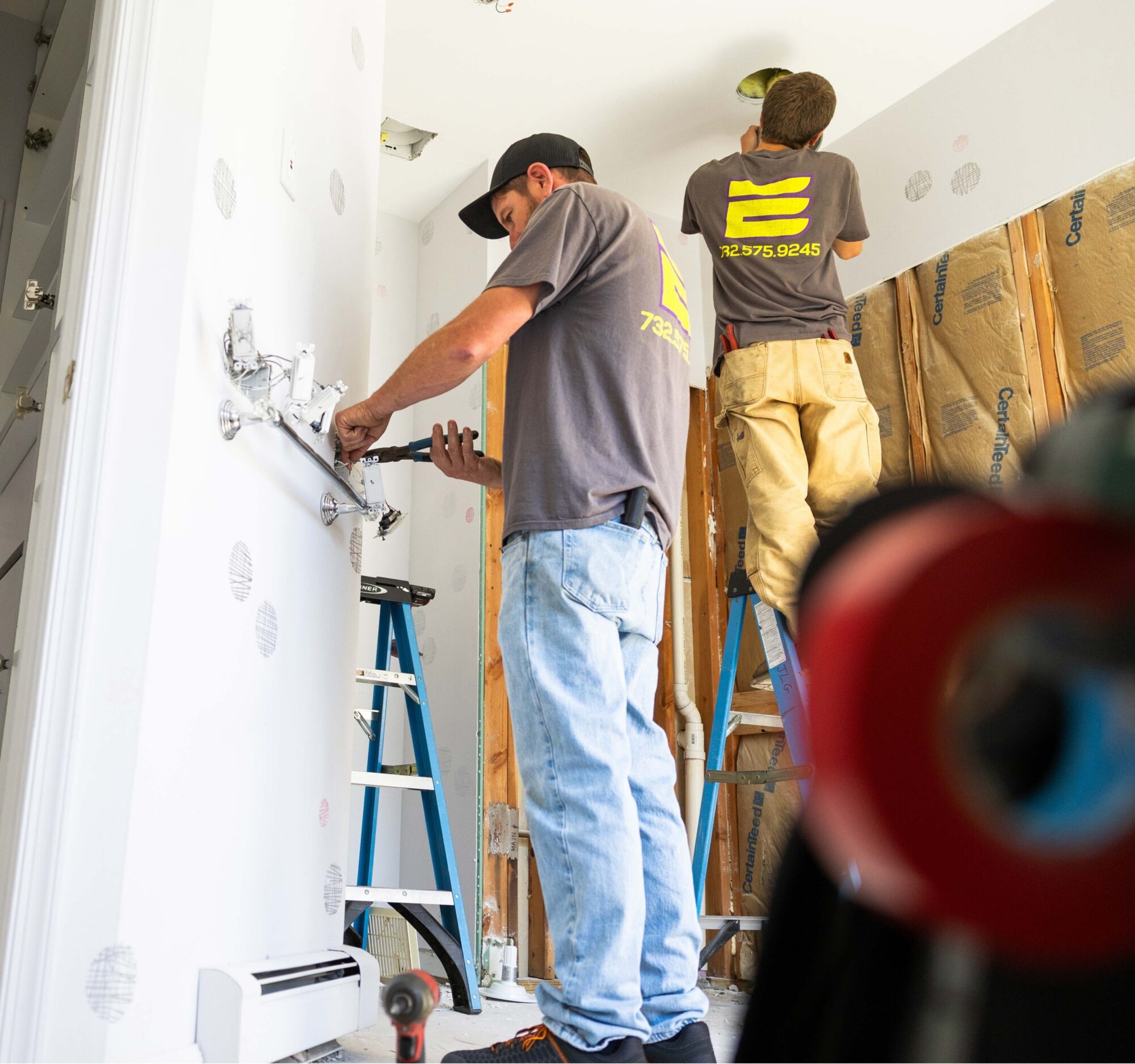
Hire a licensed electrician for your safety, code compliance, and warranty integrity. Professional installation usually costs between 300 and 700 USD, though device costs can begin just under 100. There are regional differences, and some places experience higher labor charges.
Installers come equipped with voltage testers, wire strippers, screwdrivers, drills, and safety gear. Make sure your installer reads the manufacturer instructions and ties the unit in with your existing panel. Request a post-installation inspection or report that confirms breaker sizing, grounding continuity, and proper wiring.
Say no to DIY — wrong hookup can void warranties, shock you, or leave your home unprotected.
System Compatibility
Verify that it’s compatible with your main breaker type, panel brand and any special equipment, like solar inverters or EV chargers. Some protectors are designed to fit specific panels, while others are universal or external.
Check that the protector accommodates both old and new infrastructure and permits expansion down the road, like installing a backup generator or additional panels. Verify that your selected unit safeguards the kinds of loads you prioritize—major appliances, HVAC, telecom, and smart devices—and that it integrates with whole-home systems without complication.
Layered Protection
Layered protection means employing a multiplicity of complementary defenses to protect wire and devices from surges. Begin with a defined strategy spanning the service entrance, branch circuit, and point of use equipment so that each layer confronts a different danger level and failure mode.
First Defense
Install a whole house surge protector at the main service entrance to stop large surges before they propagate through the wiring. Service entrance protection is the first line of defense and is installed at the main electrical panel. It should be rated to block no less than a 40,000-amp spike and be UL 1449 certified for performance.
This layer guards all circuits and big ticket appliances such as HVAC, water heaters, and kitchen equipment, decreasing the likelihood of catastrophic damage from lightning strikes or utility grid faults. Select a model sized for your service type (single- or three-phase) and matched to panel voltage.
When properly placed and wired by a licensed electrician, it clamps in a blink and shunts surge energy to earth ground. Test and maintain this device. Inspect indicator lights, record any replacement history after high-energy events, and replace modules or the entire unit per manufacturer guidance to retain protection levels.
Second Defense
Supplement with point-of-use surge protectors or good quality power strips at outlets for additional coverage of sensitive electronics. These devices absorb the smaller, localized surges that sneak past the service entrance layer or are generated inside the home from motor starts, HVAC cycling, or switching events.
Surge strips with joule ratings and clamping voltage that match electronics should have a UL 1449 designation and an obvious end-of-life indicator. Place these protectors in areas with high concentrations of delicate circuit boards: home offices, entertainment centers, and smart device hubs.
For instance, safeguard desktop PCs and switches in your office, AV receivers and set-top boxes in the media room, and smart home controllers around the doorway to the smart hub. Rotate and replace outlet-level protectors every few years or following a known surge event. Bargain-basement power strips can fail silently and provide minimal long-term protection.
Additional Protective Layers
Additional protective layers to consider:
- Service entrance surge protection for greater than or equal to 40,000 amps UL 1449.
- Sub-panel protectors for detached garages or workshops.
- Dedicated protection for HVAC and refrigeration circuits.
- Isolated ground and dedicated circuits for medical and lab equipment.
- Ethernet and coax surge protectors for data and TV lines.
- Battery backup with integrated surge suppression for critical loads.
Layered protection decreases repair costs in the long run and decreases the risk of device loss. It all depends on device quality, proper installation, and regular maintenance.
Future-Proofing Your Home
Future-proofing your home’s surge protection is all about selecting systems that evolve with your requirements and safeguard higher-value devices as new technology emerges. Whole-house surge protectors typically endure for around 5 to 10 years, so consider replacements or upgrades within that time frame.
Consider three basic types of protectors: panel-mounted, point-of-use, and inline/external units. They all have trade-offs in terms of cost, ease of installation, and coverage. Plan on installation costs of 300 to 1,000 and buy units rated to absorb a minimum of 40,000 amps with clamping voltage less than or equal to 400 volts and an energy rating of 2,000 joules or higher.
Smart Home Integration
Choose surge protectors that talk to smart home systems so you can see what’s happening in real time and get notified when voltage spiking occurs. More advanced units provide Wi-Fi or wired reporting that integrates with home automation systems for remote diagnosis, which can detect recurring issues before they fry equipment like smart thermostats or cameras.
Utilize smart surge units to log surges and notify; that record can assist an electrician troubleshooting wiring. Future-proof your home and make sure it’ll work with popular ecosystems and that it protects both the low-voltage lines used by sensors and the main feeds for high-wattage items.
Evolving Technology
Opt for units engineered for change, with modular or swappable modules allowing you to upgrade surge capacity without rewiring the panel. Anticipate greater surge capacity as homes install EV chargers, heat-pump systems, and a slew of smart appliances.
Engineer a system that can accommodate add-on protective modules or a higher-rated main unit. Prepare for code changes: seek out devices certified to today’s safety standards. This reduces the likelihood you have to swap out gear following a code update.
Most protectors are panel-mounted, but some need external install. Select the format that fits your panel configuration and plans for expansions.
- Strategies for future-proofing:
- Opt for panel-mounted units with swappable cartridges.
- Purchase a protector rated greater than or equal to 40,000 amps and greater than or equal to 2,000 joules.
- Confirm clamping voltage is less than or equal to 400 V for closer protection.
- Go for smart monitoring and alerts-enabled models.
- Ensure electrical capacity for EV chargers and large appliances.
- Plan for replacement every 5 to 10 years and potential rewiring.
- Talk to an electrician about external versus panel installs and code compliance.
Long-Term Value
There’s an obvious long-term value in a whole home surge protector, which is a significant reduction in the risk of damage to your appliances, electronics, and data. Upfront cost and installation are significant, but the device can provide long-term value by extending equipment life and staving off expensive replacement. Average per-unit prices range between approximately 200 and 700 (currency remains the same across regions), and professional installation by a licensed electrician adds around 300 to 1,000 depending on panel access and local rates.
Throw in regular inspections or periodic component replacements and servicing when you figure your total cost of ownership. Estimate long-term value by considering total cost of ownership, including purchase, installation, and maintenance costs against probable savings. A midrange projector at 400 plus a 600 install means a 1,000 initial outlay. If surge protection stops one refrigerator or HVAC board failure that would cost 1,500 to 3,000 to replace, the device goes a long way towards paying for itself.
Multiply that across several protected items, such as TVs, computers, and smart-home hubs, and those saved costs can top 10,000 over a few years. Include modest maintenance, such as visual inspections during annual service and replacing worn components as needed. Unlike many plug-in protectors that wear out quicker, whole-home units generally last 5 to 10 years; however, some models may require tending earlier if subjected to multiple surges.
Compare the advantages of better protection to the expense of fixes and replacements. Service panel-mounted unit guards at the source, protecting all circuits and equipment downstream. It’s much more practical than purchasing dozens of point-of-use protectors for every outlet. For homes with costly equipment—home offices, home theater, or medical equipment—this wide coverage is often the cheapest solution.

Keep in mind that many surge devices have a rated lifespan. Some manufacturers specify three to five years under heavy surge exposure, while quality models are designed for the five to ten year range. Select cells with distinct performance metrics to align anticipated longevity with local grid status. Focus on warranties and demonstrated durability when you’re looking at models.
Seek a warranty that protects the unit and connected equipment, and read the fine print. Some firms cap payouts or insist on pro installation for coverage. Look for third-party test data and installer feedback to confirm reliability. Robust build, swappable components, and obvious obsolescence signaling all increase value by reducing surprise outages.
Record any upgrades for safety and insurability value by saving receipts, install reports, and warranty paperwork. Give this paperwork to insurers to demonstrate reduced risk. Some provide discounts or expedited claims for homes with whole-home surge protection.
Conclusion
Selecting a whole-home surge protector begins with straightforward information. Consider clamping voltage, surge current rating in kiloamperes, response time, and warranty. Then align those specs with your home size, local grid hazards, and essential equipment such as HVAC, refrigerator, and home office systems. Opt for units that mount at the main panel, supplement with point-of-use protection for sensitive devices, and hire a licensed electrician for safe fit and code work. Think long term: favor brands with test reports, replaceable modules, and good support. The right protector saves you repair bills, reduces downtime, and keeps essential equipment functioning after a storm. Need a little assistance selecting models for your panel and budget? Request a short list with pros and cons.
Frequently Asked Questions
What is a whole home surge protector and why do I need one?
A whole home surge protector gets installed at your electrical service panel. It blocks big voltage spikes from getting into your house. You need one to safeguard appliances, electronics, and wiring from damages caused by lightning or utility switching.
What key specs should I compare when choosing one?
Compare max surge current (kA), voltage protection rating (Vp), response time, and type (Type 1, 2, or 3). Higher kA and lower Vp mean better protection. Check for UL 1449 certification and transparent manufacturer information.
Can I install a whole home surge protector myself?
Most homeowners shouldn’t choose a whole home surge protector. It involves working at the service panel and may require permits. Get a licensed electrician.
Where should the surge protector be installed?
Have it installed at the main electrical service panel or meter base. This location intercepts incoming surges prior to their entering branch circuits and sensitive equipment, offering the most comprehensive protection.
How does a whole home protector work with point-of-use devices?
Whole home protectors manage large incoming surges. Point-of-use protectors add fine protection at specific devices. Use both for layered defense. The whole home unit comes first, then local protectors for critical gear.
How long do surge protectors last and how do I know when to replace one?
The lifespan depends on the number of surges. Most have an indicator or end of life light. Replace after major lightning or when the indicator shows failure. Follow manufacturer replacement guidelines.
Is a higher price always better for surge protection?
Find the right specs, certification, warranty, and installer reputation. A properly rated unit installed by a professional matters more than price.