

Key Takeaways
- Anticipate a wide range in total costs based on equipment, labor, and zone count. Budget for both hardware such as dampers and thermostats and professional installation to obtain precise figures.
- Hardware and thermostat decisions fuel the equipment cost differences. Smart controllers and wireless options increase upfront cost while enhancing efficiency and control.
- Labor and installation type impact pricing, as retrofits and multi-zone configurations tend to be more expensive because of increased complexity, electrical work, or duct repairs.
- More zones and larger homes drive up equipment and installation costs. They provide efficiency savings by conditioning only occupied spaces and reducing equipment cycling, thereby increasing its life.
- Factor in a backup for sneakier costs like ductwork, drywall, or additional electrical work and for annual tune-ups and filter changes.
- Evaluate ducted versus ductless versus hybrid systems, focus on trusted brands and experienced installers, and weigh initial investment against long-term savings and resale value.
===
An HVAC zoning system cost is the price of incorporating dampers, controls, sensors, and labor to section a structure into temperature zones.
Costs depend on factors such as home size, number of zones, and system compatibility, usually costing anywhere from a few hundred to several thousand dollars per zone.
Initial expenses encompass both equipment and installation, while long-run savings derive from energy efficiency and localized comfort management.
The sections below provide typical price ranges and considerations.
The Price Tag
Zoned HVAC system cost includes equipment, labor, and site work. Typical ranges are roughly $2,500 to $8,000 and upward, with most homes being in the lower to mid range based on complexity and zone count.
1. Hardware
Key hardware are zone dampers, the central zone control panel, thermostats for each zone, and temperature sensors. Dampers come in different sizes and motor types and will cost extra for heavy-duty models. Control panels can be as simple as a relay box or as feature-rich as a controller.
Basic kits tend to skew lower and branded, networked panels push price up. Thermostats range from simple wired to smart Wi-Fi units, with adding advanced thermostats or wireless controllers costing roughly 200 to 300 per zone. Equipment cost scales with zones.
A two-zone kit often sits near 2,500 to 3,500, three to four zones around 3,500 to 5,000, and five or more zones typically 5,000 to 8,000. Verify compatibility with your existing HVAC equipment and ductwork. A portion of legacy systems requires additional adapters or a new control board, which boosts hardware spend.
2. Labor
Labor varies based on project complexity, home layout and local labor rates. A basic new-build install can be easy, but retrofits in existing homes get more time consuming. Experienced, licensed HVAC contractors offer proper sizing and sequencing.
Subpar or novice labor decisions can result in energy-sucking miscalculations or dangerous component failures. Multi-zone installations and retrofits typically entail additional hours and higher hourly totals. Include potential electrical work.
You might need to install a new 240V outlet, which can add $200 to $1,000, and anticipate additional days for drywall repair or ceiling access if ducts must be modified.
3. System Type
Ducted zoning utilizes your current duct system with dampers, while ductless mini-split zoning uses single air handlers. Ductless can sometimes cut duct work costs but have higher per-unit equipment prices.
Hybrid solutions combine ducted and ductless components and tend to be pricier but offer versatility. Ducted basic systems drift toward the lower cost band if ducts are in good condition. Ductless multi-head systems tend to nudge the project toward the higher end.
Try making up a quick table of local quotes to compare tradeoffs by price and performance.
4. Zone Count
Every additional zone increases price due to the need for extra thermostats, dampers, and sensors. A two-zone install typically costs between 2,500 and 3,500. Three to four zones cost between 3,500 and 5,000.
Five or more zones cost between 5,000 and 8,000. More zones accommodate larger houses or diverse comfort demands but add to parts and labor. Enumerate common configurations such as bedrooms versus living space and whole-house splits, and associate them with anticipated price ranges.
5. Installation Type
New construction tends to provide the neatest, most affordable integration. Retrofitting is complicated. Just retrofitting existing ductwork can increase labor by up to 75% more.
DIY zoning kits save on initial labor but sacrifice long-term performance and can void warranties. Small site tasks, like leveling an even pad under the outdoor unit, add 50 to 300.
Influencing Variables
A few variables affect the price of an HVAC zoning system. They are climate, home size, ductwork condition, thermostat choice, and local energy prices. Specific house attributes, such as high ceilings, bay windows, finished basements, or expansive gourmet kitchens, alter zone efficacy and increase installation difficulty.
Location impacts labor rates and permitting, while local utility rates impact payback time. Homeowners should examine comfort trends, occupancy schedules, and energy consumption before selecting a system to align systems with needs and prevent oversizing.
Home Size
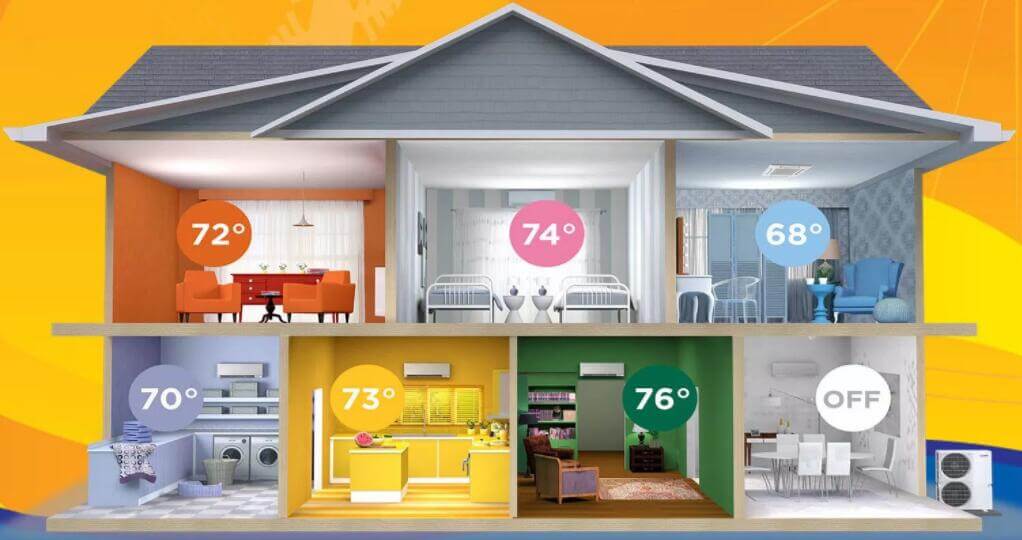
Big homes usually means more zones, bigger equipment and more install time, all of which increase cost. Multi-level homes typically need individual zones for each floor since upstairs and downstairs can be drastically different temperatures. A zone per floor is typical in these cases and assists with eliminating hot or cold spots.
Separate living spaces such as a basement apartment or home office require their own controls to maintain occupant comfort when in use and conserve power when they’re empty. Square footage and number of rooms direct system sizing and cost. A small two bedroom house may require just two zones, whereas a five bedroom home with open plan living might require four or five.
Office spaces have different weekday and weekend settings, and residential tenants will have schedules that impact how many zones make sense. Developers seeking LEED and similar certifications can win points by incorporating energy-reducing zoning.
| Home type/layout | Typical zones | Rough cost range (currency) |
|---|---|---|
| Small single-level (up to 100 m2) | 1–2 | 1,200–4,000 |
| Medium house (100–250 m2) | 2–4 | 3,000–7,500 |
| Large/multi-level (250+ m2) | 4 to 8 | 6,000 to 15,000 |
Ductwork Condition
Ducts in bad shape add expense as repairs, sealing or partial replacement will be required to make zoning function well. Older homes usually require duct work or duct replacement for balanced airflow. Hidden ducts or small ducts tend to restrict zone potential.
When ducts are inoperable, ductless mini-splits provide a lower-cost option and circumvent costly duct repair bills. Duct layout matters: long runs, many bends, or mixed-use vents require careful airflow management and possibly additional dampers.
If you’re properly configured, each zone gets the correct air volume. Zoning without it can cause pressure problems and bad comfort.
Thermostat Choice
Opting for smart or multizone thermostats increases upfront expense but can reduce consumption and enhance comfort. Smart controllers synchronize dampers and HVAC equipment for more graceful operation and can customize schedules for weekdays, weekends, or tenant patterns.
- Basic programmable thermostat: low cost, limited zone control.
- Smart thermostat (Wi‑Fi): moderate cost, app control, learning features.
- Multizone controllers: higher cost, central control for many dampers.
- Wireless wall units: add convenience, increase equipment spend.
Coupled with the home app and schedules, remote control and custom setpoints are possible, helping achieve the DOE’s up to 30% energy savings when systems are well designed and used.
Long-Term Savings
A zoning system saves money by allowing you to set variable temperatures in different zones of a structure. This brief overview sets the stage for the specific discussion on energy savings, equipment life, waste reduction, and calculating realistic savings based on usage and climate.
Energy savings and lower utility bills
Zoning provides exact control for when and where you heat or cool. Industry research indicates well-configured zoning systems frequently save 15 to 30 percent of heating and cooling expenses. For most homes, that translates into overall savings of approximately 20 to 30 percent in comparison to one thermostat.
In dollar terms, an average home could enjoy yearly savings of around $270 to $720, varying with local energy rates and the magnitude of the family’s setpoint adjustments. Coupling zoning with smart thermostats increases savings even more by learning daily habits and adjusting room temperatures when they are empty. This is most helpful in houses with different timing patterns, such as warm living rooms during the day and cool bedrooms at night.
Reduced runtime and longer equipment life
Because occupied zones fire to setpoints, aggregate runtime decreases. Less runtime reduces the wear on compressors, fans, and motors which can delay when you need to replace the whole thing. Considering that a full HVAC replacement runs around $8,000 to $15,000, even a slight lifespan boost of a handful of years carries significant value.
Most homeowners experience a 4 to 8 year payback on the up-front zoning investment, and every year thereafter those savings serve as compounded returns on that investment.
Less energy waste through targeted conditioning
Zoning kills conditioning vacuums. Instead of cooling or heating the entire house to serve one room, dampers and multiple thermostats target output where it’s required. This minimizes energy waste during low-use periods and assists in curbing peak-time consumption, which may be charged at higher rates in certain areas.
This means both lower monthly bills and less stress on the grid at peak times.
How to calculate realistic savings
Begin with your present annual heating and cooling bill. Then, multiply by a reasonable savings rate of 15% for the cautious estimate and 30% for the optimistic estimate to get a range. Adjust for climate; hotter or colder climates yield larger absolute savings.
Account for occupancy; houses with extended empty periods have seen the strongest relative increases. Don’t forget to factor in the cost of smart thermostats if you add them; they tend to accelerate payback by optimizing setpoint scheduling. Lastly, compare estimated yearly savings with the initial investment to confirm a four to eight year payback period in your case.
Hidden Expenses
A zoning upgrade frequently exposes expenses above and beyond the price quoted for dampers and controls. Anticipate electrical work to energize zone controllers and actuators and drywall repair where installers puncture access holes in ceilings or walls. Ductwork issues are common.
Collapsed, undersized, or poorly insulated runs may need repair or rerouting to balance airflow, and that work can push a small job into several thousand euros. Sometimes the hidden chain takes you all the way to a complete system replacement, which can run from €8,000 to €15,000 for an HVAC system. Incorporate that extreme into your risk planning.
Regular maintenance and filter swaps are hidden expenses that keep a zoning system working as intended. Zone motors and dampers require inspection and occasional lubrication, and filters must be replaced on time to avoid putting undue strain on the fan and compressor.
Overlooking this causes high energy consumption and premature equipment failure, resulting in hidden costs over time. Industry studies demonstrate that, when properly done, zoning can save 15 to 30 percent on heating and cooling. That saving depends on routine upkeep, or else the anticipated gains won’t come to pass.
Certain zoning configurations will need additional equipment to operate or to prevent issues. Bypass dampers are sometimes included to relieve excess pressure when a number of zones close, but they can create efficiency loss or noise if they’re poorly specified.
Hidden Costs – Supplemental heat may be required where a zone is habitually under-heated, such as a sunroom or underprotected addition. Electric space heaters or ductless minisplits add to the bill, but fill comfort voids. Talk about these options with your installer and have options priced upfront.
Usage habits expose sneaky expenses in common bills. It’s silly, for instance, to heat or cool empty rooms. If you have a guest room or a home office, you’re likely paying for that without even knowing it.
Zoning aims at that waste, but it only assists if the occupants change their behavior and close vents or set lower activity schedules. Local energy prices matter: higher electricity or gas rates shorten payback for efficiency measures, while low rates extend it. Work a buffer into your budget.

A good rule of thumb is to set aside 10 to 20 percent more for those surprises that work like structural repairs, electric panel upgrades, or overtime labor. Lifespan affects price too. Making every equipment last longer through appropriate installation and maintenance decreases the risk of that €8,000 to €15,000 replacement.
Basic zoning with 2 zones runs about €2,500 to €3,500, mid-range with 3 to 4 zones costs €3,500 to €5,000, and full-blown systems with 5 or more zones cost €5,000 to €8,000, not including hidden fees.
Future-Proofing Value
Future-Proofing Value Unlike ducts, a modern HVAC zoning system delivers quantifiable value over the long term by reducing energy consumption, enhancing comfort, and future-proofing upgrade paths. With a properly designed and installed zoning system, you can save up to 30 percent on your energy bills, a great selling point for buyers who anticipate lower operating costs.
For properties targeting green building certifications, improved energy efficiency obtained from zoning can add credits towards certifications like LEED, increasing the appeal of the property to institutional buyers and tenants that prioritize sustainability.
Smart thermostat integration and scalable zone control panels make upgrades a breeze. Digital thermostats allow occupants to set temperature and humidity values for each zone and define schedules. Control panels that accommodate extra zones enable a homeowner or property manager to begin with a limited number of dampers and grow as requirements evolve without swapping out the entire controller.
This modular approach minimizes initial cost and leaves upgrade paths open, which resonates with purchasers seeking future-proofing value.
Adaptive zoning encourages dynamic household configurations and multi-resident occupancy. Future-proofing value by adding finished space, like a basement suite or extra bedroom, is simpler when the ductwork and damper layout already allows for a new zone.
In multi-tenant buildings, separate zone control allows different tenants to run different schedules. Office zones stay cool during the week and set back on weekends, enhancing tenant comfort and lowering complaint-driven maintenance. Zoned systems eliminate daily thermostat wars by providing each user control of their space.
Longevity of equipment and indoor air quality improvements are concrete advantages. When you’re not overheating or overcooling the entire building, your HVAC system cycles less, lasts longer, has lower lifecycle costs, and expensive replacements are pushed off into the future.
Zoning allows for targeted filtration and humidity control per zone, which keeps indoor air quality higher in different-use spaces—storage, bedrooms, or kitchens—so residents are breathing cleaner air customized for that space.
Hands-on retrofit possibilities expand relevance. Zoning can fit to most duct types, even retrofit dampers for steel ducts that install with a quick cut-in, minimizing disruption during upgrades.
Examples include a family converting an attic to a living area who adds a dedicated zone to avoid fighting temperature differences. A small landlord subdividing an apartment installs separate controllers so each unit sets its own schedule, cutting disputes and turnover risk.
Smart Investments
Zoning systems are a great investment for homeowners dealing with hot and cold spots throughout their homes. With zoning, you can selectively control which rooms get heated or cooled, so you only operate the system where people are. That by itself can reduce total energy consumption and make living areas cozier without stressing the central HVAC system.
Go for smart products and trusted residential HVAC brands with the components. High-efficiency variable-speed furnaces and multi-stage heat pumps work best with dampers and smart thermostats because they modulate output to match zone demand. Brands with a long track record frequently provide better warranties and parts availability, which comes in handy if you have to get something fixed years down the road.
Think of proven vendors that provide zoning-ready hardware and third-party controls that connect through standard interfaces. Collaborate with certified diamond contractors or seasoned installers. Certified pros will size the system, plan duct or damper placement and set control logic appropriately.
Incorrect zoning can create airflow issues, short-cycling, or pressure imbalances that eat savings and damage equipment. Request that installers provide references, pictures of past work and certification evidence. Take smart investments and get several bids so you can compare scope and quality, not just price.
Weigh upfront cost versus long-term energy and comfort savings. Average prices are from around 2,500 to 8,000 in uniform currency, based on how many zones, intricacy of duct work modification, and if you install smart thermostats or upgrade the HVAC unit. Industry research indicates that if properly done, zoning can save 15 to 30 percent on heating and cooling costs, with real-life household savings frequently nearing 25 percent.
Think about local energy prices and your room usage. Homes with unoccupied guest rooms or a part-time home office receive more immediate value from zoning than homes where all rooms are used equally. Shop around and ask for specifics on costs before you commit.
Request detailed quotes that specify equipment, control panels, thermostats, damper costs, labor hours, and any ductwork or insulation work. Ask for estimates of projected energy savings, as well as a realistic payback period, which is usually four to eight years, but that can change with energy rates and occupancy patterns.
Evaluate intangible benefits: better comfort, higher resale value for energy-efficient homes, and longer HVAC life due to reduced wear and tear from lower run times.
Conclusion
Not only does a zoning system reduce energy waste, it increases comfort in homes where there might be hot or cool spots. Average installations are medium to expensive, so align the price to the size of the home, duct work, and control requirements. If you need labor, new ducts, or a bigger furnace, expect additional costs. Over time, the system cuts bills and maintains consistent room temperatures, particularly in houses with mixed usage schedules. Choose dependable dampers, intelligent controls, and a professional who measures airflow. For a more modest budget, begin with one or two zones and expand later. For a complete replacement, shop around for several estimates and a well-defined scope of work. PRIME HVAC ZONING SYSTEM COST.
Frequently Asked Questions
How much does an HVAC zoning system typically cost?
Typically, costs are somewhere around 1,000 to 4,000 EUR for simple systems and 4,000 to 10,000 EUR for larger or more complex systems, with labor and controls included. Rates differ based on residence volume and unit caliber.
What factors most affect the total price?
Primary considerations include the number of zones, kind of dampers, current ductwork status, control style (smart vs. Basic), and technician labor prices. Online dating for free equipment increases the price.
Will zoning save me money on energy bills?
Yes. Zoning minimizes wasted heating and cooling by conditioning only occupied spaces. Typically, the savings are between 10 percent and 30 percent based on use and system efficiency.
Are there hidden costs I should expect?
Potential hidden expenses are ductwork repairs, extra wiring, thermostat updates, and permits. Do yourself a favor and get a specific written estimate to avoid surprises.
How long does installation take?
Installation generally requires one to three days in most homes. Bigger or more intricate systems may require additional time. Time is a matter of duct access and how many zones.
Is a zoning system compatible with my existing HVAC unit?
Most newer HVAC units are compatible. Older or undersized systems may require enhancements. A professional load calculation will verify the compatibility and the performance.
Is a zoning system a smart long-term investment?
Yes. Zoning makes you comfortable, saves energy, and extends system life. Think about payback while factoring in local energy costs and your household’s usage.