

Key Takeaways
- Circuit breakers trip to protect your home from overloads, short circuits, and ground faults. Consider frequent tripping as an indication that a pro should inspect it or you need additional troubleshooting.
- Before flipping, shut down or disconnect devices on the impacted circuit. First, ensure your hands and the floor are dry, get good light, and stand on a dry, non-conductive surface to minimize the risk of shock.
- Reset the breaker by pushing it all the way to OFF, then ON. Bring appliances back one at a time, observing for instant re-trips to pinpoint persistent problems.
- If a breaker continues to trip, isolate the fault by testing devices individually. Examine cords and plugs for damage. Spread high-wattage appliances across multiple circuits to alleviate the load.
- Understand your breaker types: standard, GFCI, and AFCI, and the respective correct reset and testing procedure for each. GFCI and AFCI protect against specific faults and can signify different issues.
- Monitor breaker age and trip history, maintain a clean and dry panel, and contact a licensed electrician for worn, corroded, or frequently tripping breakers for long-term safety.
How to reset a tripped circuit breaker is a step-by-step process to restore power after an overload or short circuit.
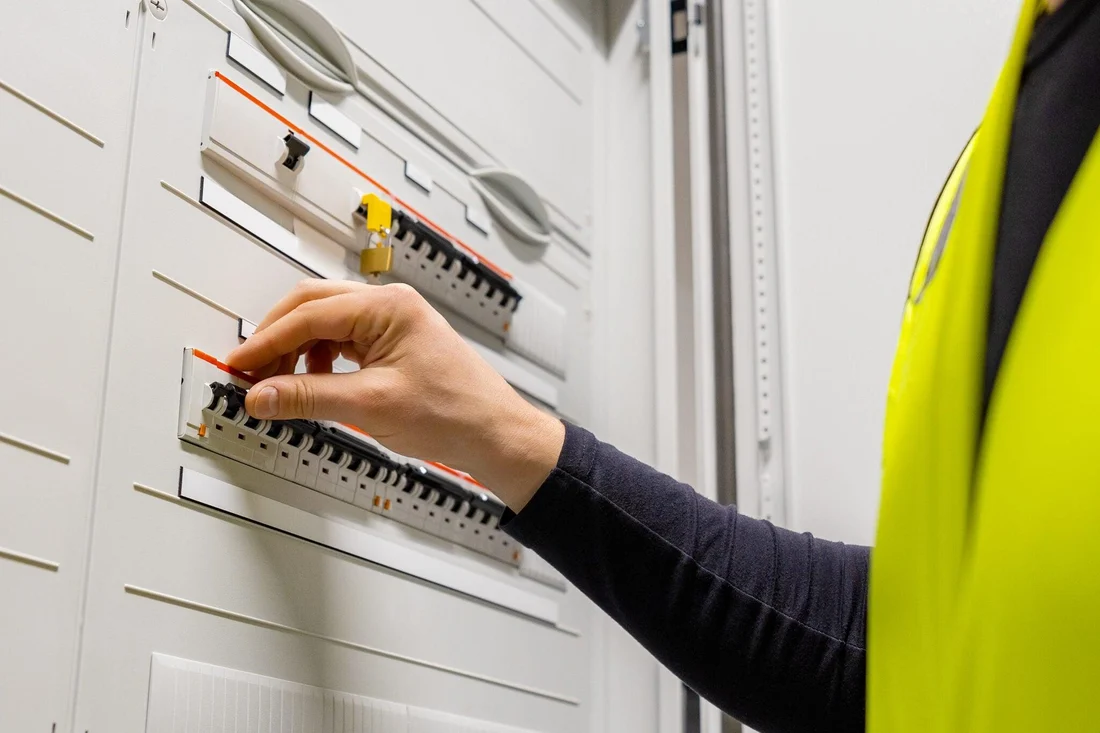
Begin by powering down devices on the impacted circuit. Next, find your breaker box, and push the tripped switch all the way into OFF before switching it back ON.
If the breaker trips again, mark the circuit and inspect wiring or devices. The guide below walks through safety checks, common causes, and when to call a pro.
Why Breakers Trip
Breakers trip to save a building’s wiring and minimize the chance of fire by interrupting excess current. When a breaker trips, it breaks the circuit so the wires don’t overheat or insulation melt. Understanding why breakers trip can assist you in repairing the immediate outage and reducing the risk of recurring trips or dangers.
Overloaded Circuits
When you plug too many things into one circuit, the current draw adds up above the breaker’s rating and the breaker trips to prevent overheating. Living rooms with TVs and chargers, home offices with computers and printers, or laundry rooms with washers and dryers are common overload culprits.
Keep an eye on demand. Track what runs when the trip occurs because air conditioners, space heaters, and kettles pull big amperage and can tip a circuit over the edge.
- Kitchen microwave
- Refrigerator
- Toaster or toaster oven
- Space heater
- Window air conditioner
- Desktop computer and monitor
- Clothes washer or dryer
- Hair dryer
Spread heavy-load devices across multiple different circuits, or use on a staggered basis. That frequently addresses overloads without new equipment. Older panels — 15 years or more — can trip more often from wear. Persistent nuisance trips may signify panel replacement rather than load shifting alone.
Short Circuits
A short circuit is an unintended path between conductors, providing a low-resistance connection that results in an excessive current surge. These include frayed wiring, loose connections, or damaged outlet bodies or appliance cords.
Watch for a burning smell, sparks, or scorch marks on outlets or plugs after a trip; those indicate a short instead of an overload. Short circuits are high risk because they can ignite nearby materials or deliver shocks, so stop using the affected circuit and arrange for a licensed electrician to inspect and repair.
Ground Faults
A ground fault occurs when current finds its way to ground through an unintended path, usually water or compromised insulation. These faults are common where moisture is present: kitchens, bathrooms, basements, and outdoor outlets.
Test GFCI outlets and breakers first. They’re supposed to trip on ground faults. Reset them only after you’ve assured no one is being electrocuted. Ground faults are a direct shock hazard and require immediate servicing, particularly in close proximity to water sources.
Make sure everyone in the home is safe before a reset attempt. Safety first.
Essential Safety
Before you reset anything, know why a breaker tripped and what dangers lurk. A breaker trips due to an overload, short circuit, ground fault, or an aging breaker. Pinpoint the probable culprit before you touch the panel.
Electrical fires are so common, almost 50,000 per year in the U.S. Alone, and some faults that cause fires won’t even trip conventional breakers. Be careful, don’t hurry.
Dry Conditions
Make sure your hands and the floor are dry before you touch the breaker panel, as even minimal moisture increases the shock hazard. Wear rubber-soled shoes and stand on a dry surface. A damp towel underfoot is not enough.
Lay a rubber mat in front of your panel for extra safety, particularly in basements or utility rooms where floors can get damp. Never try resets in damp conditions, like when it’s pouring down rain and there’s water in your garage or cellar.
Never touch the panel if you think water has gotten inside the box.
Proper Lighting
Lever a flashlight or portable lamp to illuminate the breaker space well enough to read labels and see switch positions. Proper lighting diminishes the possibility of flipping the incorrect breaker or overlooking a half-tripped switch.
Labor in generous, consistent illumination, not headlamps that can throw shadows across the panel and render tiny labels unreadable. About essential safety, keep a dedicated battery-powered light near the panel for immediate access during an outage and make sure you have replacement batteries handy.
Panel Familiarity
Learn the layout of your panel: main breaker, individual breaker rows, and any auxiliary switches. Identify each breaker with the room or appliance it serves—kitchen outlets, washer, HVAC, water heater—so you can isolate circuits quickly.
Identify the main breaker to shut off all power if you sense smoke, burning smells, or sparks. Examine the panel diagram if you have it. Diagrams connect breakers to zones and expedite troubleshooting.
Keep in mind that receptacle circuits are typically 15 or 20 amps and will trip when current exceeds this. Some systems will show low-voltage or warning signals when overloaded.
Maintain clearance and good light around the panel always and do not come in contact with metal parts inside the box. A simple short circuit won’t necessarily result in a visible warning.
Short arcs can go undetected. If you think an appliance is faulty, disconnect it before resetting. If you’re not sure whether it’s due to overload, a short or ground fault, or a failing breaker, just stop and call a qualified electrician.
The Reset Process
Resetting a tripped breaker employs a well-defined, linear sequence to safeguard individuals and equipment. Proceed to locate, identify, disconnect, reset, and restore. Skipping steps makes repeat trips or breaks. Listen for odd noises and smell for strange odors—they are often a sign of danger.
1. Locate Panel
Locate your primary electrical panel. Popular locations include basements, garages, or utility rooms. Look behind doors, inside closets, or in hallways if not apparent.
Empty any boxes or gear that obstruct access so you can get to the panel quickly in an emergency. Know the panel’s appearance and location in advance so you don’t waste minutes when the power goes off.
2. Identify Breaker
A tripped breaker frequently hangs halfway between ON and OFF. Seek out that midpoint first. Some panels utilize colored handles or little trip indicators; use those visual cues to quicken identification.
Labelled breakers make it easier to match the circuit to the room or appliance impacted. If labels are absent, test outlets or lights to determine which breaker controls them. Don’t confuse the main breaker with an ordinary circuit breaker. The main controls the entire service.
3. Disconnect Devices
Unplug or turn off everything on the impacted circuit before you reset. Taking off loads reduces the likelihood the breaker will pop again immediately from overload.
Jot down a quick device list—kitchen appliances, chargers, lamps—so you don’t forget a hidden load. Check any appliance that tripped it for scorch marks, frayed cords, or weird smells before you plug it back in.
4. Firmly Reset
Turn the tripped breaker completely to OFF first, then to ON again. You must switch completely to OFF; a partial motion may prevent the mechanism from seating.
Let it reset internally. Wait 2 to 3 seconds after OFF before moving to ON. Apply firm, consistent pressure. You’ll sense some resistance and hear a click when it engages.
If it feels stuck or will not move, don’t grind it. This can signify a more profound defect.
5. Restore Power
Reset all devices, turning them back on one at a time after the breaker is ON. Tracking for immediate trips assists in identifying even more latent faults or overloads.
Test lights and outlets in the vicinity to verify power has returned. Monitor the breaker for 15 to 20 minutes, as some problems only manifest after a few minutes of load.
If it trips immediately again, there is likely a significant electrical problem that requires an electrician.
Persistent Tripping
Constant tripping of breakers indicates there is something else going on that requires more than resetting the breaker. Don’t reset a breaker more than one time without seeing why it tripped. Persistent tripping may be caused by wiring faults, a failing breaker, or an overloaded circuit.
Typical reasons are circuit overloads, which occur when demand exceeds capacity, short circuits, which are low-resistance connections, and equipment faults. Record the event when a breaker trips: time, appliances running, weather or season, smell or heat, and whether the panel felt warm.
- Date and time of trip
- Appliances or lights on at the time
- Anything odd sounding, smelling, or hot at outlets or panel.
- Whether the trip was immediate or after sustained use
- Where the circuit in question is and whether any recent work has been done.
Isolate Fault
Unplug everything on the circuit in question and reset the breaker. Then reconnect appliances one at a time, leaving 2-3 minutes in between plug-ins to identify delayed trips. This pop quiz of elimination assists you in locating an appliance with a startup surge.
Refrigerators and freezers can pull three to four times their running wattage when the compressor starts, which could trip a borderline circuit. Hair dryers, styling tools, and portable heaters all pull significant fixed power, with hair dryers using up to 1800 watts and heaters around 1500 watts. These will cause trips when combined with other loads.
Try each device in another outlet on another known-good circuit. If the problem travels with the device, it’s likely the device. Just keep track of what appliance tripped and where you tested.
Inspect Cords
Examine power cords and plugs for fraying, cuts, exposed wires or burn marks. Immediately remove any damaged cords from service and replace a cord with a nick, as it can cause shorts or ground faults.
Examine extension cords and power strips for melted plastic, out of shape or discolored plugs, or a warm or hot sensation after unplugging. These are indications of overheating. Bad cords can cause intermittent faults that randomly trip a breaker, so swap out suspect cords and try again.
If a cord looks good but an appliance continues to trip the circuit in multiple outlets, then it might be the appliance itself that is faulty.
Reduce Load
Disseminate big appliances to reduce overload hazards. Don’t plug several heavy devices on the same breaker and turn them all on at once. Don’t run a space heater and hair dryer on the same line with your fridge going.
If overloads continue, you may need a service upgrade or dedicated circuits for major appliances. Have a licensed electrician perform load calculation and panel work. Clogged condensers on HVAC or refrigeration units will increase current draw and cause trips, so maintenance can reduce trips too.
Breaker Variations
Breaker variations Circuit breakers are not all the same. They vary by function and design, and knowing which one you have installed helps you reset safely and locate faults faster. Standard, GFCI (ground-fault circuit interrupter), and AFCI (arc-fault circuit interrupter) are the most common types.
Specialized units add protection against specific hazards: ground faults, dangerous arcs, or both. Check the panel label or breaker face for type before you do. Check for age or damage, such as scorch marks, a hot breaker, or a frequent trip, and mention if the panel hasn’t been updated in 10 years or more.
| Breaker Type | Primary Function | Typical Locations | How It Trips |
|---|---|---|---|
| Standard (thermal/magnetic) | Protects against overloads and short circuits | Most general outlets and appliances | Overcurrent from too many loads or a short |
| GFCI | Detects ground faults, cuts power quickly | Wet areas: bathrooms, kitchens, outdoors | Imbalance between hot and neutral currents |
| AFCI | Detects arcing faults that can start fires | Bedrooms, living areas in newer homes | Signature arc patterns in wiring or devices |
Standard
Ordinary breakers guard against overloads and short circuits. Most home circuits utilize these for lights, outlets, and general appliances. Breaker variations include resetting by flipping the breaker all the way to OFF and back to ON.
If it won’t stay on, unplug some devices and try again after a moment. Standard breakers don’t detect ground faults or arc faults, so a persistent trip can mask an issue that a GFCI or AFCI would address.
GFCI
GFCI breakers protect against ground faults where a hot wire touches ground or a person. They’re commonplace in bathrooms, kitchens, garages, and outdoors. Sometimes protection exhibits itself as a GFCI outlet instead of a breaker.
Test monthly with the TEST button and reset with RESET. If a GFCI breaker keeps tripping, check for moisture, a wet appliance or cord, or damaged cords. Kitchens can have two breakers or fuses. Mark both so you know which pile resets which appliances.

AFCI
AFCI breakers identify hazardous electrical arcs that have the potential to initiate fires. They are becoming more necessary in bedrooms and living spaces of new construction homes. Reset as a regular breaker — OFF then ON — but beware of repeated trips.
An AFCI that won’t stop tripping after sensible troubleshooting means a wiring defect or device gone bad. Replace AFCI units only with compatible units and per manufacturers’ instructions. After resetting, wait a few minutes, then turn them on one at a time to seek the fault.
If you detect a burning odor, heat at the panel, or damage that you can see, cease and call an electrician.
The Breaker’s Story
Circuit breakers were invented almost 100 years ago and the home circuit breaker became ubiquitous in the 60s, supplanting fuses. One frequently confused aspect of home electricity is what a breaker does when it trips. Breakers that feed receptacles are typically 15 or 20 amps and will trip when current exceeds those ratings.
Lighting circuits most commonly sit on 15 amp breakers. Over time, breakers wear out and get bad. Storms and surges shift the way they operate dependably. Keep a record of your panel’s age and service history to schedule maintenance and replace aged or faulty breakers to maintain system safety.
Wear and Tear
So repeated tripping and resets wear the internal switch, springs, and contacts. Mechanical parts loosen, contact surfaces pit, and the trip mechanism may stick. Worn breakers won’t trip when they should, which increases the risk of overheating or fire.
Plan a routine breaker panel inspection every few years for older homes, earlier if trips are common. Swap out any breaker that wiggles, smells scorched, has melted plastic, or swings without the normal solid click.
Environmental Factors
Humidity, dust, and wide temperature swings reduce breaker life by allowing corrosion to develop and by stressing insulating components. Panels in basements, garages, or by kitchens need more attention. Maintain the panel area clean and dry.
Vacuum dust away and don’t rest items directly against the cover. In damp areas, put in a dehumidifier or increase ventilation. Rust on terminals or water ingress is a red flag. Corroded parts can conceal bad connections that generate heat and spark potential.
Electrical Signatures
Each ride typically imprints a unique ‘signature’ associated with the fault type and time. A breaker that trips only when the microwave runs indicates that appliance or its circuit. Trips during storms can be a sign of transient surges or loose overhead conductors.
Maintain a journal recording the date, time, activity, and which breaker popped. That history aids an electrician in locating repeated faults and determining whether to replace a breaker or repair wiring or appliance problems.
| Trip Pattern | Possible Cause |
|---|---|
| Immediate trip on large motor start | Overload or short in appliance |
| Repeated trips at night | Timed device, thermostat or nocturnal use fault |
| Trips during rain/storms | Moisture ingress or surge from outside |
| Sporadic single trips | Loose connection or aging breaker |
Electrical fires, almost 50,000 a year in the U.S., can stem from faults that don’t trip standard breakers, so depend on logs, inspection, and prompt replacement.
Conclusion
Resetting a tripped circuit breaker is a straightforward chore that ensures your home’s safety and the electricity keeps running. Look for clear dangers. Switch off or unplug devices on the impacted circuit. Take the breaker all the way to OFF and then sharply ON until you feel it click. If it trips again, divide the load, interchange plugs to other circuits, or test equipment one by one to locate a defect. If it keeps tripping, call a licensed electrician. Older panels and GFCI/AFCI varieties might require professional attention.
Practical example: A space heater that trips a kitchen circuit often points to overload. Unplug the heater and plug it into one of those nice, convenient dedicated outlets or use a low-power setting.
Proceed carefully. If you require assistance, hire a professional.
Frequently Asked Questions
What does it mean when a circuit breaker trips?
The breaker tripped because it sensed an overload, short circuit, or ground fault. It trips power to safeguard wiring and equipment. It’s a feature; it’s not broken.
How do I safely reset a tripped circuit breaker?
Switch off or unplug devices on the circuit. Go to the breaker panel, flip the tripped breaker completely off, then on again. Stand clear and observe for immediate re-tripping.
Can I reset a breaker that keeps tripping?
No. If it trips again immediately, cease. That means there is a persistent fault. Unplug appliances and contact a licensed electrician to figure out what is going wrong and repair it.
Is it safe to reset a breaker with wet hands or in a wet area?
No. Water makes shock more likely. Dry your hands and the surrounding area before you touch the panel. If the panel or wiring is wet, do not attempt to reset it. Contact an electrician.
How do I know if a breaker is faulty and needs replacement?
If the breaker trips without a load, feels hot, buzzes, or will not reset, it may be faulty. Have a licensed electrician test and replace it if needed.
Can I reset a tripped breaker myself or should I hire an electrician?
You can reset straightforward, one-off trips after you’ve unplugged devices. Hire a licensed electrician if the breaker keeps tripping, if you smell burning or see sparks, or if you suspect wiring faults.
How do different breaker types affect reset steps?
Standard thermal-magnetic breakers share these reset steps. GFCI and AFCI breakers might require panel or outlet-specific resetting. Verify labels and ask a pro for unknown breakers.