


Key Takeaways
- Voltage drops from heavy appliances starting up often cause flicker or temporary dimming. Watch voltage during appliance startup and record when flicker occurs.
- Overloaded or shared circuits induce flicker and tripped breakers. Isolate heavy appliances onto dedicated circuits and map or label breakers to balance loads.
- Loose wiring and bad connections cause constant flicker and safety hazards. Check for discoloration, buzzing, or heat and have a licensed electrician fix or replace connections.
- Various bulb types react differently. Experiment by swapping bulbs, use LED-friendly dimmers, and replace failing ballasts or aging tubes for fluorescents.
- External grid or transformer problems can impact more than one home, so check with neighbors and your utility company before assuming the problem is internal to your home.
- Permanent solutions range from installing dedicated circuits to rewiring and upgrading panels, installing whole-house surge protection, and bringing in a professional electrician for the really complicated or persistent problems.
Voltage drop from large loads or loose electrical connections causes lights to flicker when appliances run. Typical culprits are heavy motors, such as refrigerators or air conditioners, and aging wiring, which cannot handle burst current.
Flicker frequently indicates wiring strain, a poor connection, or an overloaded circuit and can impact appliance life or safety. Below are diagnosis steps, when to call an electrician, and easy fixes to minimize flicker.
The Electrical Cause
Voltage sagging in a building’s electrical system results in lights dimming, flickering, or pulsing when appliances operate. A momentary variation in supply voltage, either a sag or imbalance between the two legs of a 240-volt feed, deprives lighting circuits of the current they require. This appears as flicker or temporary dimming.
When measuring hot-to-neutral and hot-to-ground voltages during appliance cycles, you can often see these changes and determine if the problem is localized (one circuit) or system-wide (panel or supply).
1. Voltage Drop
This sudden voltage drop is caused when high-power appliances such as refrigerators and air conditioners turn on and pull a high ‘starting current’. Motors in refrigerators, air conditioners, washing machines, and pumps draw such an inrush current that can drop available voltage by 50 percent momentarily at far-flung outlets.
This causes lights to dim or flicker for a few seconds, sometimes only at startup. Typical offenders are refrigerators, washing machines, dishwashers, HVAC compressors, and microwaves.
Watch voltage with a clamp meter or multimeter as the appliance cycles to catch the timing and depth of drops. Frequent deep drops point to wiring, circuit capacity, or panel limits, which is not normal startup behavior.
2. Circuit Overload
Running multiple large appliances on the same circuit risks overload and voltage sag. When the aggregate load surpasses the circuit’s capacity, lights will flicker and breakers will trip.
An appliance wattage table assists in load management and circuit planning. Establishing or utilizing an easy wattage chart for every appliance makes it obvious just how near to circuit overload you are!
Our recommendation is that high-demand appliances such as electric ovens and dryers require dedicated breakers to prevent constant flicker and minimize the risk of nuisance trips.
3. Loose Wiring
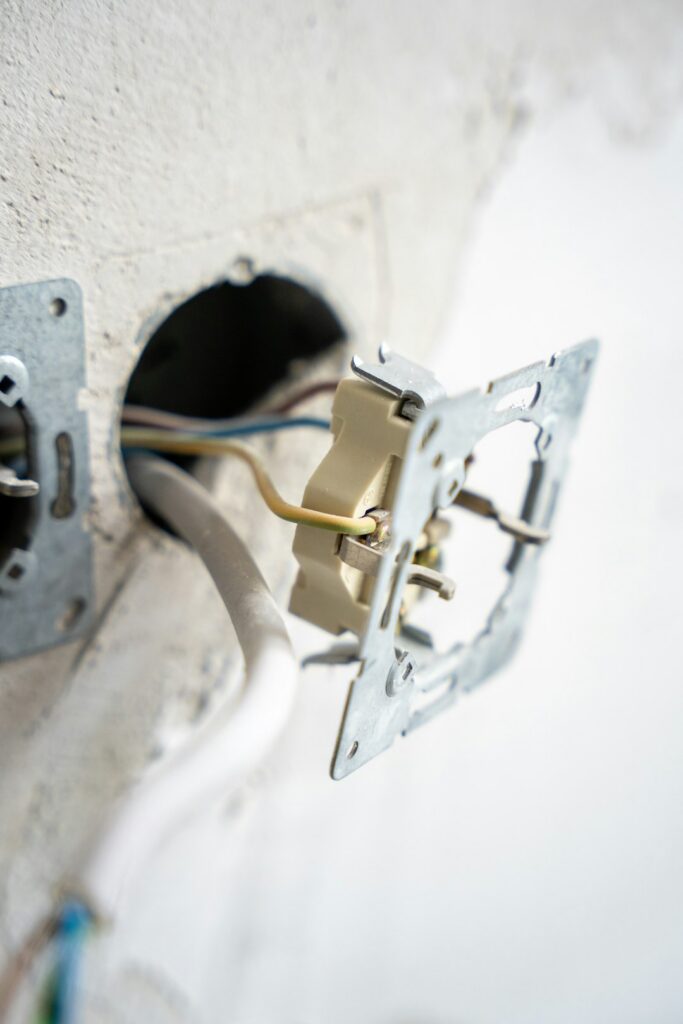
Loose connections at outlets, switches, or the service panel lead to intermittent voltage loss and flicker. Check for discoloration, buzzing, or heat around devices. These are indications of poor contact.
Tightening connections in the breaker box and main panel can restore a good, stable voltage. Loose wires are a fire and shock hazard.
If you notice burned insulation, brown outlets, or smell ozone, hit pause and call a qualified electrician ASAP.
4. Shared Circuits
Lights and appliances that share a circuit cause load conflicts at peak use. Map outlets and fixtures to identify shared circuits.
Splitting lighting and appliance loads onto separate breakers lessens flicker, particularly in older homes where wiring was not sized for such loads.
5. Appliance Inrush
Inrush current, as it’s called, is the rush of energy when motors start up. That quick surge can cause voltage swings.
See if flicker correlates to startup times. Repeated inrush-related flicker may mean upgrades to wiring, larger breakers or soft-start devices.
Pinpointing The Problem
Begin by narrowing the scope: determine whether flicker is tied to a single room, a specific switch, or is widespread. Methodically check appliances, record timing, and take basic electrical measurements to distinguish harmless reasons from problems requiring a professional electrician.
Isolate the Appliance
For all major and minor appliances, create a checklist with their usual run cycles and circuit used. Things like air conditioners, refrigerators, electric and microwave ovens, washing machines, hair dryers, space heaters, sump pumps, and even large chargers. For each appliance, note the typical current draw in amps, whether it uses a dedicated circuit, and if it has motors or heating elements that draw surges at startup.
Turn appliances on individually with someone observing the lights. Zero in on the problem. Begin with high-draw devices; these tend to be the biggest flicker culprits. Small loads can matter: multiple phone chargers or LED strips on a single circuit can create overloads. Identifying the offender aids in determining whether individual appliances require servicing, if a circuit is overburdened, or if more extensive panel enhancements are necessary.
Record which appliances produce visible dimming, how long the flicker lasts, and whether the flicker repeats with each cycle. This record directs repairs and bypasses guessing.
Check the Breaker
Check out the breaker panel — both visually and by feel. Identify the problem. These are symptoms of loose connections, overloaded circuits, or a dying breaker. Reset a suspect breaker and try the appliance again to verify flicker fires. This can distinguish transient trips from lingering faults.
Identify each breaker clearly as you test to make future troubleshooting quicker and safer. If a breaker still hums, trips persistently, or exhibits heat after resetting, it probably needs to be replaced. A bad breaker can masquerade as bigger electrical issues and needs to be dealt with by a professional electrician.
Observe the Pattern
Maintain a basic journal or spreadsheet recording time of day, appliance status, distance rooms impacted, and flicker duration. Observe if flicker occurs at appliance startup only, at steady operation, or even when nothing new energizes.
If flicker persists for a few seconds, occurs frequently, or across multiple rooms simultaneously, consider it serious. Repeatable, reliable patterns — flicker whenever the dryer kicks on, or just in one wing of a house — indicate specific devices or circuits.
Flicker during the day or when no appliance comes on can mean loose wiring, panel aging or an overloaded service that cannot handle today’s loads. Measure voltage between hot and neutral or hot and ground to verify suspected voltage drops.
How Bulb Type Reacts
Bulb type is what determines how it reacts differently to shifts in supply voltage or system stress. Voltage swings between the two hot legs, bad grounding, uneven phase loading, and faults on the panel all affect how a lamp acts. Others experience heavy flicker at times and almost none at other times.
Phase loading or a 240 V appliance on the opposite hot leg can cause flicker to be intermittent. A brief bulb swap is an effective first test. If a different lamp steadies the light, the issue is likely the bulb or its compatibility rather than the house wiring.
Incandescent Bulbs
Incandescent bulbs typically only flicker for a short duration during voltage sags and rarely exhibit high frequency sustained flicker. They utilize a filament that heats and cools slowly compared to the rate of voltage change, so quick dips appear as a subtle dim, not a strobing.
- Maintain fixtures and vents because heat reduces lifespan.
- Tighten loose bulbs and sockets from time to time. A bad contact can cause flicker.
- Play safe, only use bulbs rated up to the fixture’s maximum wattage.
- Change bulbs when filaments darken or blacken inside the glass.
Tighten or swap bulbs that flicker frequently. A bad physical connection is a frequent, easy-to-fix culprit. Incandescents are less sensitive to small voltage swings than LEDs. Constant flicker with incandescents indicates wiring or panel problems.
LED Bulbs
LEDs are very sensitive to voltage variances and to dimmer compatibility. Even small voltage shifts or an incompatible dimmer cause visible flicker or buzzing. LED drivers anticipate a consistent input, and when they don’t get it, LEDs can flicker like crazy.
LED-friendly dimmers and dimmer load ratings can give you a head start before swapping bulbs. Check for loose connections at the fixture and confirm bulb type aligns with the fixture. Some GU-base or integrated fixtures require specific LEDs.
Replace a suspect LED with a proven, quality one and observe if flicker ceases. Much of the reported flicker stops with a switch to a compatible LED.
Fluorescent Lights
Fluorescent lamps commonly flicker when ballasts fail or voltage dips. Rapid on/off flicker is a classic ballast indicator. Cold and old tubes decrease output and increase flicker in both frequency and severity.
Change out old tubes and ballasts if flicker continues. Newer electronic ballasts operate more steadily and are less prone to hum. Make sure the fixture is grounded and the panel and neutral connections are good.
Bad grounding or wide voltage swings between legs, as reported in extreme cases such as 194 V and 26 V, will exacerbate fluorescents and may necessitate panel or service upgrade.
External Factors
Flickering lights aren’t always from wires within a home. External factors such as forces on the local electrical network, weather, and equipment outside the property can alter voltage and cause lights to dim, blink, or pulse. Observing cycles and timing assists in differentiating external problems from internal flaws.
Utility Grid
Grid voltage powers multiple houses on a single feeder, so dips and surges there appear throughout a neighborhood. The typical home voltage range is somewhere around 115 to 125 volts. Anything higher or lower than that window frequently causes flicker.
During peak demand hours, especially hot afternoons when tons of air conditioners are running, the grid can sag and lights dim for a moment. Grid maintenance, switching, and sudden spikes can cause widespread flicker. Scheduled work is usually posted by the utility, so follow company notices and outage maps.
If flicker coincides with local outages, check for advisories mentioning transformer work or line repairs. Storms and electrical storms would often take out the grid. Lightning and high winds can trip feeders, cause transitory surges, or automatic switching that temporarily changes voltage.
Flooding or water damage to pole equipment or underground cables changes supply quality as well. If neighbors experience the same issue, it’s a pretty solid indication the culprit is on the grid and not inside an individual residence.
Pace timing and context. If flicker happens during downpours, heat waves or scheduled utility work, it is indicative of external causes. Jot a small record of times, weather notes and if neighboring homes are impacted. This information assists in utility calls.
Transformer Issues
Transformers reduce voltage from distribution lines to levels that can be used in homes. A failing or overloaded transformer can generate brownouts or flicker over several houses serviced by that unit. Unlike a loose lamp socket, which flickers wherever the lamp is plugged in, transformer trouble tends to result in whole-house dimming.
Overloaded transformers, rife on hot summer days, turn to toast. They warm up, efficiency drops, and voltage can slide out of that 115 to 125 V window. Defective insulation or components can generate erratic output that makes lights flicker.
Extreme heat or cold speeds wear and can alter transformer behavior, so seasonal patterns are revealing. Verify if the neighbors have the same symptoms. Multiple reports from an area raise the likelihood the transformer is the culprit.
Resolution often needs the help of utilities, such as replacement, tap adjustment, or load redistribution. Take note and notify the utility that they should come out and inspect or upgrade.
Your Home’s Electrical Story
Persistent flickering lights are more than just annoying; they tell the story of your home’s electrical system and highlight its weakest link. Document when and where flicker occurs, record what appliances were being used, and review any new electrical work. Persistent flicker could indicate overloaded panels, outdated wiring, or loose connections.
Recording each occurrence, including the date, length, appliances operating, and any visual indicators like discoloration, establishes a history that assists a professional electrician in identifying the underlying cause more swiftly.
A Silent Warning
Flicker that continues for a few seconds or recurs frequently is an initial symptom of major electrical problems. Loose wiring, bad connections at outlets or within the panel, or failing breakers can cause voltage drops that appear as light flicker.
If flicker is accompanied by heat, crackling, or discoloration around a switch or outlet, consider it urgent. Those are indicators of arcing or high resistance that can ignite fires. Flicker contained to one room or circuit typically indicates that circuit, a specific switch, or a single outlet.
When flicker becomes consistent or intense, cease use of impacted outlets and contact a qualified electrician immediately to examine wiring and connections.
Appliance Lifespan
Voltage swings reduce the lifespan of delicate electronics and appliances. Motors, compressors, and electronic power supplies take stress from repeated dips and spikes, and components can fail prematurely after repeated events.
Keep an eye on appliances for strange sounds, underperformance, or delayed startups following flicker episodes.
- Refrigerator or freezer: louder motor, more cycling, warmer interior.
- HVAC systems include short cycling, rattles, or failure to maintain temperature.
- Washing machine or dryer: irregular spins, error codes, or failure to start.
- Computers and TVs can experience unexpected shutdowns, screen artifacts, or data errors.
- Microwave and small kitchen appliances can experience inconsistent power, burn marks, or tripped breakers.
Surge protectors for sensitive devices. Consider a whole-home surge protector to protect against major spikes. Hold onto receipts and warranties. Record appliance behavior in your electrical log.
Modern Home Sensitivity
LEDs and modern electronics respond to even minor voltage shifts. They flicker or dim when the feed is unstable. Old houses have old wiring and panels not sized for modern loads of several high-powered devices.
New circuits or a service panel upgrade can ease the stress and minimize flicker. Balance loads across circuits. Shift heavy loads such as ovens or EV chargers onto their own dedicated circuits.
If dimmers are installed, verify bulb compatibility. The wrong bulb-dimmer combo can flicker. Consult an expert to strategize rewiring, panel upgrades, or new circuit installs as needed. Electrical problems can spiral fast, reach out if you’re unsure.
Permanent Solutions
Permanent Solutions try to eliminate the root cause of flickering lights, not just band-aid it. While most have upfront costs, they save throughout the lifespan of the home, making it safer and requiring less maintenance. These steps focus on electrical system upgrades: adding dedicated circuits, replacing old or undersized wiring, inspecting and tightening connections at the service panel and meter, and installing whole-house surge protection.
Some Permanent Solutions pick fixes that fit the size of the problem and talk with a licensed electrician before you get started.
Dedicated Circuits
- Identify appliances that draw large startup current: refrigerators, air conditioners, electric ovens, heat pumps and well pumps.
- We would run a dedicated circuit for each high-demand appliance sized to its nameplate amperage and a buffer.
- Suitable breaker type and wire gauge for the ampacity adhere to local code standards.
- Check voltage drop for long runs. Enlarge conductor size if voltage drop is too great.
- Spread loads across phases in multi-phase systems to minimize panel strain.
Identify each dedicated circuit at the breaker and on a circuit map. Labeling your work the right way makes future troubleshooting faster and cuts down on the likelihood a homeowner will accidentally pile on loads to the same circuit.
Lighting circuits can’t share breakers with major appliances, so don’t run kitchen or living-area lighting on the same branch as your oven or HVAC. Examine the breaker box configuration to spread heavy loads among all possible spaces and phases, so circuits are as evenly loaded as possible and there is some capacity remaining for new circuits in the future.
Upgrade Wiring
Swap out antiquated or undersized wiring that won’t support new-age appliance demands. Wiring put in place decades ago may be too small, too brittle, or aluminum that oxidizes and loosens, sapping voltage and causing flicker. Substitute copper for aluminum or deteriorated conductors where functional, as copper provides superior conductivity and durability.
Inspect and tighten every connection in the main panel and at the meter socket. Loose lugs and burnt terminals are frequent culprits of sporadic voltage loss. If your panel is full or uses old style breakers, consider replacing it with a new panel that has capacity for new circuits.
Panel upgrades tend to accompany rewiring work and can be a wise investment to avoid repeated headaches. Permanent electrical upgrades can be more eco-friendly than temporary fixes. Newer systems run cooler, lose less energy, and reduce waste from repeated repairs.
Professional Help
Call in a professional: For a gnarly or ongoing problem, hire a licensed electrician. They have the equipment to measure voltage under load, test connections, and identify hazards you might not see.
Professional troubleshooting is necessary for whole-house flicker or large voltage drops that are indicative of service conductor or meter issues. Ask for a complete wiring, panel, and meter inspection and obtain written estimates for panel upgrades or partial rewiring when flicker continues.
Conclusion
Flicker that presents itself when an appliance runs often indicates a true voltage sag. Loose wires, a weak service connection, or an undersized panel cause most cases. LED and CFL bulbs respond more than old-fashioned incandescents, so changing bulb types can mask the symptom without addressing the cause. A rapid inspection for tight panel lugs, outlet connections, and appliance cords discovers most defects. For permanent solutions, have a licensed electrician check line voltage, examine the main connection, and update the panel or service if necessary. Small repairs like tightening connections or replacing old breakers reduce the risk quickly. We’ll help you plan your next move. Schedule an electrician for a safety-first inspection and transparent repair estimate.
Frequently Asked Questions
What usually causes lights to flicker when an appliance starts?
Usually, this occurs due to a momentary voltage drop when large appliances kick on. Things like motors and compressors pull a heavy startup current that momentarily sags the voltage and makes your lights dim or flicker.
Are flickering lights dangerous?
Occasionally, intermittent flicker from appliances is generally benign. If the flicker is frequent or severe, it can indicate loose wiring or overloaded circuits, which is a fire risk that should be checked out by a licensed electrician.
How can I tell if the problem is my bulb or the wiring?
Cross that bulb with a known good one and a different fixture. If the flicker tracks the bulb, it’s the bulb. If it continues across fixtures or occurs with several bulbs, blame the wiring or the circuit.
Do LED bulbs flicker more than incandescent or CFL?
LEDs can be more obvious because they react immediately to voltage fluctuations. Quality matters: high-quality LED drivers reduce flicker. Incandescent bulbs hide short dips because of their thermal inertia.
Can external grid issues cause flicker?
Yes. Flicker can be caused by swings at the utility connection, nearby heavy loads, or bad utility equipment. If several homes exhibit the same problem, call your utility company.
What immediate steps should I take to reduce flicker?
Tighten lamp and fixture connections, swap out low-grade bulbs for certified LEDs, and avoid operating multiple heavy appliances on the same circuit at the same time. If in doubt, consult a licensed electrician.
When should I call an electrician or my utility?
Call an electrician if you observe regular flicker, burning smells, hot outlets, or tripped breakers. If neighbors have the same issue or flicker appears to be tied to grid-level events, contact your utility.