

Key Takeaways
- Target and prioritize older outlets that are most at risk, like ungrounded circuits, brittle insulation, and loose receptacles, and arrange for professional inspection or repairs where necessary.
- Make sure to upgrade high-use and kid-accessible outlets with tamper-resistant receptacles, sliding plates, GFCI protection, lock boxes, and deep boxes to prevent shock and fire dangers.
- Additional outlet safety measures include cutting and taming cords, anchoring furniture to obstruct access, and even moving or raising outlets when feasible.
- Balance safety and historic character by using covers that are discreet or paintable, reproduction hardware that meets modern code, and consulting preservation guidelines prior to significant retrofits.
- Environmental risks – Check for moisture, pests, and corrosion near outlets and seal or repair entry points and leaks to protect wiring and insulation.
- Approach an outlet upgrade with a plan that tests grounding, prioritizes rooms where your kids spend the most time, and tracks progress and schedule for maintenance and re-evaluation as your children age.
How to childproof outlets in an older New Jersey home Some older homes will have older two-prong outlets or loose plates or worn wiring that increase hazard levels. Easy solutions include swapping out outlets for tamper-resistant receptacles, putting on cover plates, securing loose outlets and verifying grounding. Hire a licensed electrician for wiring upgrades or any work you’re unsure about. Below are some practical, low-cost options and when to call a pro.
Unique Hazards
Older homes can have electrical systems that are very different. These systems pose unique dangers to toddlers who investigate outlets or pull on cords. Knowing the typical weaknesses in older wiring and outlet installation allows you to design specific, strategic childproofing that minimizes shock, electrocution, and fire hazards.
Ungrounded Circuits
Most older homes had been wired with two-prong outlets which are without a safety ground. Without a ground, a faulted appliance or a kid sticking a metal object in increases the risk of fatal shock. Test outlets with a basic 3-light tester or polarity tester prior to installing any safety covers. These devices indicate whether an outlet is grounded, reversed, or open. For baby and toddler rooms, such as nurseries, playrooms, and living rooms, make it a priority to convert two-prong outlets to three-prong grounded outlets or install a GFCI where rewiring is not feasible. Ungrounded outlets are especially dangerous when combined with improperly maintained appliances, extension cords, or adapters. This combination increases the risk of current flowing through your child’s body in unanticipated ways. Schedule an upgrade according to how often you use it and your children’s access to it.
Brittle Insulation
Over the years, wire insulation can become brittle and crack or flake. Exposed wiring, such as frayed insulation close to outlets or along cords, can expose live conductors. Examine exposed wiring near outlets, behind furniture, and in basements for cracked sheathing, powdery residue, or exposed copper. If you find damage, don’t tape or patch it as a permanent solution; replace the cable or have a licensed electrician re-insulate and secure connections. Torn insulation leads to short circuits when wires bump, and recurring arcing increases the chance of fires within walls. Swap out any wiring that is aged, particularly in kids’ playrooms or where toys and chargers plug in frequently.
Loose Receptacles
Loose outlets wiggle when things are plugged in or out, presenting openings between the receptacle and wall that kids can get their fingers into. Loose sockets stress internal connections, which can cause arcing and heat accumulation. How to identify and fix loose receptacles:
- Visually check for any gaps or a faceplate that separates from the wall.
- Lightly shake a plugged-in toy. Pay attention for extra play or creaking noises.
- Turn power off at the breaker and take off the faceplate to inspect the mounting screws and box depth.
- Tighten mounting screws or swap shallow boxes for deep outlet boxes for secure mounting. Use deep outlet boxes when replacing or repairing receptacles; they permit full screw engagement and provide room for wiring without pinch points. Don’t ignore loose outlets. Continued use can wear away contacts and pose a fire risk.
Upgrade Outlets
Upgrading outlets is a key childproofing hack for an older home. Getting rid of old or non-compliant sockets decreases the risk that little hands will touch live components. New gadgets add levels of automatic defense that static caps cannot. Below are some practical outlet options to keep in mind, with each listing describing what it is, where it is ideal, and how to implement it.
1. Sliding Plates
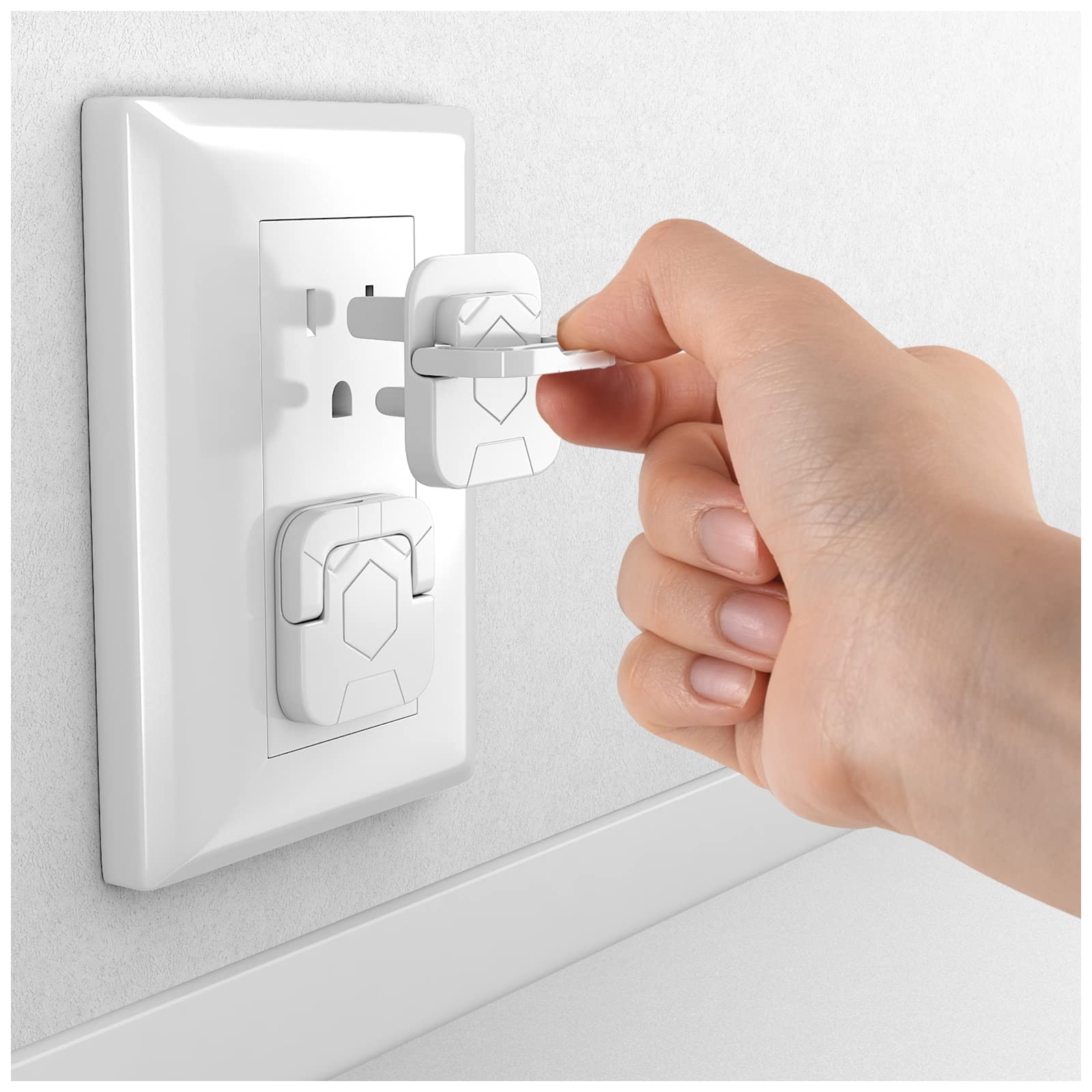
These sliding plate covers have a shutter on the inside that slides open when you plug something in and closes when you pull it out, keeping the live parts covered. They mount to a standard wall box and resemble a normal faceplate, so they are perfect for living rooms, hallways, and bedrooms where aesthetics are important. Since they don’t contain additional components and work automatically, sliding plates are low-maintenance, making them ideal for busy spaces where you plug and unplug devices all the time. While they provide some safety, their primary benefit is a physical barrier that prevents kids from jamming stuff into slots. Select options rated to meet your local electrical codes. Upgrade Outlets: Match plate finish or paintable trim to wall color for a clean, unobtrusive look.
2. Lock Boxes
Lock boxes fully envelop an outlet or the plug, typically in a rigid plastic construction with a keyed or push-lock lid. They work best on outlets that connect to essential devices you wouldn’t want kids unplugging. Think medical equipment, mini fridges in spare rooms, or extension cords. In playrooms or unmonitored spaces, lock boxes provide a distinct mechanical barrier that blocks access even if a kid figures out basic covers. If you’re shopping for a lock box, look for tamper-resistant boxes with strong hinges and latches, so they don’t open by accident and last longer.
3. Tamper Receptacles
Tamper-resistant (TR) receptacles feature spring-loaded shutters that open only when equal pressure is applied to both plug blades. They prevent forks, nails, and other intruders while accommodating regular plugs. TR outlets are now standard in new builds for child safety and are an easy retrofit in older homes during re-wiring or faceplate updates. Using TR receptacles reduces the chance of shocks and electrocution for little ones who like to investigate by hand. For maximum effect, swap out all common outlets throughout the house, not just the ones within arm’s reach.
4. GFCI Breakers
GFCI switches disrupt power fast when they sense a current imbalance, one that’s typically caused by water or a person. They are a must in kitchens, bathrooms, and laundry rooms, any environment where moisture is present. GFCIs reduce the risk of severe shock and electrical burns by halting current in milliseconds. Put GFCI-protected circuits where code mandates them and test those outlets monthly by pushing their test button, making sure that they actually do trip, then reset.
5. Deep Boxes
Deep electrical boxes give you additional room behind outlets to accommodate new wiring, bigger receptacles and thicker plugs without straining connections. They dissipate heat and avoid congestion that results in loose wires or shorts. Employ deep boxes when rewiring older plaster walls or converting to heavy-duty outlets. They make repairs and inspections easier down the road. Select the correct scale of depth when doing upgrades and you make the entire system more secure and manageable.
Preservation Balance
Preservation balance is about maintaining a home’s historic character in a way that addresses contemporary safety concerns. Older homes aren’t necessarily built with childproofing in mind or have old wiring, so you want your solutions to safeguard your kids without wiping away any period details. The National Electrical Code (NEC) has already mandated tamper-resistant receptacles since NEC 2008 Section 406.12 and GFCI protection in wet areas as per NEC Section 210.8, while the NEC 2021 edition adopted by New Jersey and locally enforced by many Morris County municipalities can influence necessary upgrades. If you’re planning work, thoughts about knob-and-tube wiring, circuits that aren’t the same, and possible retrofit expenses play a role.
Historic Aesthetics
Select outlet covers and safety devices to coordinate with trim and plate finishes and paint schemes typical of older homes. Preservation Balance reproduction hardware in brass, porcelain, and bake-enamel finishes is sized to fit contemporary boxes and maintains period looks while ensuring code compliance. Paintable outlet covers let you merge plates into the woodwork or wall color, and tamper-resistant receptacles with low-profile plates minimize visual clutter. Where visible outlets rest on decorative baseboard or wainscot, use covers with rounded edges or inset plates that reflect original lines.
Most childproofing inserts are transparent or recessed so they remain inconspicuous. For kitchens and bathrooms, opt for GFCI units with conventional faceplates or behind petite trim pieces to maintain style. If you have plaster walls or other uneven mounting surfaces, custom escutcheons can hide retrofit work. Make tamper-resistant receptacles and GFCI protection a priority even when the plate is period style matched for safety upgrades. Don’t trade them for looks.
Hidden Placement
Move outlets whenever possible to minimize accessibility. By moving sockets either higher on the wall or behind fixed furniture, they are out of a child’s line of sight and hand reach. For living rooms, put secondary outlets behind bookcases or sofas. For bedrooms, prefer higher mountings for bedside lamps. When moving is not feasible, utilize furniture as a purposeful screen. Built-in benches or cabinets can conceal lower outlets.
Concealed location provides an additional safeguard beyond tamper-proofing and works in areas where knob-and-tube wiring prohibits circuit modifications. Collaborate with an electrician experienced in historic wiring. They will consult on safe rerouting, friendly box depths, and if a complete circuit upgrade is necessary. Consider costs versus long-term safety. Electrical outlet upgrades can be expensive but offer lasting protection and peace of mind.
- Key considerations when balancing safety and preservation: * Match finishes and plate designs to original hardware.
- Utilize tamper-resistant receptacles and GFCI where needed.
- Check for knob-and-tube wiring prior to alterations.
- Prefer hidden, paintable, or reproduction covers.
- Check your local codes and NEC 2021 adoption.
- Allow for professional electrical inspection and retrofits.
Charm Consult historic preservation guidelines and your local building authorities prior to major electrical work to keep the character and meet code.
Secure Surroundings
Making the area around outlets safe is just as important as covering the outlets. A protected outlet can be unfastened by hanging cords, furniture within reach to climb on, or anything catching a child’s eye. Taking on the entire environment minimizes hazards from electrical shock, strangulation, tripping, and blunt force trauma.
Shorten Cords
Wind any excess cord length and use cord shorteners so loops do not dangle within children’s reach. Long, loose cords tempt pulling and chewing while a short, neat cord minimizes the risk of appliances being yanked off counters or a toddler jamming fingers into a plug.
Protect cords from babies and toddlers by routing them behind furniture or installing cord channels at least 1.5 meters off the floor where convenient. For floor-level devices, use short replacement cords to eliminate slack. Do not coil long cords on the floor. Do not keep cribs, play mats, or baby seats near any cord runs.
Use simple cord management products: velcro ties, plastic cable clips, spiral cable wraps, or surface-mounted raceways. Use non-toxic materials and clip on tightly so a nosy kid cannot tear them loose. Tag cords so you do not accidentally unplug something important during a speed clean.
Never run extension cords under rugs, through doorways or behind soft furniture. These arrangements trap heat, ruin insulation, and increase fire danger. If you require a socket somewhere else, have a new permanent one installed rather than relying on temporary extensions.
Anchor Furniture
Anchor heavy furniture to studs in the wall with brackets, straps, or anti-tip kits to prevent tipping when kids climb or tug. TVs, tall bookcases, and dressers are common culprits. Secure them even if they sit adjacent to an outlet, as tugging cords can easily shift or topple a unit.
Arrange furniture to obstruct direct access to sockets and cord runs whenever possible. A low sofa can protect a power strip from little hands. A dresser positioned a few inches away from a plug can provide a safe barrier. Just be careful to not build hidden nooks and crannies where wires snake behind overstuffed shelves. Those spaces can trap heat and prevent inspection.
Wall-mount your TVs and use backing straps on bookshelves. Attach freestanding units with safety standard-compliant furniture anchors and inspect anchors periodically for loosening. Anchored furniture eliminates climb points and lessens the likelihood that a kid will grab a live cord, which reduces both electrical and physical injury risks.
Checklist to inspect each room:
- Check for loose cords within 1 meter of the floor and secure or shorten them.
- Find climbable furniture near outlets and fasten it to studs.
- See if there are extension cords under rugs instead of permanent outlets.
- Make sure power strips are out of reach or covered and are not overloaded.
- Revisit every three months and after furniture moves as the kids mature and habits evolve.
Environmental Factors
Older homes can often react differently to environmental stress than newer constructions. Humidity, temperature swings, and pests all have an impact on outlet safety and performance. Considering these environmental factors aids in determining what to repair, what to swap out, and what to keep an eye on over time.
Humidity and temperature changes
Elevated humidity increases the chances of moisture getting to outlets, leading to short circuits, arcing, and corrosion. In basements and against exterior walls, measure relative humidity using an inexpensive hygrometer and aim for 30 to 50% where feasible. In humid conditions, dehumidifiers or improved ventilation around electrical panels and outlets minimize dampness. Fast temperature fluctuations create condensation in walls and outlet boxes in particular where warm interior air comes in contact with cold surfaces on the exterior. Be sure to insulate exterior walls and replace single-pane windows around outlets to prevent condensation. For such outlets in unheated spaces, utilize weatherproof covers along with GFCI protection as these minimize shock danger should moisture appear.
Inspecting for moisture and leaks
Check for water marks, peeling paint, or a musty smell around sockets. Those are indications of leaks or rising damp. Shut off the power at the breaker, then take off outlet covers and peer inside to see if it is damp, moldy, or has water marks. Should you find any moisture, track it to its source, which could be the roof, plumbing, or ground-level seepage, and fix the leak immediately. Trickle leaks can destroy wiring insulation and cause short circuits. If you discover water inside an outlet box, be sure to dry it completely and have a licensed electrician test the circuit and replace damaged components before turning the power back on.
Sealing gaps to keep pests out
Insects and rodents gnaw on insulation and wiring, posing fire and shock hazards. Plug gaps around conduit entries, cable runs and junction boxes with a flexible sealant or a suitable foam, being careful to observe ventilation codes. Make sure to install metal or rodent resistant bushings where your wires pass through the exterior sheathing. Put door sweeps on and mesh screens over vents. In crawl spaces, keep wiring in conduit and run it off the ground to prevent rodents from getting to it. For persistent pest problems, combine sealing with expert pest control so repairs endure.
Corrosion and rust monitoring
Rust on outlet covers or electrical boxes indicates extended contact with moisture and potential internal corrosion. Check exposed metal components every six months. Loose fasteners, greenish deposits, or pitting call for treatment. Swap out corroded covers and consider stainless or plastic plates in wet areas. Have an electrician open corroded boxes to inspect internal connections. Corroded terminals increase resistance and heat. Use GFCI and AFCI protection downstream of such compromised circuits to add safety while repairs are scheduled.
Upgrade Strategy
Begin with a clear scope: every room, hallway, and outdoor outlet must be listed and inspected. Pre-2008 homes are not mandated by code to upgrade, but the safety argument for doing so is compelling. A full-home outlet audit marks every standard receptacle, reports its grounding, tamper-resistant and GFCI protection status, and documents visible wiring varieties. Keep an eye out for classic old wiring like cloth-insulated, knob-and-tube, or aluminum. They require special care and typically a licensed electrician.
Begin with your plan for the upgrade. First, conduct the audit room by room and identify outlets that are easily accessible to children or in high traffic areas. Second, test each receptacle with a three-light tester for ground and polarity and mark any three-prong outlets that do not have a true ground. Third, locate wet locations such as kitchens, bathrooms, laundry rooms, garages, unfinished basements, and outdoor outlets and flag those for needed GFCI protection as required by NEC Section 210.8. Fourth, plan replacement by swapping standard receptacles for tamper-resistant receptacles throughout living spaces and bedrooms and installing GFCI devices or GFCI-protected circuits in wet locations. Fifth, address wiring issues. If knob-and-tube or aluminum wiring is present, consult an electrician for possible rewiring or the use of specific compatible devices.
Rate rooms and outlets in terms of kids’ access and daily exposure. Highest priority includes living rooms, playrooms, bedrooms, and any low outlets where toddlers play. Next are kitchens and bathrooms because of water risk, then hallways and guest rooms. Backyard and garage outlets are lower on the list for immediate child access; however, they have to be GFCI compliant as well. Think about your average family life flow—where the kids hang loose, where toys get charged, and night-lights stay plugged in.
Consider cost and benefit. Upgrading to tamper-resistant receptacles is a one-time cost that provides safety for years. If funds are tight, replace the high-priority outlets first and plan the rest. Save purchase records, model numbers, and installer notes.
Save and review again later. Test GFCIs each month and retest outlets following any substantial change to household layout. When your kids are older, their access switches up. Reevaluating which outlets require covers or hard upgrades is important. For homes with retrofitted 3-prong outlets without grounding, treat those as ungrounded until proven otherwise and do not depend on ‘plug-in’ surge devices that promise ground protection.
Upgrade strategy Keep track of your progress with a table that shows status and planned action.
| Location | Present Type | Grounded? | GFCI? | Action |
|---|---|---|---|---|
| Living room (north wall) | 2-plug | No | No | Replace with tamper-resistant, verify wiring |
| Kitchen countertop | Duplex | Yes | No | Install GFCI or GFCI breaker |
| Bathroom vanity | Duplex | No | No | Replace with GFCI tamper-resistant |
| Garage (outdoor) | 2-plug | No | No | Install weatherproof GFCI outlet |
Conclusion
Old NJ homes can be safe without losing character. Upgrade existing two-prong outlets to grounded or tamper-resistant outlets. Childproof outlets in an older New Jersey home by putting outlet covers on unused sockets and sliding tamper plates where kids play. Adding to these step-up outlets are tips to move cords out of reach and bolt furniture to eliminate tipping hazards. It’s always a good idea to check for loose wiring and hire a licensed electrician for anything beyond simple swaps. Keep an eye out for moisture in basements and old knob-and-tube wiring and address those problems first. Balance safety with preservation by opting for period-style faceplates and camouflaging contemporary patches behind trim. Small steps add up: swap a few outlets, secure a cord, and fix one damp area each month. Let’s do it then! Create a quick list of three repairs and schedule an electrician or pick up that outlet kit now!
Frequently Asked Questions
How do I childproof old outlets without changing the original wall plates?
Tamper resistant outlet inserts or one-piece slip-on outlet covers. They go behind the current plate or over it and prevent prongs from going in. This retains the wall plate with added safety and is fast for renters or historic homes.
Are tamper-resistant (TR) outlets worth installing?
Yes. TR outlets contain internal shutters that block foreign objects. They are up to current safety codes and reduce the risk of shock as well. An electrician can upgrade old receptacles quickly, boosting safety throughout your home.
Can I install childproof outlets myself in an older home?
You can switch out plain outlets if you’re electrically safe. Shut off power at the breaker and use a voltage tester. For older wiring, such as aluminum wiring or knob-and-tube, have a licensed electrician do it to avoid hazards and code violations.
What special risks do older New Jersey homes present?
Older homes might have loose outlets, missing grounding, or painted-over receptacles. These add shock and fire risk. An electrician can check, point out dangers, and suggest code upgrade upgrades.
How do I balance outlet upgrades with historic preservation rules?
Photograph current fixtures, apply reversible solutions, and select replacement plates that complement the original style. Check with local preservation guidelines before modifications. A skilled electrician who understands historic homes can assist you in maintaining your vanity appearance while enhancing safety.
Are weather and environmental factors relevant for indoor outlet safety?
Yes. High humidity, salt air by coasts, and moist basements can corrode contacts and enhance risk. Use corrosion-resistant, grounded outlets and GFCI protection in damp areas.
What is the best upgrade strategy for multiple outlets in an older house?
Focus on the rooms the kids use most or can reach. Mix and match GFCI, tamper-resistant, and grounded outlets as necessary. Arrange for a professional electrical inspection and generate a staged upgrade plan that suits budget and safety objectives.