
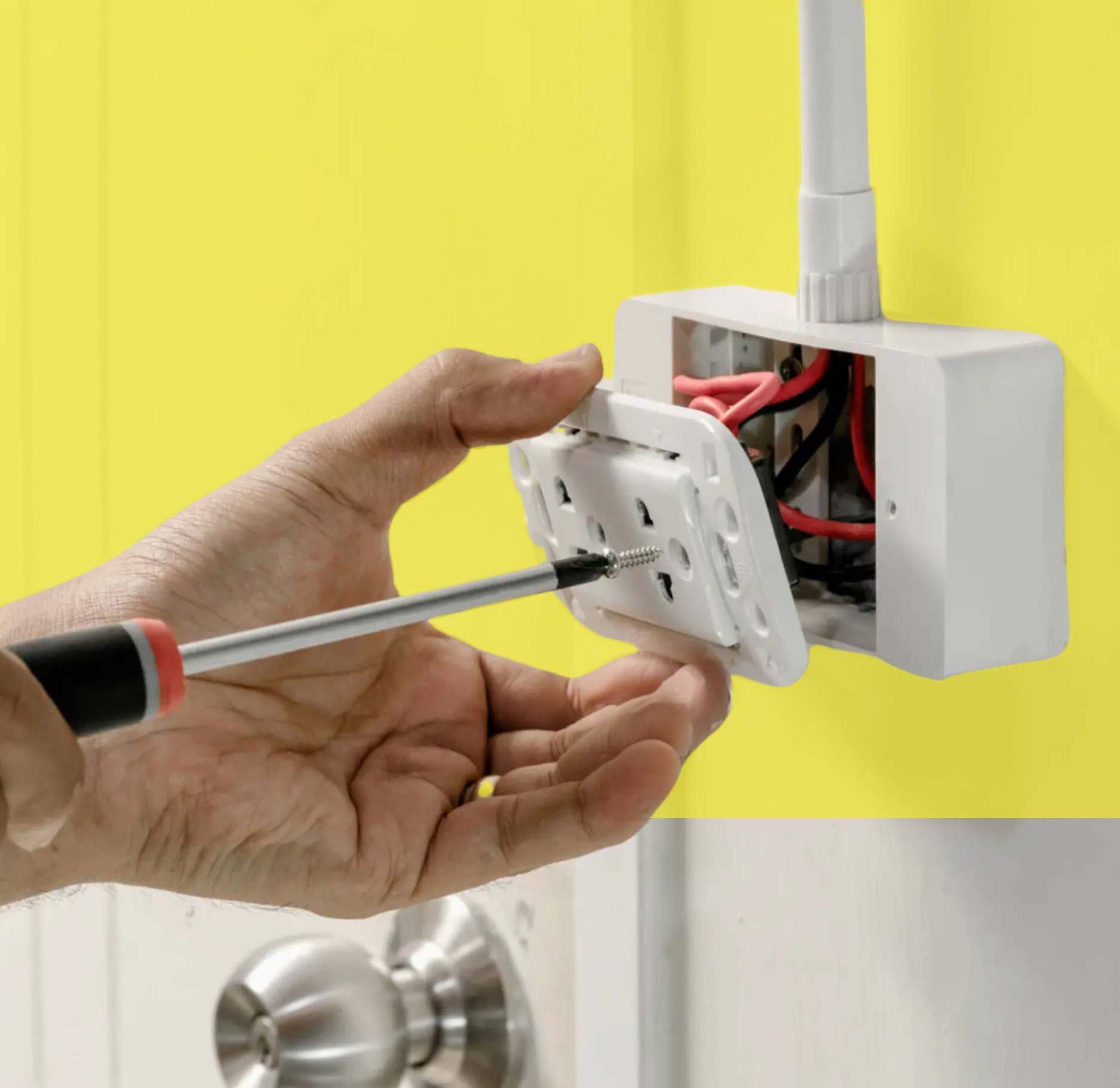

Key Takeaways
- Take immediate action and put safety first by shutting off the circuit breaker to the outlet in question and staying far away from it until it has been professionally inspected. Evacuate and call 911 if you see smoke or fire.
- Bad or loose terminals, overloaded circuits, arc faults, moisture intrusion, and debris buildup are the common culprits. Examine outlets for signs of wear, burning, or overheating.
- Check for warning signs, such as wall discoloration, buzzing or crackling noises, and warm faceplates, and discontinue use of any outlet exhibiting them.
- Use thermal imaging and circuit mapping to trace hidden hot spots and map which devices share a circuit for improved load balancing.
- Make preventative upgrades a priority by swapping old or damaged outlets, installing AFCIs and GFCIs where applicable, and arranging professional electrical inspections.
- Practice basic safety like not overloading outlets, keeping outlets clean and dry, educating your household on what to watch for, and having a Class C fire extinguisher nearby.
What causes a burning smell from an outlet Bad outlets, frayed cords, or short circuits can emit hot plastic or ozone scents and may indicate a fire hazard. Age, shoddy installation, and high-current appliances increase the risk of heat buildup. Identifying it early can mean the difference between avoiding damage and injury. We’ll discuss typical culprits, symptoms, and safe ways to take care of it below.
Immediate Actions
A burning smell from an outlet signals a potential fire hazard and requires immediate, measured steps to protect people and property. Begin by assessing the situation from a safe distance, then follow the actions below in order of priority: stop using the circuit, move people away, and prepare to suppress a small fire only if it is safe to do so.
Cut Power
Cut the circuit breaker that serves the compromised outlet at your main panel immediately. If you can’t locate the right breaker, turn off the main breaker to disable the whole house. Never touch the outlet face or plug with your finger while the power is on.
Checklist for safe handling when working near electrical outlets:
- Find and label the breaker before you turn anything back on.
- Check with a non-contact voltage tester that power is really off.
- Put on rubber-soled shoes and stand on a dry, non-conductive surface.
- Have a flashlight handy. Don’t burn candles or open flames.
- If taking off a plate or removing a plug, use insulated-handle tools and have one hand behind your back to minimize the chance of a ground. Don’t use the outlet until an electrician checks it. If wires are hot or already melted, don’t do it yourself. Use insulated tools in case you need to disconnect something by hand and you’re qualified. Otherwise, hold on for the electrician.
Evacuate Area
If you encounter smoke or flames, exit the room and building at once. Shut doors as you evacuate to help delay the spread of smoke and heat and cut down on oxygen feeding the fire.
Ensure all residents and animals get out peacefully. Delegate someone to sweep bedrooms and infrequently visited rooms when it is safe to enter. Once out, proceed at least ten meters away from the building if you can and do a headcount. Do not go back in until the fire department or building professional says it is safe.
If it smells strongly and there’s no smoke, still evacuate the vicinity and ventilate by opening windows if it can be done safely. Communicate clearly: tell neighbors or nearby occupants about the hazard so they can act.
Prepare Extinguisher
Keep a Class C (electrical) rated fire extinguisher handy. Know how to use it and maintain it.
PASS method steps:
- Pull the pin.
- Aim low at the base of the fire.
- Squeeze the handle.
- Sweep side to side until the fire has been extinguished. Never throw water on an electrical fire; water is conductive and will increase the risk of electrocution. Test the extinguisher’s pressure gauge and expiration date from time to time, and replace or service it if the gauge is in the red or the tag is out of date.
Primary Causes
A burning odor coming from an electrical outlet is almost always an indication of a fault in the device, the wiring, or the environment where it’s installed. Below are common underlying issues that lead to that smell:
- Loose terminals or connections causing heat and arcing
- Overloaded circuits where demand exceeds capacity
- Arc faults from damaged conductors or poor contacts
- Moisture intrusion that degrades insulation and causes shorts
- Debris including dust, lint, or pet hair that catches fire.
1. Loose Terminals
Loose screws or wire connections inside an outlet diminish contact surface and increase resistance. Excess resistance generates heat when current passes through, and that heat can burn plastic, insulation, or the outlet face. Arcing happens when a connection is intermittent: a small gap forms and electricity jumps through the air, generating both heat and the distinct ozone-like burning odor. Constant plugging and unplugging puts stress on terminal clamps, gradually loosening them. Examine outlets, wiggle plugs and see if they move. A hot faceplate or even a bit of charring around the slot are red flags.
2. Overloaded Circuits
Circuits are sized to carry a specific amount of current, measured in amperes. Anything over that causes wires and protective devices to overheat. Power-stripping dozens of devices into one outlet or an under-rated power strip focuses load on a single branch circuit. High wattage appliances like space heaters, ovens, or large pumps can quickly push loads past safe limits. Breaker banging or using extension cords all the time is a sign of repeated overload. Distribute devices on separate circuits or increase circuit capacity where appropriate to minimize the risk of heat and that burning odor.
3. Arc Faults
Arc faults occur when a conductive path is broken and current leaps the gap, generating energetic arcs that scorch insulation and metal. You may experience flickering lights, a low buzzing noise, or sporadic loss of power at an outlet prior to the smell coming. Punctured cable jackets, rat munch, or a nail through a cable are typical causes. Installing arc fault circuit interrupters (AFCIs) can help identify and interrupt power when hazardous arcs happen. Replace outlets with sparking, melted plastic or dark burn marks.
4. Moisture Intrusion
Water reaching an outlet reduces insulation resistance and can cause partial shorts that warm components. Kitchens, bathrooms, basements, and outdoor outlets are more vulnerable. GFCIs must be installed in these locations to provide ground fault coverage and minimize potential risk of shock. Seal leaks, halt lingering condensation, and weatherproof exterior boxes. If an outlet has gotten wet, do not use it until it has been dried and inspected.
5. Debris Accumulation
Dust, lint, and pet hair can accumulate inside outlets and around cords. When heated or under an arc, this dust can smolder and emit a burning odor. Small particles further bridge conductor gaps and enhance leak paths. Don’t stick things in outlets and vacuum up faceplates once in a while. Lint in laundries and workshops should be cleaned often to prevent accumulation.
Warning Indicators
Recognize warning signs. Little signs can foreshadow fire or critical damage, and quick intervention minimizes danger. Following are some warning signs you should watch for, how to check for them, and what to do if you find something amiss.
Wall Discoloration
Watch for yellowing, browning, or black marks around outlets as your first visual clue. Discoloration is usually from heat or small arcing that gradually chars the paint or plastic. Inspect the whole wall, not just around the outlet’s rim, as heat radiates in patterns that show the flow of current or smoke.
Consider discoloration as a warning of overheating or burning. Even light brown rings indicate frequent overheating. Don’t overlook cosmetic stains; what looks cosmetic can indicate insulation breakdown behind the wall. If multiple outlets on the same circuit are similarly marked, that indicates an overloaded circuit rather than a single bad receptacle.
Compare impacted outlets to others in the house for contrast. Test against a known-good outlet to judge color and sheen. Variations assist in eliminating usual discoloring from age or detergents. Photograph at consistent angles and lighting to monitor progress over days or weeks.
Record changes with pictures for later reference. Date-stamp images on your phone or simply write down the condition and time. This aids electricians in diagnosing progress and can even bolster insurance claims if necessary.
Buzzing Sounds
Be on the lookout for strange humming, crackling, or buzzing around outlets. These sounds can signal loose connections, arcing, or failing components within the receptacle or wiring. Differentiate consistent rattles from stopping and starting bangs, as both are important but indicative of different errors.
Take any constant noises as an electrical warning light. A steady hum under load can indicate a loose neutral or overloaded circuit. Sharp crackles or popping are characteristic of intermittent arcing, when contacts spark as they close and open. Both increase fire danger.
Test outlets with a voltage tester if safe. Use insulated tools and follow basic safety. Turn off nearby loads, avoid contact with metal, and use a tester rated for the voltage in your region. If readings are unstable or beyond expected ranges, discontinue use of the outlet and call in a pro.
Do not use outlets that sizzle or make any other strange noises. Unplug devices, turn off the circuit breaker if you can do so safely, and isolate the area from occupants until an electrician examines it.
Warm Faceplates
Touch outlet covers for warmth or heat with the back of your hand only. Heat can indicate either too much current, too much resistance at connections, or an overloaded device. Never press hard or probe with metal objects.
Stay away from outlets that are hot to the touch. If a faceplate is hot, keep the kids and pets away and unplug anything. If the heat persists, it requires immediate care.
Heed warning signs. Warm faceplates warn of too much current flow or a bad connection. Heat cycling weakens plastic and wire insulation and makes it much more likely to cause fires. Immediately replace or repair outlets that frequently overheat.
Replace or repair outlets that overheat. Have a licensed electrician check the load, tighten or replace connections, and upgrade receptacles if necessary.
Diagnostic Techniques
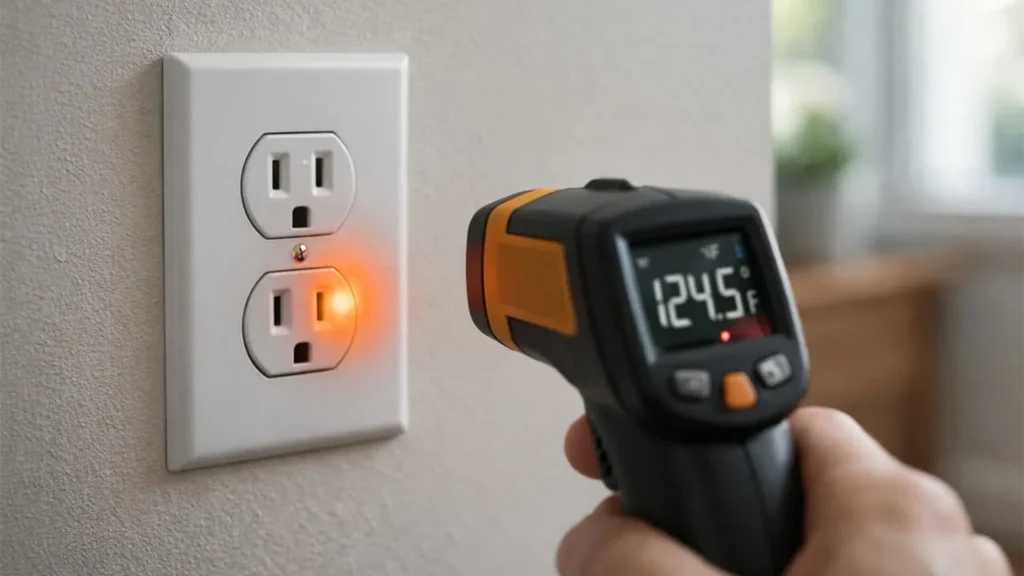
Diagnosing a burning smell coming from an outlet involves a combination of basic inspections and specialized equipment to track down non-obvious issues. Start with a quick look and sniff. Then use more technical methods to verify causes and prioritize repair.
Thermal Imaging
Thermal cameras show heat that the eye cannot see. Aim the camera down the outlet face, surrounding wall, and exposed conduit. The camera will display hot spots that reveal bad connections or overloaded conductors. Such hot spots frequently manifest as minute, concentrated pockets of increased temperature behind drywall or within junction boxes.
For example, compare temperature readings between the suspect outlet and nearby outlets on the same wall or circuit. One outlet running a few degrees hotter than the others indicates a local problem, like a loose terminal or a dying device plugged into it. Several outlets with elevated temperatures indicate an overloaded circuit or a problem in the breaker panel.
Capture images with timestamp and temperature scale. Use those images to rank repairs by urgency: a 10 to 20 °C rise over ambient is a concern, while a 30 °C rise or more is urgent. Thermal imaging can’t identify the precise defect, but it guides where to open boxes, swap receptacles, or contact a licensed electrician.
Circuit Mapping
Trace which outlets and appliances perch on every circuit to view how load is distributed. Turn breakers off one by one and see which outlets go dead. Record all outlets, lights, and hardwired appliances on the circuit. This step indicates if one overloaded circuit or multiple circuits are sharing the load.
Label each breaker and outlet clearly once mapped. Label probes with sturdy labels and a descriptive, consistent naming scheme such as B1-LivingRoom-Outlet1. Safe, clear labels accelerate future duress checks and minimize breaker reset guesswork.
Below is an example mapping table showing outlets and devices per circuit for clarity and planning.
| Breaker | Circuit Name | Outlets/Devices | Remarks |
|---|---|---|---|
| 1 | Kitchen Small Appl. | Outlet A, Toaster, Microwave | High load expected |
| 2 | Living Room | Outlet B, TV, Lamp | Balanced load now |
| 3 | Bedroom | Outlet C, Heater | Heater draws large current |
Use the map to rebalance loads: move high-draw appliances to separate circuits or add dedicated circuits where needed. Mapping helps you locate shared neutrals or multi-wire branch circuits that can conceal faults. Hang on to the map with your electrical panel and file an electronic copy for contractors.
Go from visual checks and thermal scans to mapping with a diagnostic checklist. Record each result with photos, temperatures, and the labeled circuit map. These techniques document guides repairs, safe upgrades, and even offer proof if an expert is needed.
Outlet Vulnerability
Some outlets are more prone to outlet failure and the burning smell than others. Outlets near water, in high traffic areas, or those that serve heavy appliances are more susceptible. Outlets in your kitchen that feed ovens, microwaves, or countertop cookers experience increased current draw and frequent plug cycles, which can loosen contacts over time. Laundry room outlets that feed dryers experience the same strain. Bedrooms and living rooms with several power strips and extension cords experience quicker degradation due to overload and heat buildup. Outdoor outlets and those in garages are exposed to harsher conditions and therefore tend to age more quickly.
Assess which outlets are most at risk based on location and usage
Search out outlets utilized by high-wattage appliances or that experience daily plugging and unplugging. An outlet behind a TV or desktop computer that runs for hours on end is under constant load and can heat up. Kitchens and laundry areas are high risk by design. Outlets in apartment common areas or multi-user offices have unpredictable loads and can be shunted to failure. Note which outlets are warm to the touch after typical usage; warmth indicates resistance. Observe for outlets that spark, have loose plugs, or are discolored. These signs pinpoint the greatest immediate risk.
Prioritize upgrades for older or frequently used outlets
Even in older homes, outlets can have worn contacts, fabric insulation or no ground. Install GFCI outlets for everything more than 25 years old or any showing visible wear. Focus on those that feed large appliances or devices that are always on. Upgrade ungrounded two-prong outlets to grounded or GFCI where needed. In rental or shared spaces, focus on outlets servicing multiple tenants or guests. If you’re planning upgrades, map circuits so you can sequence work without excessive disruption.
Consider environmental factors like humidity and dust exposure
Humidity corrodes metal contacts and can make leakage current conductive paths. Dust and lint, prevalent in kitchens and laundry rooms, add thermal insulation around connections and can trap heat. Salt air near shores increases corrosion. In garages and basements, bugs and spiders web contacts. Make sure the area around the outlets is clean and dry, use sealed covers for outdoors or damp locations, and if in harsh environments, consider weatherproof or corrosion-resistant outlet models.
Replace vulnerable outlets with safer, modern alternatives
Contemporary outlet choices are tamper-resistant, GFCI, AFCI, and grounded duplex. AFCI outlets identify hazardous arcs that can lead to burning odors and fires. GFCI safeguards wet areas against ground faults. Tamper-resistant outlets reduce foreign object insertion. For heavy loads, use dedicated circuits and outlets. Outlet susceptibility requires attention. Get a licensed electrician to rewire, install AFCI/GFCI, and check circuit capacity.
Preventative Upgrades
Preventative upgrades lower the risk of an outlet emitting a burning smell by eliminating potential causes such as loose connections, degraded insulation, and overloaded circuits. Upgrades reduce fire hazard and can bring older wiring up to current safety standards. The table below provides concrete, practical actions you can undertake, with concentrated analysis of each point so that you can determine what to do and why.
- Preventative Upgrades – Swap out old or broken outlets for new, code compliant ones.
- Add tamper-resistant and arc-fault or ground-fault protection where appropriate.
- Upgrade wiring and circuit capacity to meet current load requirements.
- Tighten and secure connections and replace worn backstabs.
- Install smart breakers or monitored outlets for load tracking.
- Install faceplates and insulation shields for protection from dust accumulation.
- Schedule periodic professional inspections and thermal imaging checks.
- Educate household members on safe outlet use and maintenance.
Swap out old or defective outlets with new, code-compliant devices. Outlets become loose over time or have worn contacts that heat under load and smell. For example, swap two-prong outlets for three-prong grounded types where applicable and replace cracked or discolored receptacles. Install ground-fault circuit interrupters (GFCIs) in areas where they are most needed.
Put in tamper resistant outlets and arc-fault/ground-fault protection. Tamper-resistant outlets stop foreign objects. Arc-fault circuit interrupters (AFCIs) and ground-fault circuit interrupters (GFCIs) identify hazardous situations early. AFCIs prevent arcing faults that cause burning odors, and GFCIs protect against shock in damp locations. Install these devices in bedrooms, living areas, kitchens, bathrooms, and outdoors as per contemporary safety standards.
Upgrade wiring and circuit capacity to current load. Some houses were wired well before our current appliance usage. If outlets frequently trip or feel hot, upgrade circuit capacity or install separate circuits for hogs like ovens or HVAC. Swap out cloth-insulated wiring, aluminum wiring, or undersized cables for modern copper conductors and breakers.
Tighten and secure connections, replace worn backstabs. Loose screws or push-in terminations can generate resistance and heat. When you do a preventative upgrade, put the wires on screw terminals, tighten to torque specs and swap out any outlets that are burned or melting. Think of it as preventative upgrades. Use quality connectors and where splices are, rebuild them with approved wire nuts and electrical tape or heat-shrink.
Install smart breakers or monitored outlets for load monitoring. These allow you to monitor current draw, detect unusual spikes, and remotely de-energize circuits. Thermal imaging during inspection can locate hot spots behind walls before odors begin.
Plan annual professional inspections and thermal imaging checks. A good licensed electrician can test wiring, check for resistance and spot covert faults. Try to get an inspection every 3 to 5 years or sooner in older homes.
Teach your family safe outlet usage and upkeep. Educate them not to overload strips, not to run cords under rugs, and to report warm or smelly outlets immediately.
Conclusion
A burning smell emanating from an electrical outlet indicates a serious danger. Most commonly, it indicates loose wires, overloaded circuits, or failing devices. Quick fixes, such as securing a loose plug or replacing a frayed cord, act immediately. Certain issues require a pro, like a licensed electrician. Calling in a pro is warranted for scorch marks, smoke, breakers that keep tripping, or heat that lingers even after you unplug things.
Try simple checks first: unplug, cut power at the breaker, and look for burn marks or melted plastic. For older homes, GFCI and AFCI upgrades and improved outlet wiring reduce danger and extend the life of your system. For safety’s sake, schedule an inspection. If you smell burning, shut off the circuit and call an electrician.
Frequently Asked Questions
What should I do right away if I smell a burning odor from an outlet?
Unplug devices, turn off the circuit breaker for that outlet, and don’t use it. If the odor lingers or you notice smoke, get out and call for help. Consult a licensed electrician prior to using the outlet again.
Can a burning smell mean an electrical fire is starting?
Yes. A burning smell, smoke, sparking, or discoloration that doesn’t go away can be a sign of insulation or wiring overheating and a fire hazard. Consider these signs an emergency and cut the power.
What are the most common causes of a burning smell at an outlet?
Typical causes for burning smells from electrical outlets are loose wiring, overloaded circuits, damaged device cords, faulty outlets, and internal component failure such as switches or GFCIs. Moisture and pest damage can lead to overheating.
How can I tell if an outlet is damaged or unsafe?
Check for scorch marks, melted plastic, warm or hot faceplates, buzzing, intermittent power, or the smell of something burning. Any of these indicates to stop using the outlet and call an electrician.
Is it safe to keep using an outlet after resetting a tripped breaker?
Not until an electrician checks it. If they go off over and over, or the smell lingers, it means it has a fault. Resetting might get the power back for a while, but it masks a hazardous issue.
Can simple DIY fixes stop a burning smell?
Simple things like unplugging things and switching off the breaker are safe. Don’t open the outlet or rewire it unless you’re an electrician. Home fixes can exacerbate dangers.
What preventive measures reduce the risk of burning smells from outlets?
Utilize appropriately rated outlets and surge protectors, don’t overload circuits, replace damaged cords, install newer tamper-resistant or arc-fault breakers, and have a licensed electrician perform periodic inspections.