

Key Takeaways
- Fuse boxes and circuit breaker panels both protect home circuits from overloads and short circuits. Fuse boxes use single-use fuses while breakers use resettable switches. Breakers tend to provide simpler recovery and more obvious troubleshooting.
- Circuit breaker panels give you better safety and capacity for today’s homes. They minimize risks of fires and overloads and support more circuits and dedicated lines for large appliances.
- Breaker panels are more expensive to install. They usually save money over time in lower maintenance, improved insurance rates, and fewer emergency repairs than constant fuse replacement.
- Update a fuse box if you notice constant blown fuses, physical damage or signs of overheating, frequent outages, or when installing major appliances or remodeling the house.
- Always hire a licensed electrician for panel replacement and permit work, anticipate a planned outage, inspections, and proper panel sizing to code.
- Future-proof your system by opting for a breaker panel with additional capacity, incorporating surge protection and dedicated circuits, and conducting regular inspections and trip tests to ensure safety and reliability.
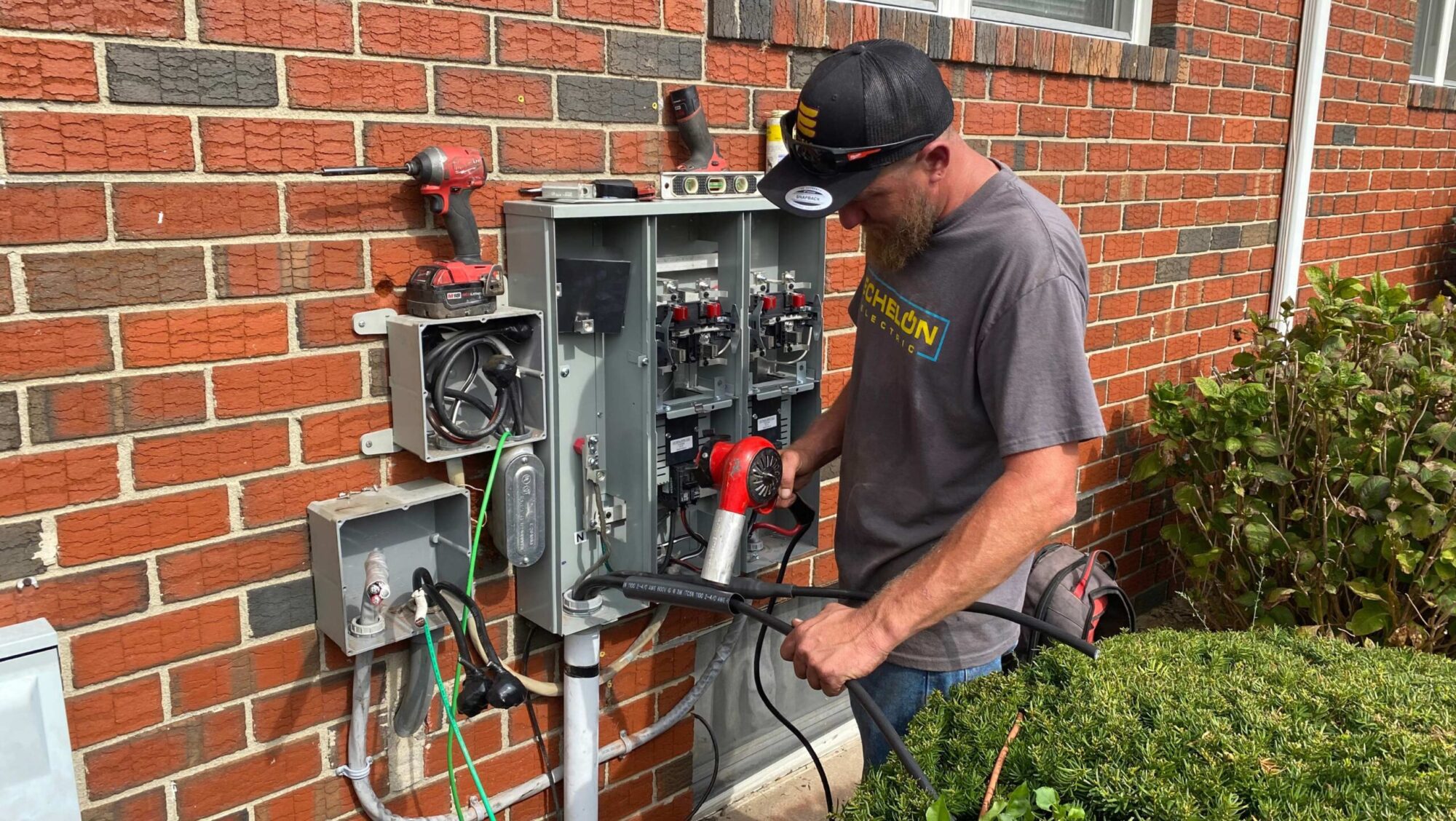
Fuse box and circuit breaker panel are two different types of home electrical safety switches that prevent overloads and short circuits.
A fuse box employs replaceable fuses that melt at a certain current, as opposed to a circuit breaker panel that uses switches that trip and can be reset. Circuit breakers reset more quickly and isolate faults more easily.
Homeowners frequently upgrade panels for capacity, safety, and code compliance. The main body compares cost, safety, and maintenance.
Electrical Guardians
Electrical guardians are the front and backstop for a home’s electrical wiring. They block excessive current, contain faults, and prevent fire, damage to equipment, or shock. Both fuse boxes and circuit breaker panels do the same basic job: protect circuits from overloads and short circuits. They do so by breaking current flow when it passes a safe threshold.
Critical components on both systems include fuses or breakers, a main breaker or service disconnect, wiring connections, and a panel cover to keep live parts protected.
Fuse Mechanics
Fuse boxes rely on a simple, single-use element: a piece of wire or metal designed to melt when current exceeds a set rating. That melting interrupts the circuit and halts the flow. For instance, replaceable fuses include screw-in glass fuses and larger cartridge fuses.
Typical home systems with fuses offer limited total service of, say, 30 to 60 amps, which is inadequate for today’s loads such as an EV charger or central AC. When a fuse blows, the solution is physical replacement with a fuse of the correct current rating. Cranking up the fuse rating to prevent nuisance blows bypasses the protection and increases fire risk.
These can be older homes with 15 A or 30 A branch fuses and service fuses of 30 to 60 A, which limit whole home capacity. Wrong fuse type or oversizing is a hazard and why some insurers won’t cover or charge more for original fuse panel homes.
Breaker Mechanics
Circuit breaker panels use resettable mechanical switches that ‘trip’ to cut power during an overload or short. Breakers operate by thermal, magnetic, or combined methods. Thermal elements respond to sustained overloads while magnetic trips react to large, fast surges.
After a trip, a breaker is reset by flipping its switch back to the ON position, making troubleshooting easier and minimizing downtime compared with replacing fuses. A normal panel includes both individual branch breakers and a main breaker within a metal enclosure with a cover that identifies circuits.
Modern breakers include added safety devices. GFCI breakers protect against ground-fault shock, and AFCI breakers detect arc faults that can start fires. We highly recommend upgrading to a new breaker panel.
It is more reliable, requires less maintenance, accommodates higher loads, and often fulfills insurer requirements for new builds or owners, which is why it is so popular among many homeowners and new builds.
The Core Comparison
Fuse boxes and circuit breaker panels perform the same basic job: protect wiring by stopping excess current. Fuse boxes do the same with sacrificial fuses that melt when overloaded. Circuit breaker panels employ resettable breakers that trip and can be reset.
Fuse boxes, which are found primarily in homes constructed prior to the 1960s or 1970s, usually provide about 60 amp service with six to 12 screw-in or cartridge fuses. Modern breaker panels dominate new construction, offer 100 to 200 amp capacity, and are available in standard, GFCI, and AFCI varieties. The visual cue for a fault is different: a blown fuse shows a visible break or a darkened element, while a tripped breaker sits out of line or displays a clear trip position.
1. Safety
Breaker panels are superior overcurrent protection and pose a lower fire hazard than fuse boxes because they break overloads as well as short circuits. Breakers respond to more types of fault conditions and can feature arc-fault and ground-fault protection to satisfy present safety standards.
Old fuse panels are not grounded, may have used improper fuse replacements, and can have concealed loose connections that get hot. Such defects present genuine risks, particularly when contemporary devices pull more power than the original grid was designed to accommodate. Newer codes and most insurers prefer breaker panels, so swapping out a fuse box for a breaker panel is not too complicated, but this should be performed by a licensed electrical contractor.
2. Convenience
Resetting a tripped breaker is quicker and safer than locating and replacing a blown fuse. Breaker panels minimize nuisance outages because they are easier to diagnose and frequently come with clear circuit labeling, allowing homeowners and technicians to isolate problems fast.
Fuses demand the correct replacement and occasional specialty tools. An incorrect fuse rating can permit hazardous conditions. Most homeowners can flip a breaker switch without tools, while changing a fuse frequently means handling a hot or fragile object and verifying the right amperage.
3. Cost
It’s less expensive to install a fuse box. However, fuses need to be replaced more often, increasing maintenance costs. Breaker panels are more expensive initially, but they are cheaper over the long run and sometimes even benefit insurance rates since many insurers prefer breaker systems.
Hidden costs include damage from wrong fuse use, potential fire claims, and the cost to upgrade once you discover capacity limitations.
4. Capacity
Breaker panels handle greater loads and many more circuits, enabling dedicated lines for ovens, HVAC, and EV chargers. Fuse boxes not only stifle expansion but also make it difficult to accommodate modern usage.
Breaker systems enable easier addition of circuits and integration of surge or AFCI/GFCI protection.
5. Longevity
Breakers last 30 to 40 years without many parts replaced. Fuse boxes may last 50 years but require frequent fuse changes and wear in holders.
Breaker panels withstand corrosion and mechanical failure more effectively and accommodate future updates to code and technology.
Beyond The Basics
This section peers beyond mere utility and contrasts how panel type influences insurance, fire safety, and resale. It assists owners in determining if an improvement is up to date on safety requirements and load demands prior to getting to the nitty gritty.
Insurance Hurdles
Any insurers that do will generally treat fuse box as higher risk equipment. Policies can have higher premiums, exclusions or even flat out denial when an older fuse panel is involved. A few companies will require a replacement, at least with a modern breaker panel, before they will issue or renew coverage, particularly for full-value homeowners insurance.
Fuse-box failures—especially fires—can complicate claims payouts. An insurer might look into maintenance history and past warnings regarding electrical hazards, for example, slowing or minimizing settlements. Breaker panels more frequently satisfy present-day insurance safety standards since they may be equipped with GFCI and AFCI protection and pass standard inspections.
That alignment typically eases underwriting and decreases the likelihood of policy conditions related to electrical work.
Fire Risk Reality
Fuse boxes are more likely to cause fire when fuses are the wrong size, wiring is old or there are no modern-day safety devices. Older installations do not have arc-fault detection or new trip mechanisms that reduce ignition risk.
There is a greater occurrence of electrical fires in homes with antiquated fuse panels according to a number of industry reports. A common finding is that overloaded circuits and oversized fuses account for a sizable share of residential electrical fires. Fuse related failures are usually in connection with junction overheating and poor connections.
Breaker enhancements with AFCI and GFCI minimize danger by sensing arcs and ground faults early. Breaker panels provide better fire protection with sophisticated trip mechanisms and arc-fault detection. Fuses respond more quickly to overloads, about 0.002 seconds compared to breakers’ 0.02 to 0.05 seconds.
Breakers reset and provide additional protections. Overloaded circuits and oversized fuses in old boxes continue to be a leading cause of house fires, particularly where appliances require more current than the panel was designed for.
Resale Value Impact
Houses with updated breaker panels sell for more and attract more buyers. Real estate inspectors love to cite fuse boxes as a safety issue during sales. Certain lenders or insurance companies might even demand upgrades prior to closing.
An upgraded panel, typically with a capacity of 100 to 200 amps, keeps up with new appliance loads and is an obvious selling feature. Fuse boxes provide approximately 60 amp service and may have as few as six to 12 fuses, either screw-in or cartridge, which limits contemporary usage.
Replacement costs vary. Breaker box replacement averages around USD 1,150, while fuse box replacement ranges roughly from USD 200 to 2,000 depending on scope. That price is usually recaptured in quicker sales and less negotiation holdbacks post upgrade.
Checklist for upgrade: panel condition, age, amp rating compared to current load, presence of AFCI/GFCI, inspection history, insurance requirements, appliance additions, and wiring integrity.
The Upgrade Question
Whether you want to upgrade from a fuse box to a circuit breaker panel comes down to safety and code compliance and the actual electrical needs of your home. The subsections below detail when to act and why the investment matters, with unmistakable signs an upgrade is pressing, concrete examples and results to anticipate.
When
Upgrade when adding large appliances, remodeling, or increasing electrical load. If you install an electric range, heat pump, or EV charger, or just a few high-load devices, you can push a 60-amp system well beyond safe limits. A modern kitchen and an EV charger often need 100 to 200 amp service. A 60-amp fuse box is inadequate.
Swap the panel if the fuse box is damaged, corroded, or appears to have overheated. Burn marks, melted insulation, a scorched smell at the panel, or rusted terminals are direct indicators that components are malfunctioning. Corrosion makes connections resistive and hot under load.
Act now if you experience frequent outages, repeated tripping or if your insurer flags the panel. Recurrent blown fuses, persistent nuisance trips, or a carrier that raises premiums or refuses coverage are real-world motivators. If circuits go down with typical use, say, lights dim when the microwave operates, that is a sign of limited capabilities.
Homes that are pre-1970 should be near the top of the list for evaluation and probable upgrade. Most of these homes still have fuse boxes, ancient cloth wiring, or two-wire, ungrounded wiring. An electrician ought to check anything over 50, as age is directly related to latent decay.
- Frequent tripping of circuit breakers.
- Flickering or dimming lights when appliances are in use.
- Burning smells or scorch marks near the panel.
- The panel feels warm to the touch.
- The age of the panel exceeds 20 years.
- The panel has insufficient capacity for current electrical demands.
- Outdated fuses or breakers that are not up to code.
- Multiple outages and incessant blown fuses indicate system overload and danger of overfusing, the practice where someone may have installed higher-amp fuses to prevent trips, further raising fire hazard.
- Visible damage includes burn marks, melted components, or scorched wiring. This is an immediate hazard that needs professional intervention.
- Corrosion or water intrusion at the panel leads to moisture that accelerates failure and shorts.
- Limited capacity: panel rated 60 amps or full of tandem or filler circuits cannot support modern loads.
- Insurance flags or coverage denial — insurers will frequently mandate modern panels for liability reasons.
- Old wiring or knob and tube lurking may not fix with just a panel upgrade. Complete re-wiring might be necessary.
- No physical room to add circuits inhibits logical expansion during renovations or equipment additions.
Why
Safety tops the list: breaker panels reduce fire risk and avoid common mistakes tied to fuse boxes. Fuse boxes encourage overfusing, the perilous act of replacing a blown fuse with a bigger one, subverting the circuit’s safety purpose. Newer panels are code compliant, have more service capacity, grounding, and room for more circuits.
The upgrade creates room for today’s electronics, appliances and smart devices. It lessens your dependence on extension cords and overburdened multi-plug adapters. Maintenance becomes simpler. Breakers can be reset without replacement, lowering the chance of amateur, unsafe fixes.
Upgrades tend to reduce insurance premiums and boost resale. Buyers and insurers like upgraded electrical. It is a beautiful way to invest in a modern panel that protects your home and makes future upgrades simpler.
Installation Insights
Service panel upgrade: In order to replace a fuse box with a circuit breaker panel, you’ll need advance planning, permits, and inspections. Start with the service capacity, as many fuse boxes are from the pre-1960s era and only provide 60 amp power, while modern breaker panels often supply 100 to 200+ amp service to accommodate today’s loads.
See if the home’s main service point and meter can accommodate an upgraded panel and if you need a new service entrance cable or grounding upgrade. Send plans to your local AHJ and get permits before you begin. Inspections are typically needed at rough-in and at final hookup to confirm code compliance.
Professional Help
Panel replacements and upgrades require hiring a licensed electrician or electrical contractor. Licensed professionals size the panel to the home’s load, calculate demand based on appliances and HVAC, and select breaker types, which include standard, GFCI, or AFCI where code mandates.
They ensure work adheres to national and local electrical codes, decreasing liability and safety hazards. Poor workmanship can introduce code violations that result in fines or hazardous conditions such as overloaded conductors.
Therefore, check credentials, request breaker-panel installation references, and verify insurance and licensing before signing on.
Preparing for the Work
Don’t be surprised if there are brief power outages when installing or replacing panels. Work with your tenants to power down sensitive electronics and plan for food and medical equipment preservation.
An average swap can be anywhere from a few hours to a full day, depending on conduit runs, meter work and service upgrades. Some inspectors might even want the breaker installation tested prior to energizing circuits.
Installation insights test plans should include a routine trip test following installation and periodic checks. Inspect breakers every one to three years and do a trip test every three to five years to ensure switches work.
Required Materials and Safety Equipment
- New breaker panel sized for load calculation (100 to 200 plus amp typical)
- Main breaker and branch breakers (standard, GFCI, AFCI as necessary)
- Service entrance cable and grounding conductors
- Panel enclosure, bus bars, breakers, and lugs
- Circuit testers and multimeter
- Insulated hand tools and torque wrench
- Safety glasses and dielectric gloves
- Lockout/tagout kit and warning labels
- Voltage detector and noncontact tester
DIY Dangers
Doing DIY work on fuse boxes or breaker panels is fraught with dangerous shock and fire risks and will void insurance. Unskilled homeowners might substitute a fuse for a larger-amp unit, which is unsafe and in violation of code, or develop improper wiring that fries appliances or trips utility limitations.
Insurance claims for damage from home-brew wiring are frequently turned down. Always, always, ALWAYS select a licensed electrician for ANY panel work.
Future-Proofing Power
Future-proofing power refers to enhancing the conductive and controlling paths in a home so the system can accommodate increasing demand from new loads. Most older fuse boxes were sized for smaller, simpler electrical consumption. Enter modern living — EV chargers, smart thermostats, home offices, and super high-efficiency HVAC systems that draw more current.
A good first step is to determine if your current panel can accommodate growth without trips or unsafe wiring.
Advocate for installing a modern breaker panel with extra capacity for future electrical needs and smart devices
Future-Proofing Power—Install a modern circuit breaker panel sized with headroom. For most homes, a 200-amp panel is now the norm, providing room for current loads and probable future additions. New builds and major renovations routinely use 200-amp service or above.
A 200-amp-rated panel allows you to add circuits without overloading the main service. Select panels with additional breaker spaces or subpanel allowances so new circuits for workshops, home offices, or media rooms can be added without a complete replacement.
Suggest including surge protection and dedicated circuits for sensitive electronics and major appliances
Add whole-home surge protection at the main panel to protect sensitive electronics from voltage spikes. Plan dedicated circuits for high-draw or sensitive equipment: refrigerator, oven, electric range, heat pump, HVAC compressor, washer, dryer, and EV charger each deserve their own circuit sized properly.
Dedicated circuits minimize nuisance trips and isolate inter-load interference. For example, a refrigerator and a microwave on separate circuits avoid the common brownout when both start at once.
Encourage planning for future upgrades like electric vehicle chargers or solar power integration
Future proof the power future-proofing power – reserve a 40 to 60 amp circuit space for a level 2 EV charger and leave space for a bi-directional EV-ready breaker if vehicle-to-home use is in the cards. For solar, provide a labeled PV interconnection space and even an inverter location adjacent to the panel.
For systems anticipating battery storage, take advantage of a panel rated over 200 amps and labeled main lug or switchgear options for safe shutoff and utility intertie.
Advise periodic inspections and routine trip tests to ensure ongoing electrical safety and reliability
Plan on having an electrician come through once in a while and for any panel upgrade, plan on permits and inspection. Examine wiring, bus bars, and breaker condition every few years, and trip test critical breakers routinely to ensure they still work.
Replace old breakers that are heat-damaged, corroded, or tripping all the time. The right maintenance keeps it safe, makes it more reliable, and future-proofs the value of the home.
Conclusion
Own a fuse box – more limits than a circuit breaker panel. Breaker panels interrupt faults quickly, allow homeowners to reset a tripped circuit, and accommodate modern load demands. Fuse boxes had their time proving well, but they are out of space and components. An upgrade reduces fire hazard, creates capacity for additional circuits, and facilitates troubleshooting.
For a tiny house with minimal appliances, a fuse box can still do the job as long as it remains well maintained and checked. For expanding families, electric heat, EV chargers, or a lot of new equipment, a breaker panel is the way to go. An electrician can trace your needs, demonstrate options, and provide transparent cost and time estimates. Insist on a blueprint and timeline before you begin.
Frequently Asked Questions
What is the main difference between a fuse box and a circuit breaker panel?
Fuse box vs circuit breaker panel A circuit breaker panel has switches that trip and can be reset. Breakers are quicker to replace and safer for contemporary loads.
Are circuit breakers safer than fuses?
Yes. Circuit breakers trip without destruction and enable quick resets. They provide improved protection for contemporary wiring and typically feature enhanced safety such as ground-fault or arc-fault protection.
Can I replace a fuse box with a circuit breaker panel?
Yes. This is a common upgrade that makes your home safer and increases the capacity. A licensed electrician needs to do the work to meet code and make sure things are properly sized, grounded, and permitted.
How do I know if my home needs an upgrade from a fuse box?
You should upgrade if you have blown fuses frequently, not enough circuits, modern appliances, or an older home. An electrician can determine load capacity and safety concerns.
Is it more expensive to switch from fuses to breakers?
Upfront costs depend on your home’s size and your panel’s complexity. Upgrades almost always redeem themselves in increased safety, ease, and maybe an insurance or resale advantage. Obtain several quotes and permits.
Do circuit breaker panels support modern electrical demands better?
Yes. Breaker panels deal with greater loads and fluctuating appliance, HVAC, and electronics demands. They accommodate new circuits and sophisticated protection devices for today’s systems.
What maintenance does a circuit breaker panel require?
Have a licensed electrician check it once every few years. Keep the panel accessible, label circuits, and test safety devices. Don’t wait for breakers to trip to replace worn ones.