
Key Takeaways
- Look for indicators of knob and tube and potential dangers like ceramic knobs, porcelain tubes, single exposed wires and cloth or rubber insulation.
- Get to know the key hazards: insulation failure, absence of grounding, overheating due to modern loads, and dangerous alterations that pose a fire and shock risk.
- Prioritize a licensed electrician assessment to document conditions, map circuits, and get a detailed quote for repairs, partial upgrades, or full replacement.
- Full rewiring is the safest long-term solution. You can do partial upgrades, too, to target the kitchen, baths, and heavy-appliance areas.
- Don’t DIY fixes, don’t blanket active knob and tube with insulation, and schedule renovations with electricians and insulation contractors to avoid damage or code violations.
- The insurance nightmares mean you better set aside some money for permits, wall repairs, and code compliance when you’re planning upgrades to preserve your property value.
Knob and tube wiring dangers include fire risk, insulation breakdown, and lack of grounding in older homes. The system uses ceramic knobs and tubes to hold single insulated conductors, which can degrade with age and heat.
Modern electrical codes no longer accept it for new work. Homeowners and buyers should know common signs, testing options, and typical remediation steps to assess safety and plan upgrades.
Identifying Knob and Tube
Knob and tube wiring is an early standardized method from around 1880 to the 1940s. Pre-1950s homes are more probable. It separates the hot and neutral conductors, supporting them on ceramic knobs and routing them through wood with porcelain tubes. There was no grounding conductor like modern installations and the wiring was often exposed.
Visual Cues
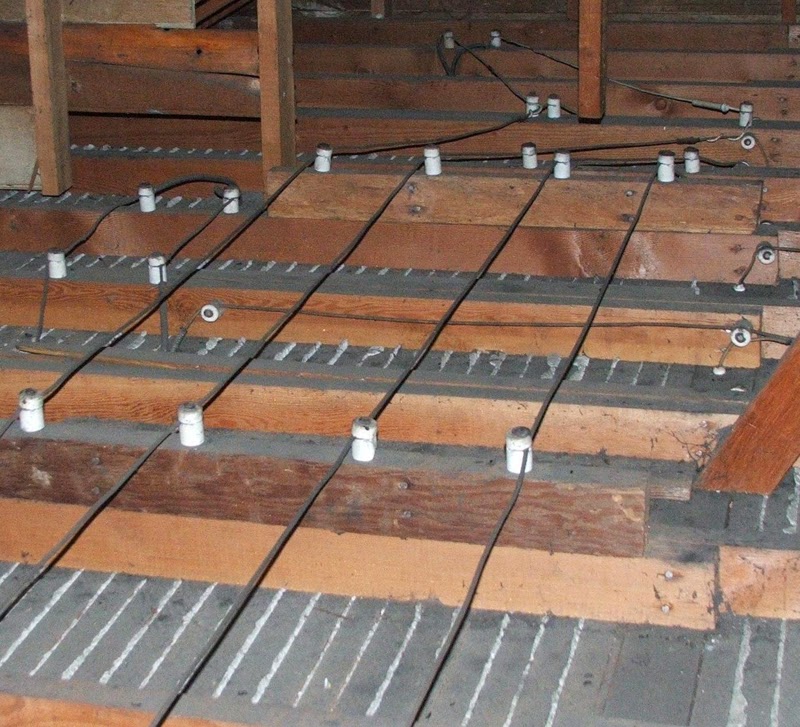
They’re easy to spot: white or black ceramic knobs, nailed to framing directing single wires along joists and studs. These knobs are small, round, and spaced where the wire changes direction. They rest on the surface of wood and hold a single conductor in position.
In certain homes, the knobs are blackened with age or paint, so take a good look. Recognize porcelain tubes which guide wires as they pass through wood framing, keeping them separated from combustible materials. Tubes are short, hollow sleeves inset into holes in studs or joists.
They encase the wire where it passes through structural members. If you see a short, glazed collar around a hole, that’s probably a tube. Discover single wires roaming in the wild, as opposed to the confined cable packs of today’s wiring.
Knob and tube utilized discrete hot and neutral wires separated and not twisted together in a sheath like modern cable. If you notice two separate single conductors traveling two slightly different routes, that’s a dead giveaway.
Detect aging insulation, such as fraying cloth or brittle rubber, that’s indicative of knob and tube wiring. Cloth and early rubber insulation become cloth-bare or crack. If it has a flexible cloth covering or sticky, powdery rubber, or places where the braid has worn off, be concerned.
Common Locations
Look in unfinished basements, attics, and crawl spaces, where original knob and tube wiring typically remains exposed. These areas frequently still expose the wires strung along beams and joists and are simple to inspect without removing finished walls.
In attics, you may find long runs suspended from knobs. Look behind old walls and ceilings and under floors of late 1800s to 1940s era homes for tube wiring lurking in the dark. Open small inspection holes or look behind baseboards and you’ll find tubes where wires pass through framing.
Homes of that era might hide portions when remodeled. Check around light fixtures and switches. These tend to keep remnants of knob and tube wiring. Two-prong outlets and vintage lamp pulls frequently connect back to original wiring.
If you discover two wires powering a fixture and no ground, it might be K&T. Inspect service panels and junction boxes for mixed wiring, indicating partial reroutes. Fuse boxes instead of circuit breakers are another clue in older homes.
Romex together with single conductors means partial replacement. Note: NEC requires K&T not to be covered by insulation since 2008.
Inherent Dangers
Knob and tube wiring is, in itself, a relatively straightforward, early 20th-century technique. It’s not dangerous by itself, but age, modified installations and current-day household requirements can cause actual risks. These risks bunch up around several foreseeable failure modes: fire safety, shock exposure and insurability.
- Insulation breakdown
- Overheating
- Lack of ground connection
- Susceptibility to unsafe modifications
1. Insulation Breakdown
Rubberized cloth insulation on knob and tube conductors becomes brittle as it ages and frequently cracks, exposing bare copper. Light and heat accelerate this degradation, so wiring near lamps or recessed fixtures degrades more quickly and increases the fire hazard.
When insulation breaks down, live conductors can contact other wires, the framing or metal boxes and begin sparking or heating. Exposed wiring makes it more likely that somebody will come in contact with an energized conductor and be shocked.
Insulation failure is a crucial point of system collapse in older homes because the insulation that kept currents contained no longer functions.
2. No Grounding
Knob and tube systems don’t have a ground conductor. Metal components of fixtures and appliances on ungrounded circuits can become live during a fault, increasing the shock hazard.
Two-prong outlets associated with knob and tube are a dead giveaway that grounding is nonexistent. Modern codes demand grounding to guard people and delicate electronics from surges and faults.
In cases where grounding isn’t immediately feasible, installing grounded outlets or even GFCI protection provides some protection by disconnecting power promptly if a fault results in current leakage.
3. Overheating Risk
These circuits were sized for early 20th-century loads, far lower than today’s ubiquitous appliances. Running new, modern heaters, air conditioners, or several kitchen appliances off original knob and tube runs can overload them.
Overload increases conductor temperature which can liquefy remaining insulation and ignite adjacent combustibles. The NEC (2008) prohibits insulating over knob and tube because the separated conductors depend on open air cooling.
When buried in insulation, they hold heat. A lot of houses have had insulation blown in over ancient wiring, forming an invisible fire hazard because heat can’t expire.
4. Improper Modifications
Amateur fixes, splices outside of junction boxes, and combining new wire with old runs are typical. That kind of work can cause loose connections, bad contacts, and over-fused circuits that bypass safeguards.
These modifications frequently disregard wiring regulations and increase electrocution and fire risks. Homeowners should not attempt DIY fixes and should instead hire licensed electricians to inspect, repair, or replace knob and tube.
5. Insurance Hurdles
Insurers see active knob and tube as a risk and will refuse coverage or charge exorbitant premiums. They might require inspection reports or proof of rewiring before providing policies.
No coverage devalues and can even derail a sale. You can help appease insurers by documenting what has been upgraded and what is up to code.
Modern Life Strains
Knob and tube wiring was made for an entirely different modern life. Early installations supplied few lights and small motors. Our homes have many more high-wattage loads today, and that gap creates an actual mismatch between original wiring capacity and modern demands.
This chapter details how today’s appliances strain archaic systems, identifies the most common overload culprits, and describes action steps for evaluating and updating your electrical loads.
Power Demands
Homes in the early 1900s used lighting, a handful of small motors and perhaps a radio. Circuits were sized for low continuous loads and intermittent use. Today’s homes spin washers and dryers, refrigerator units with auto defrost cycles, central or ductless HVAC, microwaves, ovens, computers, big screen TVs, streaming media systems, and chargers for numerous portable devices. A lot of these pull heavy currents over extended periods.
- Early 1900s usage: low wattage lighting, single-room heating, basic motors. Circuits often had 15 A or lower and were not built for continuous heavy draw.
- Mid-century transition: More appliances appear, including refrigerators, freezers, and small kitchen appliances, raising a steady load but still within limited circuit design.
- Contemporary homes have multiple appliances with power ratings between 1,000 and 3,000 watts running concurrently. Central HVAC systems and electric dryers pull heavy, sustained power.
- Peak and continuous demand is now common. Simultaneous use of kitchen, laundry, and entertainment increases current beyond what kitchen and towel insulation and conductor size were meant to carry.
K&t doesn’t have a grounding conductor so three-prong devices are not supported without proper grounding or GFCI retrofit. The cotton or rubber insulation on vintage conductors becomes brittle and flakes off, exposing bare conductors.
Overloaded or aging wiring can overheat and this can trip breakers, outlets, or char insulation on wires.
Renovation Conflicts
K&t runs in walls and attics are the routine surprise of renovations. Breaking into plaster or tearing down ceiling panels frequently wrecks ancient ceramic knobs or pulls conductors into hazardous configurations. Most building codes mandate that unsafe wiring be removed or fully replaced when major remodels happen, especially where hidden by new finishes.
Insulation contractors commonly refuse to add modern insulation over energized knob and tube wiring because heat buildup can exceed the original design limits and accelerate insulation breakdown. Coordination is essential.
Electricians should assess and, if needed, isolate or replace circuits before insulation crews proceed. Get at least two or three estimates from licensed electricians to compare options, costs, and timelines.
Consider staged upgrades. Add dedicated circuits for HVAC or kitchen, install grounded outlets, and replace brittle knob and tube wiring where it intersects with new construction.
Environmental Accelerants
Knob-and-tube wiring is easily damaged by the elements. They phased it out in the 1940s and it uses cloth and rubber insulation that deteriorates faster than modern synthetic sheathing. This older system has a lower voltage supply and no ground wire, so any insulation damage increases the risk of shorts and shock.
If you discover knob-and-tube wiring, initially consult an electrician to determine if it’s still live and how immediately repairs are necessary.
Rats and mice nibble fabric and rubber with ease. Mice and rats nest in attics and behind walls and will chew through insulation to get to other materials. Gnawed insulation leaves conductors exposed and can form arcing and overheating paths.
Think attics with bird nests and loose wiring or basements with rodents scurrying on joists and wires. Even routine pest control and plugging entry points diminish this threat.
Wetness expedites rot and eats away at metal components. Cloth and rubber take on moisture from roof leaks, insufficient ventilation or humid basements. Wet insulation loses its resistance and can let little currents leak or build heat.
In good ol’ knob-and-tube houses, condensation on cold-water pipes or roof leaks frequently manifests itself near wire runs. Fixing leaks, enhancing attic ventilation and applying moisture barriers help protect wiring.
Temperature swings make the insulation stiffen and crack. Attic temperatures often climb above 40 °C in summer and plummet in winter, causing repeated stress on the insulating jacket. Over time, this results in brittle spots that snap under light tugs or when fittings shift.
Where knob-and-tube runs cross joists or are stapled, motion and thermal expansion cause more wear. For upgrade planning, understand that extra insulation can be added only after knob-and-tube issues are resolved, as encasing such wires with modern insulation may induce overheating.
Dust, debris and pests accumulate in attics and crawl spaces and can catch fire if they come into contact with exposed live wires. Accumulated dust insulates, holding in the heat. Leaves or nesting material can smolder from a tiny arc.
We’ve had house fires begin this way when old wiring had deteriorated spots. Purify, minimize storing in these areas and maintain exposed wiring so an electrician can check for bared conductors.
Check risk points regularly and seek expert guidance. If knob-and-tube is found to be live, an electrician might suggest partial or total replacement when upgrading electrical systems.
Get at least three estimates before major rewiring to compare scope, cost, and if added insulation or grounding will be included.
Replacement Strategy
Knob and tube (K&T) wiring is limited for modern loads and ultimately a safety and insurance issue. A strategic replacement plan cuts down fire hazard, simplifies upgrades and satisfies modern codes. These subsections address evaluation, replacement options, and price considerations to lead homeowners through a realistic rewiring strategy.
Professional Assessment
Have a licensed electrician, preferably one who’s familiar with older systems, conduct a full inspection. The inspector should record the condition, age, and locations of active K&T runs, splices, additions, and mixed wiring.
It’s vital to map out all circuits, outlets, and fixtures connected to knob and tube. A definitive map keeps you from opening your walls unexpectedly and allows you to plan the work.
Ask for a written report listing safety risks like overheated conductors, degraded insulation, or knob mounts loosened by age. Request an itemized quote that breaks out inspection, removal, new wiring, and permits.
Obtain a minimum of three quotes to compare both scope and price. Confirm each electrician’s licensing and insurance before making an appointment.
Removal Options
Complete replacement involves ripping out K&T conductors and putting in modern NM or conduit systems across the entire house. This alternative eliminates nearly all of the long-term risk and makes your future work easier.
It is more invasive and may necessitate drywall or plaster repair. Partial upgrades enable focused replacement in high-risk areas, such as the kitchen, bathroom, and laundry and can be staged if budget or access constraints exist.
In some cases, isolating unused circuits or decommissioning branches may reduce immediate hazards when full rewiring isn’t possible. Trace any leftover K&T wiring and mark circuits.
Focus on rooms with heavy appliance use for first-phase work. These areas frequently surpass the original design thresholds of K&T, which was phased out in the 1940s and was never intended for modern day loads.
If you’re adding insulation or converting an attic, check with an electrician that K&T is not in use before you seal it because covered K&T can short-circuit and overheat.
Cost Factors
Prices depend on the size of your home, how complicated the layout is, and run accessibility. A big home or one with thick plaster walls will take longer and potentially need more wall repair, driving up price and time.
Permits, final inspection fees, and code-compliant materials add to the sum. Rewiring can take weeks and cost thousands of dollars. Think about secondary costs like insulation upgrades and finishing trades.
| Factor | Typical influence on cost |
|---|---|
| Home size (m²) | Larger area, higher labor and materials |
| Wall type | Plaster/lath higher repair cost |
| Accessibility | Attic/crawl easier than in-wall runs |
| Permits & inspections | Mandatory in most jurisdictions |
Request detailed quotes from several electricians with timelines and verify how each one handles permits and insurance notifications.
Annual inspections are still prudent if any K&T remains and document all work for insurers and future estate sales.
The Legacy System Paradox
A paradox is a self-contradictory or illogical statement, one which can generate insight. Knob and tube wiring fits that idea: it was sensible when first used yet now raises safety and code questions that conflict with its original success. This is what makes that paradox real and something homeowners should consider.
Knob and tube wiring was the right solution for the time and even survives to this day in certain houses. Installed from the late 1800s through the 1930s, it used ceramic knobs to keep insulated conductors away from framing and ceramic tubes where wires crossed joists. That design kept wires cool and separated, and many systems handled light loads for decades without obvious failure.
In vintage houses with minimal technology, the wiring can continue to provide power dependably for bulbs and ancient appliances. Though the system is not inherently dangerous, its age, lack of grounding, and mismatch to contemporary necessities generate serious hazards. Insulation on cloth-covered wire deteriorates, becoming brittle or absent.
Without a grounding conductor, surge protection and most modern devices won’t function as designed. High-draw appliances, space heaters, and air conditioners put loads that the original circuits were not sized for. Splices from decades ago can be bad or exposed. Insulation contact with insulation batts or renovations can alter heat dissipation, creating a fire hazard.
Respecting what was, there is history and craftsmanship in much knob and tube wiring. The neat runs, hand-placed ceramics, and the way the wiring follows framing are a narrative about construction methods and material use. For historic homeowners, these touches are part of the home’s character and even of cultural significance.
Safety and code need to take priority. There are grounded circuits, GFCI protection in wet areas, and appropriate circuit capacity in newer electrical codes. Insurance companies might deny coverage or charge exorbitant rates for live knob and tube wiring, and certain areas mandate its disclosure or removal in extensive remodels.
Homeowners need to strike a balance between preservation of historic features and upgrades. For example, you may be able to leave exposed historic runs in non-essential rooms with new, code-compliant circuits in the kitchen, bathrooms, and HVAC.
Another strategy is to encapsulate or document decorative runs and swap out the majority of functional wiring. Give priority to a licensed electrician for inspection, load testing, and a roadmap that indicates which parts are left for looks and which will be upgraded for safety.
Conclusion
Knob and tube wiring presents distinct, quantifiable hazards in modern residences. Old insulation and loose connections increase fire risks. Your modern appliances pull more electricity than the original system accommodates. Damp or modified walls conceal damage and accelerate deterioration. A complete replacement eliminates those hazards and updates the home to code. As a lower-cost stepping stone, isolate circuits and use fused breakers as you plan work. Always contact a licensed electrician for any inspection or repair. Request a written report, pictures, and a phased plan including cost estimates. Document for resale and insurance purposes. If you live with knob and tube, act soon! Get an inspection and plan your response.
Frequently Asked Questions
What is knob and tube wiring?
Knob and tube is an early form of electrical wiring used between the late 1800s and the mid 1900s. About: knob and tube wiring dangers It uses ceramic knobs and tubes to support and insulate single insulated conductors. It does not have modern grounding or protective sheathing.
Is knob and tube wiring dangerous?
Yes. It’s dangerous because of aging insulation, no ground, and increased risk of overload and overheating. These problems pose an increased risk of shocks and home fires if left uninspected and uncontrolled.
Can I insure a home with knob and tube wiring?
Other insurers will take homes with intact, well-documented knob and tube. Others will deny coverage or charge exorbitant premiums. A recent electrical inspection report frequently assists with insurer needs.
Should knob and tube be replaced or can it be repaired?
Replacement is the answer for safety and code compliance. Repairs don’t last and complete replacement with modern wiring offers grounding, higher circuit capacity and lower risk.
Can knob and tube handle modern appliances?
No. Knob and tube wiring wasn’t meant to carry today’s loads. Newer appliances and HVAC systems can overload the circuits and increase fire and overheating danger.
How do environmental factors affect knob and tube safety?
Moisture, rodent damage, or simply contact with insulation or building alterations can erode wiring. These accelerants increase the risk of shorts, insulation failure, and fire.
What should I expect during a replacement?
Anticipate a professional like a licensed electrician to inspect circuits, replace old wiring, and install grounded, insulated cables. It is a hassle, but it really reduces fire hazard and increases electrical capacity.