
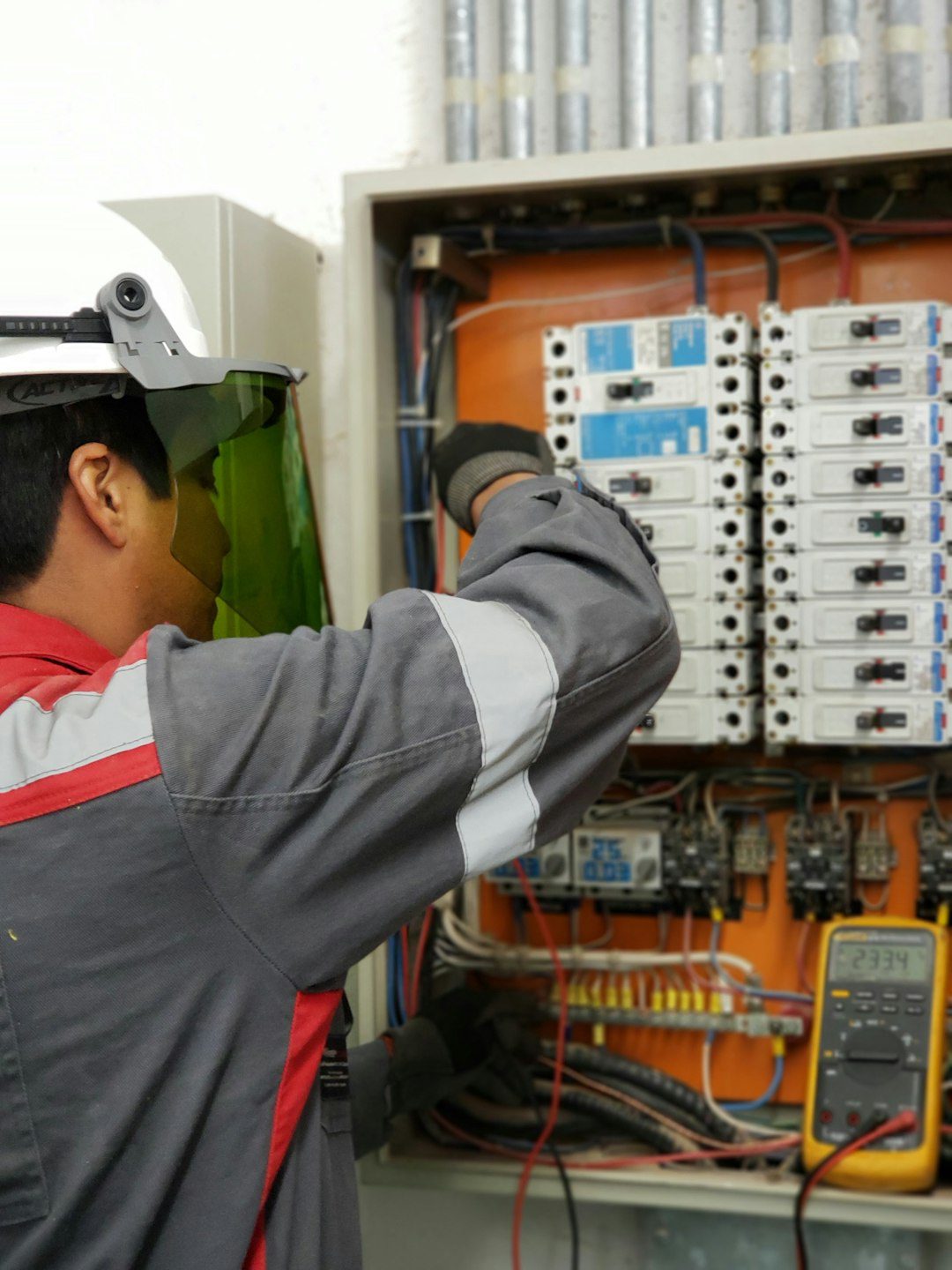

Key Takeaways
- The main breaker panel is the heart where the utility power comes in and is distributed safely to branch circuits while affording a single disconnect and overcurrent protection for the entire building.
- Select a main breaker panel for service entrances as your main disconnect and for emergency shutoff and simpler code compliance. Use main lug panels where an upstream disconnect offers the same protection.
- Size panels according to your calculated amperage requirements, provide room for future additions like EV or solar, and check that the panel meets required clearances and mounting space.
- Adhere to safety protocols such as appropriately rated breakers, AFCIs, and GFCIs as necessary. Secure bus and neutral/ground connections, and conduct periodic inspections to minimize the risk of overheating, shocks, and fire.
- Replace or upgrade any panels exhibiting rust or visible damage, tripping frequently, or that are older than roughly 25 to 40 years. Always schedule a licensed electrician for professional evaluation, repairs, and heavy lifting.
- Think smart panels and smart breakers to track energy usage, enable remote control and allow integration with building systems for optimized efficiency and proactive maintenance.
A main breaker panel is the primary circuit board that governs and safeguards a structure’s electrical feed. It contains the main breaker, separate breaker circuits, neutral, and ground.
Measured in amps, panels can be anywhere between 100 A and 400 A and define total branch circuit capacity. Right sizing, labeling, and grounding of the main breaker panel minimizes overload and safety hazards.
These sections cover panel types, sizing, installation basics, and maintenance tips.
The Core Hub
The core hub is the main distribution point for a building’s electrical system. It receives power from the utility meter and distributes it to branch circuits, serving as the node where supply, control, and protection converge. This electric hub optimizes power delivery across a residence or workplace, allows device intercommunication for contemporary setups, and needs to be engineered for present and anticipated demand.
1. The Main Breaker
That’s the main breaker, the disconnect for the entire panel. It is positioned at the top of the panel and can switch off power to all branch circuits in a single motion. In overloads or short circuits, the main breaker trips, delivering overcurrent protection and halting hazardous surges prior to injury to wiring or equipment.
The main breaker’s amperage rating, typically 100 A, 150 A, 200 A or higher, determines the panel’s maximum safe load, so its selection should correspond with service capacity and anticipated demand. In an emergency or for maintenance, the main breaker provides a convenient, dependable method to cut power that simplifies the work and eases danger.
2. Branch Circuits
Branch circuits are those individual lines that deliver electricity from the panel to outlets, lights, and appliances. Every branch circuit gets its own breaker that is sized to the circuit’s wire and expected load, which prevents overheating and protects downstream devices.
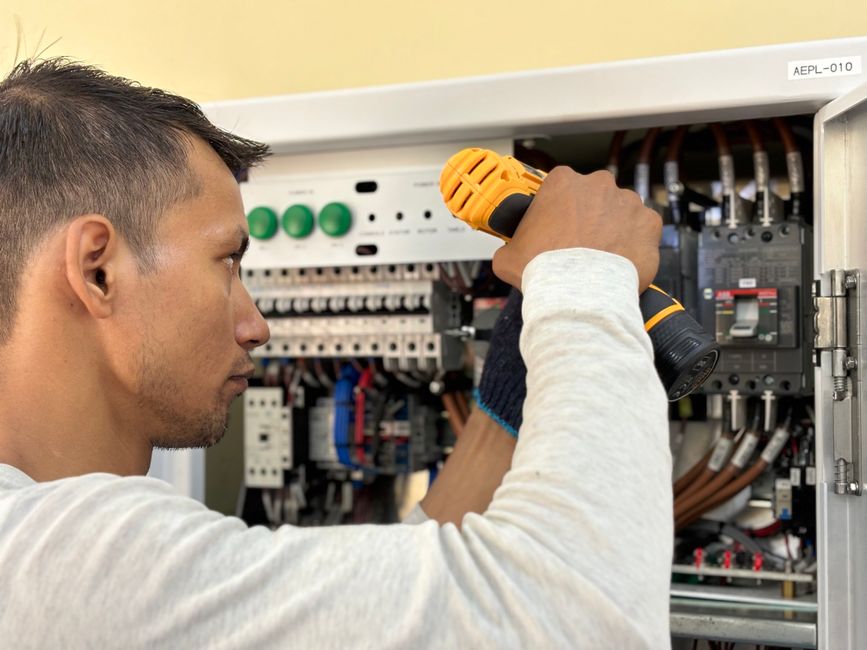
Typical uses are kitchen outlets and dedicated circuits for ovens, HVAC, washers, dryers, and EV chargers. Correctly labeling branch circuits is critical for safety and troubleshooting. A clearly marked panel helps electricians work faster and prevents unnecessary outages during repairs.
3. Bus Bars
Bus bars are metal strips inside the panel that conduct electricity to the breakers. Hot (live) bus bars feed the breakers while neutral and sometimes a separate neutral bus manage return currents. Physical separation keeps current flow safe and clear.
Bus bars are rated for the panel’s full amperage to ensure they don’t overheat, and connections between bus bars and breakers must be tight and corrosion free to maintain reliable protection. Badly rated or loose bus bars cause many failures.
4. Neutral/Ground Bars
It’s neutral and ground bars which are return current termination points and safe paths to earth. In main breaker panels, neutral and ground are typically bonded together. In subpanels, they must be isolated to prevent parallel return paths.
Appropriate bonding and separation comply with safety standards and minimize shock and fire hazard. These bars mitigate stray voltages and help stabilize the system during faults.
5. The Enclosure
The enclosure is the metal box that contains everything and provides physical and fire protection. It should be well-grounded, firmly mounted, and equipped with a cover that limits access to live components but displays circuit markings.
A sealed, intact panel maintains security and efficiency. Panels beyond approximately 25 years may require an update or exchange to comply with current loads.
Main Breaker vs. Main Lug
Main breaker panels and main lug panels are the two main types of electrical service panels. The fundamental distinction is that a main breaker panel has an integrated disconnect breaker capable of disconnecting all power feeding to it, whereas a main lug panel doesn’t have that internal disconnect and relies on an upstream breaker or separate disconnect to provide that shutoff and overcurrent protection.
This difference impacts safety, code compliance, installation cost, and real-world use.
Purpose
Main breaker panels have a switch that turns off all power to a building, enhancing maintenance and emergency safety. That one breaker makes it easy to isolate the entire service without having to mess with a bunch of branch breakers.
Main lug panels are usually subpanels or secondary service locations where the main panel upstream already has a disconnect. They work well when feed-through protection is already present, such as in an existing main service entrance.
Main breaker panels are generally preferred for service entrance because they combine the overcurrent protection with a convenient means of disconnect at the service location. This minimizes dependence on other devices and eases code inspections.
Main lug panels often need a separate disconnect or upstream breaker for emergency shutoff in many jurisdictions. Some local codes require an outside disconnect if the lugs are at the service entrance, so installers have to check locally.
Application
Main breaker panels are typically found in houses and main services for small businesses. They fit locations that require centralized control so someone can turn off power immediately in the event of a fault or for safe work.
Main lug panels are great as subpanels in garages, outbuildings, basements, or expansions of a system where the main panel houses the main disconnect. They’re typically used to distribute power from a main panel to branch circuits within the same or nearby building.
Suggest main breaker panels for living spaces, main electrical rooms, main meters, etc. Where centralized power control and emergency shutoff are necessary. The built-in breaker enables quick isolation and easier adherence to safety regulations.
We recommend main lug panels for applications where you already have upstream breaker protection and a separate disconnect would be redundant and expensive. They can conserve space and are easier for distribution-only functions.
Cost
| Feature | Main Breaker Panel | Main Lug Panel |
|---|---|---|
| Typical use | Primary service | Subpanel or secondary |
| Upfront cost | $1,500–$4,000+ (install) | Generally lower unit cost |
| Extra hardware | Built-in disconnect | May need separate disconnect |
| Long-term savings | Better safety; fewer add-ons | Savings if upstream protection exists |
Labor cost differs by complexity and local codes. Main lug panels may save money for subpanel installs but add cost if an external disconnect is needed.
Don’t sacrifice long-term safety and code compliance just to save a few hundred dollars at the outset. Stay away from panels from troublemakers like Zinsco and Federal Pacific because of their high failure rate and fire hazard.
Sizing and Selection
Choosing the right main breaker panel size and type impacts safety, code compliance, and the capacity to handle present and future electrical needs. A defined, documented load calculation is the starting point. It indicates whether you need a 200-amp service or if a smaller panel will work.
Sizing and selection below are targeted thoughts and actions to nail the appropriate panel.
Amperage Needs
Determine full load by summing the amperage or converting watts to amps, using Amps equals Watts divided by Volts of all of the circuits and major appliances. Incorporate hard-wired loads like electric ranges, water heaters, HVAC compressors, EV chargers, and big subpanels.
Basic appliances and lights can often add 20 amps or so, but HVAC and electric heat can push needs much higher. For example, if you have a 100-amp panel, you’d want to keep max calculated load near 80 amps or you’ll be overloading it all the time.
Use a load calculation to verify if 200-amp service satisfies current and anticipated requirements. Electric heat, central A/C, or several high watt appliances means a 200-amp service that is the norm these days.
Allow extra capacity by adding 20 percent to your total load calculation to account for small devices and usage spikes. Undersized panels are more prone to overloads and fire. Never install a main breaker that has a lower ampacity than your building’s maximum calculated load.
Future-Proofing
Select a panel with spare spaces and an amp rating a bit higher than you presently need so you won’t have to replace it when you upgrade. Panels with modular or smart design enable simpler circuit additions, load monitoring, and improved integration with energy management systems.
Plan for EV charging and solar inputs. Both can need dedicated breakers and inverter tie-ins or subpanels. Consider likely future additions: an upgraded HVAC system, a kitchen remodel with added appliances, or a dedicated home office with high-powered equipment.
These situations warrant choosing a 200-amp panel or greater, even if your load at present is less.
Physical Space
Size and Select– Measure wall space and verify the panel actually fits and satisfies clearance guidelines. Provide working clearance for service. Local codes generally mandate unobstructed working space in front of the panel.
Do not install in damp, cramped, or dangerous locations. Nor locate panels near water sources or in tight, inaccessible closets. Make sure they are accessible to electricians and quick to turn off in an emergency.
Proper placement facilitates safe feeding of incoming service conductors and maintains future expansion feasible.
Safety Protocols
Main breaker panels must be installed and maintained to minimize shocks, arcs, and fire hazards. Adhere to rigorous guidelines from design to punch-out. Verify service rating, panel location, wire types, and load calculations prior to commencing work.
Conduct a preliminary hazard analysis for electrical explosion, arcing, or fires as advised by the NFPA. Turn off the main breaker and circuit breakers prior to any work. Go metric and order currency-neutral parts.
Overcurrent Protection
Require every circuit in the panel to have a correctly rated circuit breaker sized to the conductor and anticipated load. Single-pole breakers typically provide 120 volts and 15 to 20 amps for lights and outlets while double-pole breakers provide 240 volts and 20 to 60 amps for things like large appliances.
Proper breaker type and trip curve mismatched breakers allow sustained overloads that heat conductors and insulation. Circuit breakers turn off electricity to circuits as a way to prevent overheating and fire. Main breaker panels offer centralized overcurrent protection for the entire service, enabling quick power disconnect in emergency situations.
Swap out antiquated 60 amp fuse boxes prevalent in homes constructed prior to 1965 for contemporary breaker panels that satisfy the present-day demand and safety standards. If uncertain of load, calculate watts equals amps multiplied by volts, or have a professional size service and subpanels.
Arc-Fault/GFCI
Provide arc-fault and ground-fault circuit interrupters where required by present code. AFCIs detect arc patterns caused by damaged wiring, loose connections, or pinched cables and trip before a sustained arc can ignite surrounding materials.
GFCIs sense an imbalance in hot and neutral conductors, tripping within milliseconds, and are required in wet or damp areas like kitchens, bathrooms, basements, and outdoors. Such devices assist in addressing today’s building codes and significantly reduce shock and fire occurrences.
Replace older panels without AFCI or GFCI coverage and note locations of protected circuits on the panel directory.
Clearances
Maintain minimum working clearances around the panel as specified by applicable code. Keep the area directly in front of the panel free of stored items and obstructions for at least the required depth, and ensure headroom and side access meet standards.
Do not keep flammable liquids, solvents, or paper near the panel; even the tiniest sparks can ignite nearby fuel. Clearly identify and label the panel location and every circuit to facilitate emergency and troubleshooting efforts.
Use an appliance amp reference chart to help balance loads and double-check that no one circuit is being overwhelmed. If you notice anything that looks like arcing, smells like burning, trips too frequently, or has hot covers, get in touch with a licensed electrician immediately.
The Panel’s Lifespan
Main breaker panels can last for several decades, but there’s a wide range. The majority of references cite a panel’s lifespan in the range of 20 to 50 years, with many households enjoying 25 to 40 years of dependable performance. Their longevity is largely a matter of their build quality, installation, environment, usage, and regular maintenance.
A well-made, well-placed, and properly maintained panel can last for decades, but older panels or those exposed to moisture, corrosion, or heavy, repeated overloads will age faster and be more risky.
Warning Signs
- Any visible rust or corrosion on the enclosure or bus bars.
- These can include burn marks, melted insulation or signs of overheating around breakers.
- Frequent tripping of breakers under normal load conditions.
- Flashing lights or mysterious outages in portions of the structure.
- Buzzing, crackling, or other unusual sounds from the panel.
- A warm or hot surface on the panel door or adjacent wall.
- Use of fuses, open neutral, or other antiquated wiring arrangements!
- Presence of recalled panel models or known defective breakers.
Rust and heat stain are usually signs of water infiltration or insufficient ventilation, both of which reduce life. Flicker or intermittent loss may indicate loose connections or failing breakers. These faults can escalate to arcing and fire.
Recalled panels, particularly some mid-century manufacturers’ models, need to be replaced outright, not patched.
Upgrade Triggers
- Introducing significant new appliances and systems (EV chargers, heat pumps, electric ranges) that push the load beyond the amperage available. The current panel might not have the capacity or breaker spaces required for safe distribution.
- Legacy panels with low amperage ratings, typically 60 to 100 A in homes from the 1940s to 1950s, or lacking contemporary safety features such as arc-fault and ground-fault protection.
- Non-compliance can impact coverage and liability.
- Signs of wear, damage, overheating or frequent failures. Taking action early is risk-mitigating and usually cheaper than reactive maintenance.
Don’t design your upgrades for today’s load, design them for tomorrow’s needs. A solution to current limits and near-term repeat work is to increase from 100 A to 200 A or add a subpanel.
Professional Assessment
Have a licensed electrician come by for a complete inspection every 5 to 10 years, or sooner at the first sign of warning signs. Request a written report on load distribution, safety hazards and obvious upgrade alternatives with cost estimates.
Get pro tips to consider replacement versus repair, and how to select compatible panels and breakers that comply with today’s standards. Need code-required installation, permits, and final inspections. Demand quality workmanship and documented testing for reliability and safety.
The Intelligent Panel
Intelligent panels are main breaker panels on steroids that bring monitoring, control, and automation to a conventional electrical distribution board. They integrate breakers with digital sensors, communications hardware, and software to display real-time power flows, allow users to switch power sources, and control circuits remotely.
These panels serve as the nexus for energy management, resiliency, and safety in today’s homes and small commercial sites.
Smart Breakers
Add smart breakers so you can remotely control and monitor individual circuits. Smart breakers instead take the place of normal breakers and communicate status via a network, so you can turn a circuit off from an app or only run at certain times.
Schedule, automate, and get notifications for critical loads or high power devices. For instance, time EV charging to take place overnight or trigger a space heater to turn off when a temperature sensor detects a room has reached a certain warmth.
With smart breakers, you can find patterns in energy use and optimize it. Knowing which circuits consume the most energy over weeks allows you to modify habits or shift loads to off-peak times to reduce bills.
Connect smart breakers to home automation platforms for integrated control. Many breakers work with major platforms so lighting, HVAC, and breakers can act as one system.
Energy Monitoring
Take advantage of integrated energy monitoring to keep an eye on total and per circuit power use. The panel is capable of displaying live watts, voltage, and total energy in kilowatt-hours, assisting in identifying inefficiencies and unusual draws.
| Metric | Example | Use |
|---|---|---|
| Peak load | 8.2 kW | Assess main capacity needs |
| The smart board | 1.2 kW average (dryer) | Consider schedule or upgrade |
| Approx. saving | 15% off peak shift savings estimate |
Identify unusual power draw or inefficiencies for preventative maintenance. A spike on a single circuit, for example, could indicate impending equipment failure.
Use energy data to decide whether you should upgrade, add solar, or balance loads. The intelligent panel can steer decisions about adding solar, batteries, or circuit priority during outages.
System Integration
Integrate the main breaker panel into smart home or building management systems. Integration means you can view and act on panel data from one dashboard.
Make it work with Sense Home Energy Monitor or other advanced analytics. Third-party tools commonly incorporate pattern recognition and appliance level disaggregation.
Intelligent Panel – Coordinate panel functions with HVAC, lighting, and security. The panel can shed nonessential loads during peak hours and keep, for example, refrigerators or medical equipment running.
Ready for next-generation electrification demands with open integration panels. Prices for intelligent panels run approximately between two thousand and five thousand dollars for hardware, with total projects often landing between four thousand and ten thousand dollars with installation and upgrades.
Conclusion
A main breaker panel lies at the center of a home’s electrical system. It cuts house power, houses branch breakers and provides a convenient location to kill power for servicing or emergencies. Select a panel that corresponds with the home’s load, available space, and local code. Size the main breaker for the amount of total amps you require, but leave space for expansion for future circuits. Follow safety steps: cut power at the main, use rated tools, and call a licensed electrician for changes that touch live parts. A good panel, carefully selected and cared for, lasts years and reduces hazards. If you want a free check or assistance with upgrades, reach out to a local licensed electrician today.
Frequently Asked Questions
What is a main breaker panel?
A main breaker panel is your home’s electrical headquarters. It gets power from the utility and allows you to turn off all circuits via one switch. It contains the branch circuit individual circuit breakers.
How does a main breaker differ from a main lug panel?
Main breaker panels have one shutoff switch. A main lug panel doesn’t have that switch and depends on a separate upstream breaker. Main breaker panels feature more convenient whole-home shutdown and easier safety control.
How do I size a main breaker panel for my home?
Size according to the total load and future requirements. Typical home sizes are 100 A, 150 A, and 200 A. A licensed electrician performs a load calculation to select the appropriate amp rating and ensure local code compliance.
What safety checks should I perform on the panel?
Look for burning smells, discoloration, loose breakers that won’t reset. Keep the panel in a clear and dry location. Let a good electrician check it from time to time or after major electrical problems.
When should I replace a breaker panel?
Swap it out if the panel is more than 25 to 40 years old, has any corrosion, utilizes antiquated breakers, or cannot support today’s electrical loads. Upgrading increases safety and powers new appliances.
Can I upgrade to an intelligent panel, and why?
Yes. Smart panels bring circuit-level monitoring, remote control, and load management. They enhance energy awareness, safety, and can connect to home energy systems.
Do I need a permit to install or change a main breaker panel?
Yes, pretty much everywhere needs permits and inspections. That’s what licensed electricians handle: code, safety, and paperwork. This guarantees legal and safe installations.