


Key Takeaways
- Prepare for upfront costs from charger equipment, electrician’s labor, electrical upgrades, and permit fees. Request several written quotes to compare overall project estimates.
- Level 1 is the lowest cost and taps into a standard 110V outlet for light daily use. Level 2 mixes speed and price with a 240V circuit. DC fast charging is pricey and seldom feasible for home installations.
- While New Jersey incentives and federal tax credits may lower out-of-pocket costs when installations utilize licensed electricians and compliant equipment, check your eligibility and apply via their respective portals.
- Understand your electrical panel capacity, wiring type and distance to the parking spot before scheduling work. Panel upgrades, trenching, conduit and long cable runs can increase the final cost.
- Future-proof with adjustable-amperage chargers, smart features, and universal connector readiness. Contemplate adding extra conduit or a heavier circuit for a second EV or battery storage.
- Get permits and inspections for code compliance, save your rebates and insurance, and avoid fines or resale issues.
Ev charger installation cost in NJ averages between USD 500 and USD 2,500 for a typical home setup. Costs fluctuate with charger power, electrician rates, panel upgrades, and utility program rebates.
Higher-power Level 2 units and required electrical work drive costs to the upper end. Navigating permit needs and incentive opportunities can reduce expenses and accelerate installation.
The following sections dissect expenditures, financing alternatives, and actionable steps for strategizing implementation.
Installation Cost Breakdown
Straightforward cost analysis of an EV charger installation in New Jersey. First, we list the main cost items and then break them down into hardware, labor, electrical upgrade, and permit subtopics.
- Charger hardware includes purchase price, cable length, connector type, and smart features.
- Labor: electrician hourly or flat fees, travel, and installer experience.
- Electrical upgrades include panel work, new breakers, conduit, and wiring changes.
- Permits and inspections: municipal fees, inspections, and code compliance.
- Materials and misc: conduit, mounting, connectors, and weatherproofing.
- Taxes and rebates include sales tax, federal tax credits, and state or utility incentives.
- Distance and site work: long wiring runs, trenching, or garage to panel distance.
- Additional EVs and future proofing: capacity for more vehicles or higher amperage.
1. Charger Hardware
Popular home chargers include ChargePoint, JuiceBox, and Tesla Wall Connector, each with different features. ChargePoint offers networked management. JuiceBox focuses on smart load control. Tesla Wall Connector supports high amperage for Tesla vehicles.
Level 2 equipment usually costs somewhere between 400 and 800 USD. Weatherproof models and higher amperage units carry a premium. Cables and longer cords increase cost, as do universal wall connectors or additional adapters for Tesla vehicles. Compatibility matters.
J1772 is standard for most EVs. NACS is Tesla’s newer standard and may need an adapter for non-Tesla units.
2. Labor Rates
Licensed electricians bill hourly or flat fees for EVSE installs. Labor itself can run anywhere from approximately 1,316 to 2,471 depending on the job and region. Easy installs with a 240V outlet in place are cheaper or panel upgrades push labor higher.
New Jersey labor can trend slightly above national averages based on local demand and wages. Always compare written quotes from several installers who specifically list experience with EV chargers and panel work.
3. Electrical Upgrades
Level 2 chargers can sometimes require their own 240V circuit. Panel upgrades may cost between 1,000 and 4,000 dollars or more. Common upgrades include larger amp panels, new breakers, protective conduit, and replacement of older or aluminum wiring, which raises the price.
It varies based on your panel capacity, how much amperage you have available, and whether you’re planning on more EVs.
4. Permit Fees
Most NJ towns require electrical permits for EV charger installations. Permit fees range significantly, from approximately 45 to 720, with an average of 297 in 2025. Average permit costs for a one-off install hover in the 59 to 82 range in some breakdowns.
Inspection charges may be additional. Skip permits and you risk fine, insurance issues, and resale complications. The federal tax credit covers 30 percent of installation costs up to 1,000 for eligible homeowners through July 2026.
Charger Levels Explained
Knowing charger levels sets your expectations for speed, cost, and what electrical work is required. Here’s an easy-to-understand breakdown of Level 1, Level 2, and DC fast charging, along with some details on who they’re best suited for and how your selection impacts installation cost, daily use, and future needs.
Level 1
Level 1 charging, which uses a standard 120V wall outlet, is the slowest. It contributes approximately 200 km of range in around 20 hours, making it ideal for overnight charging and low-mileage motorists.
Pros: Lowest installation cost, usually no panel upgrade, and every EV can use it with the cable that comes with the car. No electrician is necessary unless you want to update your outlets.
Cons: Very slow charge rate, not practical for large-battery EVs or households with multiple EVs. If your daily driving is more than a modest amount of miles, Level 1 will leave you wanting.
Ideal for plug-in hybrids, second vehicles, or houses with low electrical service. Most plug-in hybrids only require level 1 to satisfy normal daily usage. Examples include short commutes, urban dwellers with public charging options, or second household vehicles.
Level 2
Level 2 utilizes a 240V circuit and can provide anywhere between 16 and 80 amps, typically providing up to 7.2 kW on a 30-amp unit. It charges at roughly 40 to 64 km/h and usually requires four to ten hours to fully charge most EV batteries.
Level 2 chargers usually come with smart features, adjustable amperage, and broad compatibility. Almost all passenger EVs have the SAE J1772 port, so they plug in without adapters. Installation typically needs a new 240V circuit, potential panel upgrades, and a licensed electrician.
Prices increase with panel work, the distance of the wiring, and the complexity of the site. Level 2 is the practical balance for most owners in New Jersey and elsewhere. It offers moderate installation cost, meaningful speed gains, and convenient overnight charging.
Example use cases include daily commuters, single-family homes, and small workplaces that want reliable home-style charging.
DC Fast Charging
DC fast charging (Level 3) utilizes high-voltage direct current and is the quickest, delivering up to 50 to 500 kW and effectively up to 300 km per hour for select vehicles. It can charge up to around 80 percent in less than an hour for supported vehicles.
Such units require demanding electrical infrastructure, high amperage service and site engineering. They’re seldom residentially appropriate. Common locations include highway rest stops, commercial sites, and fleet depots.
Downsides are a higher cost per kWh of approximately $0.53 per kWh and rapid battery degradation. Research indicates a capacity loss of 3 to 9 percent over 50,000 miles with regular use.
NJ’s typical residential installs target Level 2 due to cost and electrical constraints. DC fast chargers address public networks and high-turnover demand.
| Level | Speed (approx.) | Outlet/Circuit | Typical use |
|---|---|---|---|
| Level 1 | 200 km / 20 hr | 120V household | Low-mileage, PHEVs |
| Level 2 | 40–64 km/hr | 240V circuit (16–80A) | Home, work, overnight |
| DC Fast | up to 300+ km/hr | High-voltage DC | Public, fleets, long trips |
New Jersey Incentives
New Jersey provides a combination of state and federal incentives to reduce the net cost of EV charger installation for residences, businesses, non-profit organizations, and public locations. The state targets public access and tourism-related charging expansion while supporting fleet electrification. Start with a clean picture of what programs are out there, then align eligibility and project scope to the appropriate funding stream.
State programs and incentives available in New Jersey include:
- New Jersey 30% tax credit for businesses, non-profits, and municipalities purchasing and installing EV charging infrastructure.
- Specific per-station caps: up to USD 5,000 for public Level 2 stations, up to USD 4,000 for fleet Level 2 stations, and up to USD 50,000 for DC fast chargers.
- Increased 30C tax credit guidelines protect up to USD 100,000 per charger in eligible geographic locations.
- Funding covers up to 80% of eligible project costs for select projects.
- New Jersey EV Tourism Program incentives for boardwalks, parks, unique attractions, and overnight lodging.
- Apply and get program information via the New Jersey Board of Public Utilities (NJBPU) EV Tourism Program portal.
- Local utility rebates and manufacturer discounts that stack with state credits.
Federal incentives add to state support. The Alternative Fuel Vehicle Refueling Property Credit (30C federal tax credit) credits eligible installation and can offset tax liability for qualifying taxpayers. Check the existing federal regulations, qualifying expenses, and any limits before filing.
There are very defined qualifying requirements in order to receive these credits and rebates. Installations typically need to be completed by licensed electricians and employ compliant equipment that adheres to technical and safety standards. Documentation is required: invoices, proof of purchase, installer credentials, and site photographs.
For a lot of the New Jersey programs, you’ll be submitting directly through the NJBPU EV portal or the respective application system. Follow the checklist on the portal precisely to prevent any hold-ups.
Examples help illustrate: a small hotel on a boardwalk that installs four Level 2 chargers may apply for the state per-station cap while qualifying for the enhanced USD 100,000 30C allowance if the site meets geographic rules and the project passes the 80% cost-share test.
A municipal fleet installing DC fast chargers could receive up to $50,000 per charger plus state tax credit coverage.
Homeowners, definitely check for rebates and offers. Manufacturer incentives, dealer discounts, and utility programs frequently lower the front-end cost. Reach out to local utilities and visit the NJBPU EV Tourism Program pages for site-specific guidance, deadlines, and application forms.
Hidden Installation Factors
EV charger installation in New Jersey: What homeowners really should know about the hidden installation factors that drive final costs. A quick site and electrical evaluation initially exposes requirements such as panel updates, trenching, weatherproofing, permits and additional conduit. The checklist below aggregates those hidden items so budgets are realistic and surprises are reduced.
Panel Capacity
- Check main breaker rating and free breaker slots.
- Confirm service amps (100 A, 200 A, etc.) on the meter.
- Search for already installed high draw appliances such as HVAC, electric range, and dryer.
- Note age of wiring and presence of aluminum conductors.
- If you’re unsure, hire a licensed electrician to perform a load calculation.
Not enough panel capacity can drive a full panel upgrade or subpanel addition. Upgrading a main panel or rewiring can often range from 1,000 to 3,000, depending on complexity and parts. Older homes or those with many heavy appliances are more likely to require those modifications, which adds labor time and permit needs.
Right panel sizing means safe, smart, efficient charging and space for a second EV down the road. Without it, you could encounter nuisance tripping or unsafe conditions. A dedicated NEMA 14-50 outlet or hardwired Level 2 charger is contingent on the panel’s available capacity and breaker location.
Trenching Needs
Trenching is needed when the charger will be at a detached garage or a parking spot away from the house. Distance is the primary cost driver, with longer runs requiring more conduit and cable and possibly deeper and wider trenches.
Soil conditions, underground debris, tree roots and utilities all impact time and cost. Rocky soil or pavement will drive up labor and equipment requirements. Protective conduit and extended cable lengths increase material costs and contribute to the overall bill.
Trenching can activate permits and inspections and forced repairs of landscaping or driveways. Factor these in: permit fees, restoration materials, and extra labor can add several hundred to a few thousand. Don’t forget to factor in trenching estimates for a total project budget.
Location Choice
Bonus tip: Select a location near the electrical panel to save on conduit and labor hours. Short runs lower material costs and eliminate the need for trenching in numerous instances.
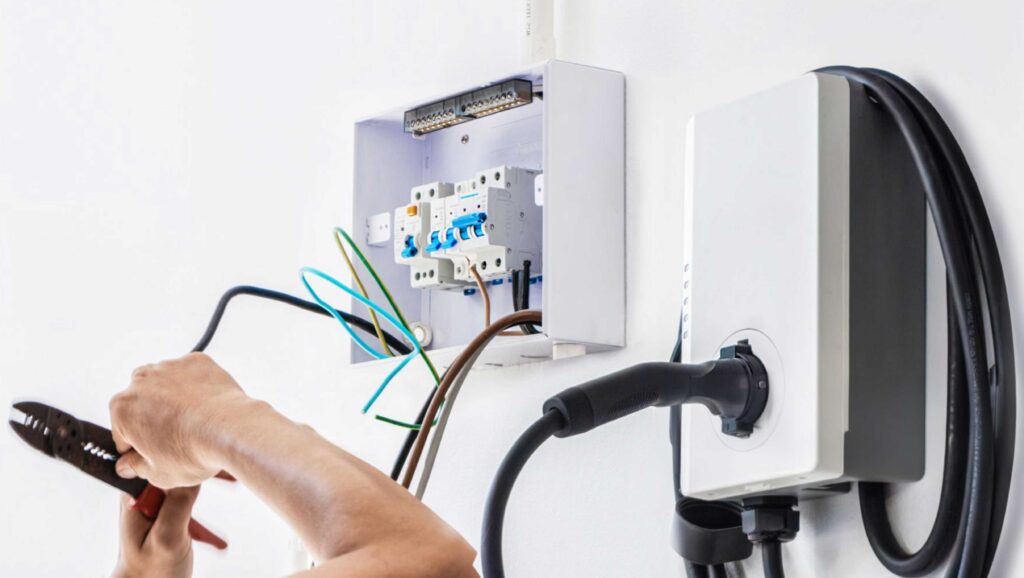
For outdoor chargers, weatherproof models and proper mounting are a must. Conduit and weather seals increase cost but safeguard equipment and wiring. Plan conduit runs that keep cables off the ground and out of the elements.
Anticipate additional EVs or guest charging, and install additional bays or a higher-capacity charger now instead of retrofitting later. This is much more important than simply hiding installation factors.
Future-Proofing Your Setup
Future-proofing starts with a clear view of what you need now and what you might need later. A home assessment is the first step to know the capacity of your electrical panel, the layout for conduit runs, and how your site ties into any existing solar or planned energy projects.
The assessment shows whether a panel upgrade or a growth-ready path is needed to support an EV charger, added solar, or battery storage. It guides where extra conduit or an outlet for a second charger should go, which saves time and cost later.
Choose adjustable amperage, smart features, and wide compatibility
Choose a charger that allows you to adjust the amperage to suit different EVs and fluctuating household loads. With 11 kW or 22 kW models available, you have room for higher-powered EVs and shorter charge times.
Smart chargers matter because they let you schedule sessions, set charging windows for off-peak rates or daytime solar output, and receive firmware updates. Smart features include load sharing and remote control through apps.
Select units certified for interoperability and with defined firmware-update paths so new car protocols or utility signals can be accommodated without hardware replacement.
Install higher-capacity circuits and extra conduit for expansion
Put in a bigger circuit than you need and run a second conduit or leave room in the main raceway for future lines. Future-proof your setup.
If you have room, wire for a 60 A or larger breaker even if starting smaller. This allows for the future addition of a second charger or home battery without ripping out walls.
When upgrading the electrical panel, plan a growth-ready layout that includes extra breakers, space for a storage inverter, and clear labeling. These decisions minimize future downtime and labor expense when you increase capacity.
Integrate with home automation and energy management
Connect the charger to a home automation or energy management system to synchronize charging with other loads and renewable generation. Integration allows it to time charging to align with off-peak utility rates or solar output, or to throttle charging when home demand suddenly spikes.
More advanced energy management systems can coordinate EV charging with battery charge cycles and solar export limits, helping reduce your bills and grid strain. Future-proof your setup a bit.
Use platforms that support open standards and APIs so you can swap apps or services later.
Support new plug standards and expandable infrastructure
Future-proof your setup — Plan for connector evolution by selecting chargers with adapter options or universal sockets and by leaving space for NACS plugs and other standards.
Install infrastructure that is easy to upgrade, like mounting plates, accessible wiring chases, and labeled conduits. This keeps the grunt work light when new plugs or higher power chargers appear.
Permits and Regulations
All home EV charger installations in New Jersey have to adhere to local building codes and electrical standards to comply with safety regulations and prevent future issues. They address wiring, grounding, circuit sizing, and placement. You’ll need a permit when you add a new EV charging circuit or hardwire a station.
Permit fees differ per area; on average, they range from 50 to 800 in local currency. Plug-in use of an existing outlet frequently doesn’t require a permit if the outlet, wiring, and panel load are sufficient, but any alteration to the electrical system typically does.
Required permits: electrical, building, and possibly zoning
An electrical permit is the primary paperwork for Level 2 chargers as they require a 240-volt dedicated circuit or commercial-grade outlet. If the project includes trenching, conduit runs or modifications to walls and exterior surfaces, a building permit could be required.
Zoning review is rarer for single-family homes, but local regulations may still demand it when the charger is located in a conspicuous location, appended to a detached building, or modifies driveway configuration. For permits and regulations, check local municipal offices to verify which permits you need to file. Overlooking a necessary permit can translate to work stoppage or retrofits.
Inspections and why they matter
Local authorities will inspect to ensure the installation is code and safe. Inspectors will verify breaker sizing, conductor type, grounding and bonding, outlet orientation and that your charger is installed according to manufacturer’s instructions.
Their inspections safeguard the homeowner’s investment by minimizing fire risk and confirm the system won’t overload the home electrical supply. Inspection fees are typically consolidated with permit fees but may be separate in certain cities.
Risks of non-compliance
If installations aren’t permitted or don’t pass inspections, homeowners can face fines, lose out on rebates, have trouble with insurance claims, and create headaches in a home sale. Certain incentives, such as federal or local rebates, may require evidence of permits and inspections.
A residential tax credit, for instance, might cover 30% of qualified fueling equipment up to 1,000, and without the paperwork, you’ll leave that on the table. Insurance companies can refuse to pay if unpermitted work was a factor in a loss.
Cost factors and practical steps
Take into account permit and inspection charges when calculating installation costs, which usually fall between 800 and 2,500 for Level 2 chargers, not including panel upgrades. If the electrical panel requires replacement or upgrade, add about 1,500 to 3,000 and anticipate additional permits and inspections.
Begin by phoning your local building department, requesting permit checklists and verifying rebate eligibility prior to work commencement.
Conclusion
It’s logical to install an EV charger in NJ for most homeowners. Standard home installs range from a few hundred to a few thousand euros, with level 2 equipment and panel upgrades accounting for the bulk of the cost. Local rebates and state incentives reduce that amount for qualified users. Simple installs are fast and inexpensive. Complicated projects require additional time and expenses. Factor in permits and final inspection. Select a charger suitable for daily miles and future needs. Include conduit or a dedicated circuit for tidier upgrades down the line. If there’s a way, hire a professional and use a licensed electrician with EV experience to ensure safe work and obtain valid permits. Let’s get started. Find at least 3 quotes, verify incentives, and book an on-site estimate.
Frequently Asked Questions
What is the typical cost to install an EV charger in New Jersey?
The average cost for a Level 2 EV charger installation is between roughly €600 and €2,400, depending on charger price, electrical upgrades, and labor. Easy installs cost less. Complex electrical work increases the price.
How much does upgrading my electrical panel add to the price?
Panel upgrades typically add €800 to €3,200. If your home requires a higher-capacity panel or service upgrade to support a Level 2 charger, anticipate higher expenses and potentially an electrician’s audit.
Are there any New Jersey incentives that reduce installation costs?
Yes. New Jersey state rebates and utility programs reduce costs. We sometimes see local utilities and federal tax credits as well. Click to check the present NJ Board of Public Utilities and utilities websites for new offers.
What hidden factors can increase my installation bill?
Long cable runs, trenching, challenging outdoor mounting, buried conduit, or even relocating the main service entrance can significantly add to costs. Permit fees and necessary electrical inspections contribute to the ultimate cost.
Do I need a permit to install an EV charger in NJ?
Yes. Nearly all NJ municipalities mandate permits and an electrical inspection. Permit requirements and fees differ by town, so reach out to your local building department before you hire an installer.
Should I choose a smart charger or a basic one?
A smart charger includes additional capabilities such as scheduling, load management, and remote monitoring. They’re pricier but reduce long-term energy costs and future upgrades. Pick depending on budget and smart-grid advantages.
How can I future-proof my EV charger installation?
Install a dedicated 40 to 48 amp circuit, give allowance for spare conduit and room at the panel, and select a charger with upgradeable firmware. These steps minimize upgrade costs down the line as vehicle charging needs increase.