
Key Takeaways
- Be aware of the warning signs. Correctly installed outlets should be cool to the touch and a warm or hot faceplate is dangerous. Unplug devices and discontinue use of the outlet if it is uncomfortably hot.
- Look for external causes first. Sunlight, nearby heaters, or heat-producing transformers can cause an outlet to feel slightly warm, and see if the warmth decreases as room temperature decreases.
- Watch for diagnostic signs such as discoloration, buzzing sounds, or burning smells. These are signs of internal resistance, arcing, or insulation failure and all demand urgent attention.
- Take safety steps immediately. Unplug loads, turn the circuit off at the breaker, and don’t use temporary fixes like extension cords until a pro has checked out the circuit.
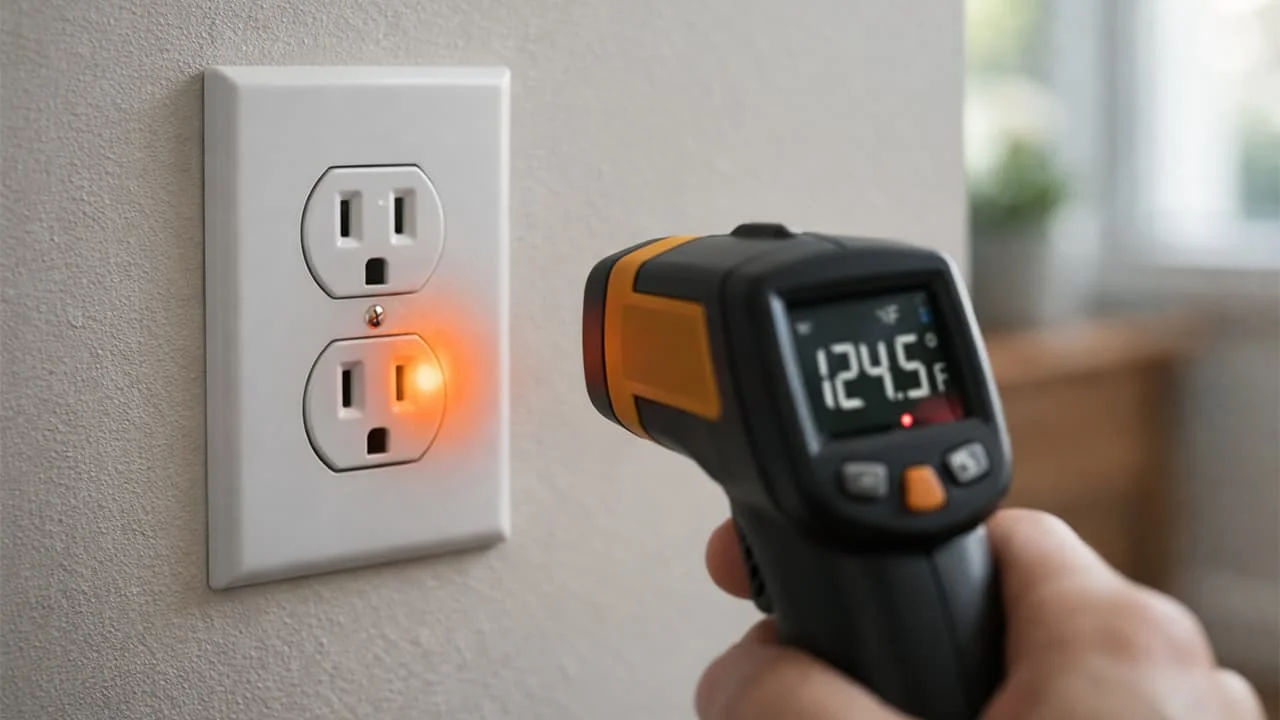
- Evaluate risk by scanning outlets with a non-contact infrared thermometer and recording abnormally warm hotspots to assist in locating loose terminals, overloaded circuits, or deteriorated wiring.
- Hire a licensed electrician to perform any remediation and upgrades, have them conduct a full system evaluation, and discuss dedicated circuits, AFCI/GFCI protection, and smart outlets with temperature monitoring to avoid future overheating.
Warm wall outlets mean there is heat building up at the receptacle due to loose wiring, high load, poor contacts, or aging components. Heat can come from overloaded circuits, dimmer switches, or corroded connections that cause a resistance increase. Frequent flickering, a burning smell, or tripped breakers indicate issues. Measure load in watts if possible. A certified electrician can investigate wiring and secure or replace components to return safe functioning and mitigate additional danger.
Thermal Baselines
Establishing what qualifies as normal outlet heat is crucial, especially since an outlet feels uncomfortably hot can indicate serious electrical issues. A little warmth is typical, but overheating outlets are not, emphasizing the importance of context in determining whether to monitor or seek professional assistance.
Ambient Heat
Since outlets sometimes feel warm when room air or sun warms the wall. Direct sunlight, radiators, space heaters, or even a warm appliance nearby will increase the faceplate temperature by a few degrees Celsius.
Typical culprits are south-facing walls in direct sun, outlets above baseboard heaters or near ovens and HVAC vents. In these instances, the outlet surface can equal room temperature and feel simply warm, not hot.
Observe if the outlet cools down as the room cools. If the heat trails the ambient dip, the problem is probably outside. With a room thermometer and an infrared thermometer, check for hot spots.
Ambient heat in and of itself does not usually cause a hot outlet faceplate or internal wiring to get hot. Sustained hot-to-the-touch implies more than just warm air; there’s probably some internal electrical source.
Transformer Dissipation
| Device type | Typical dissipation / heat feel | Notes |
|---|---|---|
| Low-power phone charger (idle) | Slight warmth | Normal, small transformers dissipate some heat |
| Laptop power brick | Warm | Can make the outlet area feel warm during charging |
| Large adapters (printers, AV) | Warm to hot under load | Higher draw produces more heat |
| Power strips with surge protection | Can feel warm if heavily loaded | Watch cumulative load |
A ton of low wattage chargers and small transformers will make an outlet just a little warm but not hot. If a single plugged device is making it warm, unplug it and try another outlet. A consistent pattern implicates the device or its adapter, not the outlet.
Thermal Baselines See if certain devices always generate heat. Swapping devices or outlets can isolate the source. Excess heat from transformer dissipation that is strong or growing over time can be a sign of a failing adapter, poor connection, or voltage issue and warrants additional testing.
Dangerous Spikes
Sudden or sharp increases in outlet temperature are a red flag. A quick rise from cool to hot indicates arcing, a loose connection or overload.
A faceplate that’s hot to the touch generally indicates the issue is within the wall, either at the outlet terminals or in the branch wiring. That kind of heat can set nearby combustibles aflame and cannot be overlooked.
Extreme heat causes fire, so any outlet that is uncomfortably hot should be dealt with as an imminent threat. Shut the circuit off at the breaker and call a licensed electrician before you use it any more.
Primary Causes
Warm or hot outlets are a sign of surplus heat on the circuit or at the connection point, which can indicate serious electrical issues. Here’s a brief overview of the main causes that lead to overheating outlets and faulty wiring. After that, we’ll take a closer look at each primary cause.
- Loose or corroded terminals increasing electrical resistance
- Circuit overload from multiple or high-draw appliances
- Aging wiring and degraded insulation in older installations
- High continuous appliance draw (EV chargers, heaters)
- Shared neutrals or multi-wire branch circuits concentrating load
1. Terminal Resistance
Loose screws, backstabbed connections, or rusted terminal clamps can lead to faulty electrical outlets by reducing the contact surface between conductor and terminal. This increased resistance creates dangerous heat, converting electrical current into heat right at the outlet face. Check for flicker in connected lights, intermittent power, or an outlet that feels unusually warm. These are common warning signs. Terminal hotspots can heat a plug in addition to the outlet body, where overheating outlets may cause serious electrical issues behind the receptacle.
2. Circuit Overload
A circuit overload occurs when the total of device currents surpasses the design limitations of the breaker and wiring. Frequent offenders like space heaters and hair dryers can lead to overheated outlets, consuming 1,000 to 3,000 watts each. When several of these loads are on the same circuit, it can drive the current and conductor temperature up, causing the outlet feels uncomfortably hot. To prevent overheating outlets, it’s advisable to put major appliances on their own circuits to control heat and hazard.
3. Infrastructure Decay
As wiring ages, insulation becomes brittle, and connections corrode, leading to increased resistance that can cause overheating outlets or even arcing. In older homes, knob-and-tube or two-prong circuits lack modern grounding and protective devices, making them more prone to serious electrical issues. It’s crucial to have your electrical system regularly checked by a competent electrician, especially when you notice that sockets are discolored, black, or warm, as these are indicators of potential hazards.
4. Appliance Draw
Modern devices such as EV chargers, induction cooktops, or large compressors can place sustained heavy demand on an electrical outlet or circuit. To prevent overheating outlets, test by simply unplugging and re-checking the outlet temperature after a short run. Unplugging when not in use, utilizing appliances on appropriate dedicated circuits, and ensuring cords and plugs are in good condition all minimize constant heat generation. Continuous heavy draw shortens component life and increases fire hazard.
5. Shared Neutrals
Shared neutral or multi-wire branch circuits can concentrate return currents and conceal overloads from individual breakers, leading to a hot outlet situation. If outlets on a shared neutral are used simultaneously, a specific neutral or hot connection can warm up more than anticipated, potentially causing overheating outlets. Identify shared circuits and consider upgrades, as dedicated runs or AFCI/GFCI protection lower the risk of overheating caused by shared neutrals.
Diagnostic Signs
Warm outlets can be innocuous in small instances, but they can be a precursor to a significant electrical issue. Here are the diagnostic signs to look out for, a handy checklist for risk monitoring, and tips on inspection and early intervention to forestall escalation.
- Visible heat-related damage: Plate discoloration, melting plastic, or warped faceplates indicate sustained heat. Typical discoloration is brown, yellow, or black around the slots or screw head. Swap out any outlet exhibiting these symptoms immediately. The switch frequently indicates that an internal mechanism is malfunctioning or wiring is getting hot within the wall. Ignoring visible damage can allow heat to accumulate and ignite a fire.
- Unusual sounds: Buzzing, humming, or sizzling from an outlet signals loose connections, arcing, or high resistance. These noises tend to come before heat or sparks are evident. If you hear them, shut off the breaker for that circuit and don’t go near the outlet until a licensed electrician examines and fixes it.
- Electrical odors: Smells of burning, melting plastic, or a sharp acrid scent near an outlet are frequent early warnings. The signs of diagnostics almost always precede smoke or damage. Turn off the circuit immediately and investigate. Leaving power to the outlet while smelling burning increases the possibility of flame.
- Intermittent power or tripping breakers: Outlets that cut power, reset only after a period, or cause breakers to trip repeatedly suggest thermal stress, overloaded circuits, or failing components. They are diagnostic signs that create heat and need to be diagnosed immediately.
- Hot plugs or cords: If plugs or connected cords feel warm to the touch where they meet the outlet, the load may be too high or contacts may be poor. Verify device rating versus outlet circuit capacity. Swap out frayed cords and steer clear of high-draw appliances on that circuit.
- Age and prior repairs: Older outlets or those previously repaired with substandard parts have a higher risk of failure. Routine replacement of outdated outlets and tamper-resistant upgrades can mitigate thermal issues.
Checklist to monitor for potential electrical fires:
- Discoloration on faceplates or switches
- Burning or acrid odors near outlets
- Buzzing, humming, or sizzling sounds
- Repeated breaker trips or intermittent power
- Warm plugs, cords, or outlet surfaces
- Visible charring or melting around sockets
Early detection is important because minor issues tend to escalate rapidly when stressed. Periodically check every outlet in your living and work spaces. Touch the plate after devices have been running for a few minutes and observe any differences. If any checklist item arises, turn off the circuit and call a licensed electrician for thorough diagnosis and repair.
Plate Discoloration
Brown, black, or yellow stains on an outlet faceplate suggest a hot outlet, indicating that heat has impacted the plastic. Replace discolored outlets immediately, as the damage frequently points to faulty electrical outlets or wiring issues within the wall. A stained plate indicates a serious electrical issue that needs a professional look.
Acoustic Humming
Buzzing, sizzling, or humming signifies electrical resistance or arcing at a connection, which may indicate a hot outlet. Disconnect the breaker if you hear these signs, as overheating outlets can precede visible sparking and serious electrical issues.
Odor Detection
If you smell burning, melting plastic, or acrid odors near electrical outlets, it’s a diagnostic sign of overheating outlets. If you sense any unusual odors, turn off the power at the breaker. Odor is the earliest warning before damage is visible, and ignoring it can rapidly lead to serious electrical issues.
Immediate Responses
When an outlet is warm, you should act fast and deliberately. The steps below describe what to do initially, how to minimize immediate risk, and what to check for while you wait for the experts.
Checklist — immediate actions and descriptions:
- Cut power: Turn off the circuit at the breaker panel for the affected outlet to stop heat build-up. This avoids additional damage and contains fire risk.
- Unplug loads: Remove every device from that outlet and nearby outlets on the same circuit. Don’t re-plug anything until the outlet has cooled and been inspected.
- Label breaker: Mark the breaker you switched off so others do not turn it back on by mistake.
- Avoid temporary fixes. Do not use extension cords, power strips, or alternate outlets on the same circuit to keep devices running.
- Monitor and isolate: Keep people and flammable materials away from the outlet. Cover with a non-flammable cover or barrier if present.
- Call a professional. Contact a licensed electrician to inspect wiring and receptacle condition before restoring power.
Unplug Loads
Unplug immediately any devices and appliances from a hot outlet or one that feels unusually warm. To prevent damage, always pull the plug firmly from the wall by the insulated plug body. Don’t yank the cord. High-draw appliances such as space heaters, kettles, and hair dryers are common culprits for causing overloaded circuits. Remove them first.
Let the outlet cool down before you touch or test it. Even if the device seems okay, unplugging decreases current and prevents overheating outlets from generating dangerous heat. Avoid shifting the load to another outlet on the same circuit, as the fault may lie in other electrical outlets.
Don’t use extension cords or power strips as a temporary fix. They can conceal overloads and increase voltage drop, worsening the situation. If you need to tap a temporary power source for necessary equipment, ensure it is from a separate, properly installed circuit, and consult an electrician first.
Trip Breaker
Shut off power at the main or the breaker controlling the hot outlet in question. To find the right breaker, read labels or use a circuit tester. When in doubt, switch off the entire panel. Turning power off right away stops heat production in wiring and other equipment connected to the circuit, especially in cases of faulty outlets.
Once you’ve turned it off, mark the breaker with tape or a marker so other people don’t turn it back on. Leave the breaker off until an electrician can check the receptacle and wiring. Re-energizing a panel before inspection threatens to reignite a concealed fault or develop an arc that can cause a fire.
It’s essential to turn the breaker off when the outlet feels unusually warm, sparking, or showing burn marks. This protects the remainder of the home’s electrical system and provides the experts a more secure space to operate.
Thermal Scan
To measure outlet temperature with a non-contact infrared thermometer or thermal camera from a short distance, scan around the faceplate and adjacent wall. If any outlet is even several degrees Celsius warmer than room temperature, it may indicate a potential issue.
Mark temperature for all outlets and list those that are unusually warm. Cross-check readings between rooms to identify trends. Clusters of hot sockets can indicate a common wiring issue or overloaded branch.
Thermal scanning can expose concealed heat behind walls and inside junction boxes and lead electricians to the probable source. Take these measurements to prioritize repairs and demonstrate clear evidence to the technician.
Professional Remediation
Hot sockets are a job for the professionals. A licensed electrician will find the source of the issue, evaluate the danger, and perform fixes to restore the circuit to safe functioning. First, a complete system inspection is needed to identify overheating outlets, overloaded circuits, damaged insulation, or malfunctioning devices. Here’s the professional remediation section, which provides actionable steps and remediation options, so you know what to ask for and what to expect.
- Ask for a complete electrical inspection of the wiring and breaker panels.
- Have the electrician test the outlet temperature under load and examine the internal connections.
- Have any outlets, switches, or receptacles that are hot, discolored, or have burn marks replaced.
- Professional Remediation – Upgrade knob-and-tube, cloth-insulated, or undersized wiring.
- Install AFCI/GFCI outlets as needed.
- Professional Remediation balances loads across circuits and adds dedicated circuits for high-draw appliances.
- Swap out or rewire overloaded breaker panels and fix loose bus or terminal connections.
- Ask for a written report, a safety sticker, and a timeline for follow-up checks.
Ask for a complete review of the electrical system, including wiring and breaker panels. The electrician should pop open select electrical outlets and the service panel to inspect for loose terminals, corrosion, or arcing. They should measure voltage and current, conduct thermal scans to identify hot spots, and test continuity and insulation resistance if necessary. Be sure you ask that they check all the accessible wiring from the outlet back to the panel so they won’t overlook any hidden heat buildup behind walls.
Suggest bringing defective outlets, switches, and wiring up to electric code. Change any outlet that feels uncomfortably hot, cracked, or loose. Employ tamper-resistant and adequately rated outlets. If wiring is outdated, too small, or damaged, replace it with properly gauged copper conductors. For circuits powering kitchens, laundry, or HVAC, consider dedicated circuits sized for appliance load to prevent overheating outlets.
Push for installing AFCI or GFCI outlets to protect against electrical fires. AFCI devices sense hazardous arcing signatures and trip prior to an arc initiating a fire. Fit them to bedroom, living room, and other branch circuits mandated by contemporary codes. GFCI devices are ground fault protected and required in wet locations like bathrooms, kitchens, and outdoors. Utilize combined AFCI/GFCI breakers or receptacles where both protections are suitable.
When you hire, check the license, insurance, local code knowledge, and references. Request an explicit quote, a scope of work, and a timeline. Maintain copies of permits and inspection reports.
Preventive Upgrades
Preventive upgrades diminish the likelihood that a hot outlet heats up enough to initiate harm. They prioritize early warning, repair of aging components, and elimination of typical causes of overheating outlets. Here are real-world solutions, why each is beneficial, where you can apply them, and how to install and maintain properly installed outlets.
Smart outlets with temperature monitoring
In addition, smart outlets equipped with temperature sensors can measure heat at the receptacle and can notify you or cut power when temperatures escalate beyond a safe point, which is crucial for preventing overheated outlets. Install them in rooms with frequent heavy use: kitchens, home offices, laundry areas, and entertainment centers. Opt for models that communicate in metrics and integrate with your phone or home hub, so you receive instant alerts. For example, a smart outlet that logs surface temperature every minute will show a pattern if a device slowly overheats, helping you avoid a serious electrical issue before insulation or wiring is damaged. When purchasing, look for sensor location, response time, and if the device can trip the circuit or merely alert you. Professional installation of hardwired smart modules is important to ensure the outlet remains cool to the touch and complies with local electrical codes.
Regular professional electrical inspections
A good licensed electrician can detect loose connections, corrosion, overloaded circuits, and degraded insulation that you probably won’t notice. Have an inspection at least every 3 to 5 years in common homes and more frequently in older homes or following significant remodeling efforts. As part of an inspection, anticipate outlet tightness testing, load measurements in amperes, and thermal imaging scans to detect hot outlet spots lurking behind plates. For instance, an inspection might reveal an outlet feels unusually warm due to a loose connection at a junction box feeding multiple outlets. Tightening or replacing that connection can help prevent overheated outlets and stop intermittent heating.
Replacing old or worn outlets and wiring
Outlets and wiring older than about 25 to 30 years are due for a look-see, especially if the outlet feels unusually warm, receptacles are loose, or plastic faces are cracked. Upgrading two-prong outlets to grounded three-prong units where appropriate is crucial to prevent overheating outlets. Additionally, exchanging damaged outlets for tamper-resistant, higher-quality receptacles can enhance safety. Rewiring swaps out cloth-insulated or aluminum wiring for modern copper conductors with less resistance and heat. For instance, replacing a loose, yellowed outlet that sparks when plugs are inserted can eliminate the resistance that made it warm. Here’s a twist: hire a skilled electrician to rewire.
Installing dedicated circuits for high-power appliances
Ovens, dryers, air conditioners, and certain space heaters are examples of high-power appliances that require their own dedicated circuits, sized for their continuous load. Adding a dedicated 240 V circuit or a 20 to 30 A branch circuit prevents overheating outlets from getting overloaded. Proper planning for placement near the appliance helps maintain short cable runs and minimize voltage drop. For instance, relocating a high-amperage microwave from a shared kitchen circuit to its own circuit stops the outlet from feeling unusually warm during heavy use.
Conclusion
Warm outlets indicate a real danger. Heat at the face, loose wiring or a buzzing plug signify a fault that requires immediate attention. Turn off the circuit if heat builds quickly or if you notice scorch marks. A licensed electrician is best to find loose screws, worn wires and overloaded circuits. Exchange old two-prong outlets for grounded ones and distribute heavy loads among circuits to reduce heat accumulation. Opt for surge protectors with thermal cutoffs for sensitive gear. Keep cords and plugs clean and snug. Little tests now prevent blazes later. If an outlet stays warm for more than a few minutes under normal use, schedule an inspection. Plan ahead with a pro and stay cool and safe at home.
Frequently Asked Questions
Why are my outlets warm instead of hot?
Warm outlets usually indicate normal load or minor contact resistance, but a hot outlet can be symptomatic of a serious electrical issue, such as loose wires or overloaded circuits. If the outlet feels uncomfortably hot or the warmth continues, consider it a safety issue and investigate further.
Could warm outlets cause a fire?
Yes. A warm outlet, especially when nothing is plugged in, can indicate bad connections or overloaded circuits that raise fire hazards. Treating hot outlets quickly minimizes the risk of arcing, frayed insulation, or fire.
What should I check first when an outlet feels warm?
Unplug devices and try the outlet again. Check for a tripped breaker or tripped GFCI. If the outlet feels uncomfortably warm even when nothing is plugged in, it may indicate a serious electrical issue, so cease use and get assistance.
Can I keep using an outlet that’s slightly warm?
No. Do not use regularly until you determine the cause. A hot outlet feels uncomfortably warm under extreme load might be okay, but recurrent or intensifying warmth suggests a serious electrical issue that needs to be examined by a professional electrician.
How does a loose connection make an outlet warm?
Loose connections in electrical outlets create resistance, generating heat at the connection point. This overheating can deteriorate wiring over time, leading to serious electrical issues and potential fire hazards if not properly addressed.
When should I call an electrician?
Call an electrician if the outlet feels unusually warm even when nothing is plugged in, heats up fast, sparks, smells like it’s burning, trips breakers repeatedly, or shows signs of faulty outlets, as these represent a potential dangerous fault.
What preventive upgrades reduce warm-outlet risk?
Upgrade to modern outlets and install dedicated circuits for high load appliances to prevent overheated outlets and ensure proper electrical system safety.